
Motorcycle specifications BMW1200 R 12 2026 A toast to the coast


presentation of the 1200 R 12 2026
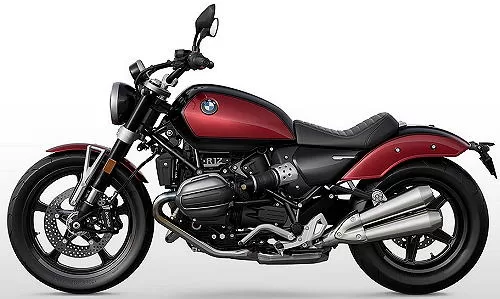
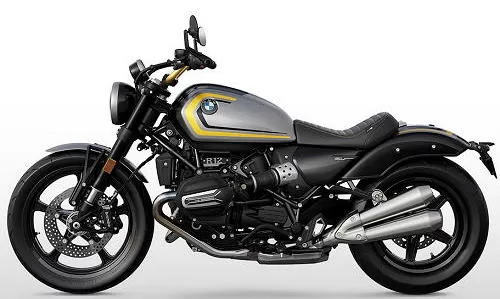
A new custom joins BMW's Heritage range. A family largely represented by the big custom 1800 and its variants. But this R12 is not a miniature R18, as you might expect. In fact, it's a NineT transposed to custom. A machine more suited to styling than cruising.
It's definitely got style. Not like a long low-rider, but with a visual character contained in a rather compact size for the category. Its weight of 227 kilos confirms this, where the norm is over 300 kilos. On the downside, its strong consanguinity with the NineT roadster prevents it from really standing out. It's only with a little time, hindsight and aromatics that the R 12 really catches the eye. What sets one apart from the other? Each has its own wheels, fuel tank, seat and rear mudguard.
The R12 opts for a mechanical solution that will delight fans of the old air-cooled Boxer engine. Old, old.... more or less. It was at the heart of the R 1200 GS, the RT and the HP2 Sport, but it's been over 10 years since a new generation of liquid-cooled flat-twin took over.
Nor should we compare it with the block of the first R12, from 1937 - which sent out 18 hp from its 745 cm3. The flat engine has survived to the present day, with mixed air/oil cooling, giving it a sleeker, more classic look, reinforced by redesigned cylinder head covers in a more old-fashioned style.
Inside, fuel injection sends the sauce into 1170 cm3, gas flows via 4 valves per cylinder and double ACT cylinder heads, and the R12 boasts 95 hp at 6,500 rpm. BMW has deliberately reduced the R12's power output compared to the NineT (109 hp), even though it's exactly the same engine. The same approach applies to the 11.2 mkg torque, which is slightly lower and obtained earlier, at 6,000 rpm. A way of demonstrating the softer approach to the road. But there's plenty to enjoy on the road.
In fact, it's far more dynamic than its big brother, the R18. At 120 kilos lighter, the R12 looks like a sportster next to it. It could even taunt it a little with its slightly higher watts (4 hp more). Not too provocative either. Otherwise, the R18's big torque could give it a run for its money.

An electronic torque feedback control is also present, to digest any rear-wheel drift when decelerating too abruptly.
The R12s are fitted with an all-new frame, still in tubular steel trellis but now monobloc, with a bolt-on rear section - the old main frame was in two parts. On the custom model, the frame is slightly different. The headroom and wheelbase are longer, the spine angle more open; and with handlebars closer to the rider, footrests further forward and wheels with asymmetrical dimensions (19" front, 16" rear), the machine announces a more relaxed riding position and a softer ride than the roadster.
Although unadjustable, the front axle is very serious, with a 45 mm inverted fork and Brembo 4-piston radial calipers on 310 mm tracks. The rear is also equipped with a Paralever monobar, a 265 mm disc and 2 pistons to calm it down. Suspension has been brought into line with the rules of the custom world, with just 90 mm of travel. But this lowers the overall height, and de facto, the seat is only 754 mm off the ground.

While we're on the subject of digital technology, let's see what the R12 has up its sleeve. Cornering ABS, traction control and engine braking regulation, USB-C and 12V sockets, LED headlights and indicators, Keyless Ride for keyless start and keyless fuel filler. Optional extras include a shifter, hill-start assist, adaptive cornering light, Connect Ride Control to interface with a smartphone, intelligent emergency call, cruise control and tire pressure monitoring.
The corner also features a host of Option 719 and other stylish parts to enhance the bike.
The NineT now has a custom sibling. This makes it possible to offer two different styles and riding styles on the same base. The R12 is less well off, with a steel tank instead of aluminum, few suspension settings, less polished rims and less power, but this makes it more affordable. At 14,990 euros, the difference is 3,300 euros.
M.B. - Manufacturer's photos
by Greg

 Share
Share
Key facts BMW 1200 R 12 (2026) : What you need to know before you buy
Prices
| Basic version | |
|---|---|
 France France |
15,000€
|

Performance
- Max speed : 203 km/h (126.10 mph)
- 0-100 km/h acceleration : 3.90 s
- Average fuel consumption : 5.10 liters/100km (0.46 mpg)
-
Estimated range
: 275 km (171 miles)
Calculated range until tank is empty, not verified.
Specifications BMW 1200 R 12 2026
- Chassis
- Two-seater saddle
- Frame : tubular steel perimeter, motor with load-bearing function
- Fuel capacity : 14 liters (3.70 US gallons)
- Seat height : 754 mm (29.69 in)
- Length : 2,000 mm (78.74 in)
- Width : 830 mm (32.68 in)
- Min height : 1,240 mm (48.82 in)
- Wheelbase : 1,520 mm (59.84 in)
- Weight when fully loaded : 227 kg (500 lb)
- Front axle
- Reverse telehydraulic fork Ø 45 mm, Wheel travel : 90 mm (3.54 in)
- Braking 2 discs Ø 310 mm (12.2 in), radial mounting, 4-piston caliper
- Front tire (Tubeless) : 100 / 90 - 19 → Order this type of tire
- Transmission
- 6 stage gearbox , manual - optional shifter
- Secondary cardan shaft
- Rear axle
- Monoshock and monoboom, Wheel travel : 90 mm (3.54 in)
- Preload and rebound adjustment
- Braking 1 disc Ø 265 mm (10.43 in), 2-piston caliper
- Rear tire (Tubeless) : 150 / 80 - 16 → Order this type of tire
- Motor
- two-cylinder flat , 4 strokes
- Injection ø 50 mm
- Cooling system : by air
- 2 ACT per cylinder
- 4 valves per cylinder
- 1,170 cc
- 95 ch (93.70 hp) to 6,500 rpm
- 11.20 mkg to 6,000 rpm
- Power-to-weight ratio : approximately 2.29 kg/ch
- Weight / torque ratio : approximately 19.15 kg/mkg
- Compression : 12 : 1
- Starting system : electric
- CO² emissions: 119 g/km
- Standard equipment
- Brake assist : ABS
- Number of riding modes : 2
- Aluminium rims
- Steering damper
- Gear indicator
- USB plug
- Keyless ignition
- Traction control
- Engine-brake control
- Practical information
- Country of manufacture : Germany





Models
2026
2025
2024
Used


Compare the 1200 R 12 to its competitors
Price
Acceleration
Fuel consumption
Range
Torque
Power
Power-to-Weight ratio
Torque-to-Weight ratio
Speed
CO² emissions
FAQ Your frequently asked questions about the 1200 R 12 2026
- What is the power of the 1200 R 12 2026?
-
The 1200 R 12 2026 develops a power of 95 ch (93.70 hp)
- What is the torque of the 1200 R 12 2026?
-
The maximum torque of the 1200 R 12 2026 is 11.20 mkg to 6,000 rpm.
- What is the maximum speed of the 1200 R 12 2026?
-
The 1200 R 12 2026 is capable of reaching a top speed of 203 km/h (126.10 mph) on the track.
- What is the weight of the 1200 R 12 2026?
-
The 1200 R 12 2026 has a a weight when fully loaded of 227 kg (500 lb).
- What is the fuel consumption of the 1200 R 12 2026?
-
Average fuel consumption is estimated at 5.10 l/100km (0.46 mpg) according to the WMTC cycle.
- QWhat is the seat height of the 1200 R 12 2026?
-
To ensure good accessibility, the 1200 R 12 2026 offers a minimum seat height of 754 mm (29.69 in).
- What is the price of the 1200 R 12 2026?
-
The price of the 1200 R 12 2026 is 15,000€ in France
- What colors are available for the 1200 R 12 2026?
-
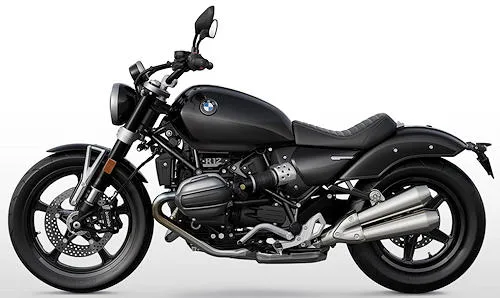
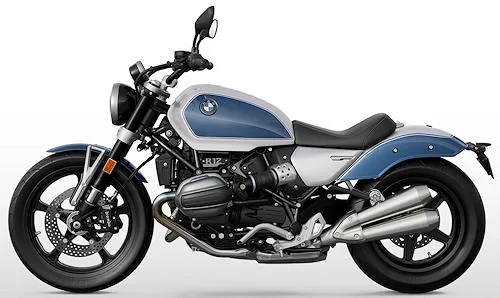
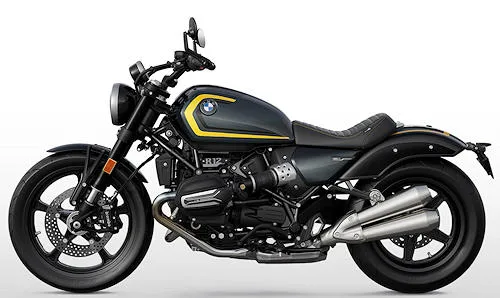
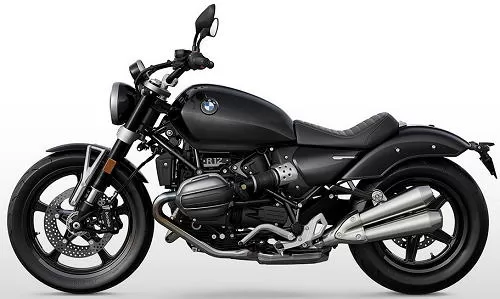
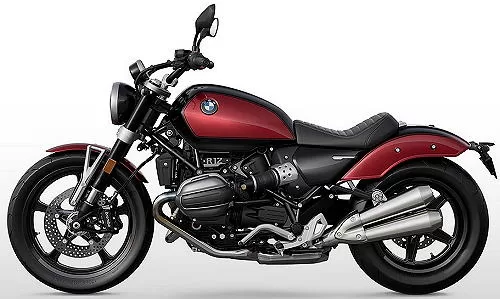
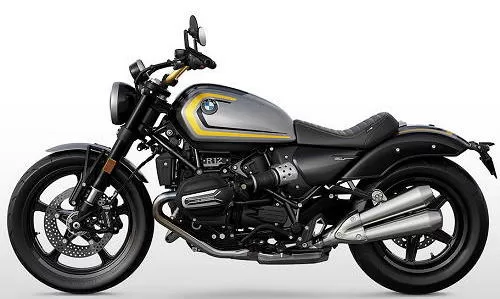
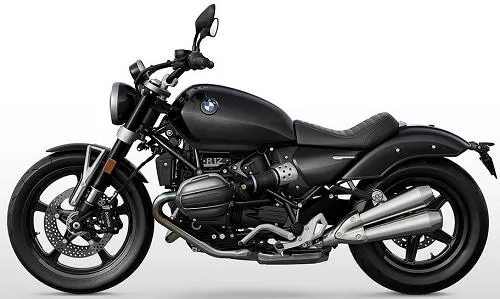
For the 2026 model year, the 1200 R 12 is available in several colors: black, blue and yellow / black.
News
-
New motorcycle products for 2026

-
Bridgestone announces the RS12, its new road-race weapon.
-
Yamaha Race Like A Girl: Natalia Rivera in episode 5.
-
Bridgestone presents the Battlax V03, its new slick tire.
-
With Sartoria Meccanica, MV-Agusta aims to go beyond premium.
-
Upgrading the entire Bonneville family for 2026.
-
Metzeler unveils three new tires at EICMA.
-
World Superbike celebrates 70 years of Yamaha.
-
Exceptional: some thirty new Triumphs in 2026.
-
40.000 bikers for the Royal-Enfield "One Ride" 2025.



Bikers' reviews Leave a review - 10 reviews