
Motorcycle specifications BMWR 100 RS 1976 The Imperator is reborn on two wheels


presentation of the R 100 RS 1976
In 1976, just as Apple was taking its first steps and Rocky was hitting the silver screen, the motorcycle world discovered the BMW R 100 RS, and distant motorcycling horizons were never the same again. While the Kawasaki Z1 roared down the road with its big 900 trunk, and Honda CB 750s reigned as masters of reliability, BMW came up with an idea that seemed, at first glance, baffling. Instead of offering more horsepower, the brand relied on an innovation that no one else had dared: wind science.
This bike wasn't a simple evolution; it was a breakthrough. It wasn't developed to win speed races, but for long distances. And its most fascinating feature was not its engine, but the air that surrounded it. The R 100 RS ushered in a new era, one in which travel became a philosophy.
A wind tunnel revolution
In the mid-1970s, chief engineer Hans-Günther von der Marwitz and his team in Munich faced a major challenge. Their motorcycles, equipped with air-cooled Boxer engines, were technologically outmatched by the Japanese competition. The sunrise 4-cylinder in-line engines dominate in terms of power. BMW's response will not be a race for horsepower, but a quest for efficiency.
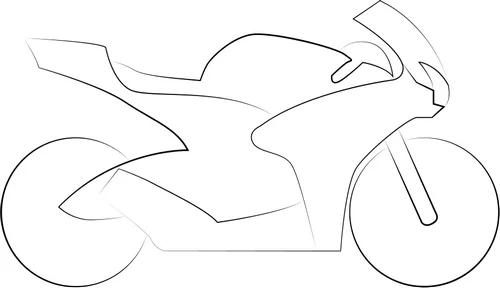
The testing ground for this new approach? The wind tunnel at Munich airport. Engineers used to attach tufts of wool to prototype fairings to visualize airflow, a simple and effective method for cutting-edge science. The result of this obsession with air was a radical innovation: a fairing at one with the machine.
The idea of wind tunnel testing is not new. Moto-Guzzi had already installed such a facility in 1950, to optimize the sporting performance of its machines.
BM's approach is quite different. Unlike fairings of the time, which were often mere appendages, the fairing on the R 100 RS is an integral part. It is designed to direct airflow not only around the rider, but also to channel it towards the engine cylinders, optimizing their cooling. The side scoops aren't there for style's sake; they're the culmination of lengthy research.
The beating heart and distinctive features
Beneath this aerodynamic armor lies a heart that purists know well. The 980 cm3 flat-twin engine, with a bore of 94 mm and a stroke of 70.6 mm, was the biggest of the boxers at the time. It was fed by Bing constant vacuum carburetors, and produced 70 hp, a far cry from the 100+ hp of the competition.
But power is just a number. Character, on the other hand, is felt. The sound of the Boxer, a low hum, was unique. It was inseparable from the motorcycle's famous "kidney kick" at standstill when the throttle was applied, a gimbal torque effect that made the bike "dance". Many owners considered it a personality trait of the machine. The gearbox, meanwhile, was known for its audible clatter, announcing each gear change.
On the road, the R 100 RS was a champion of comfort. The dashboard, complete for its time, incorporated an oil temperature gauge and a clock, details that underlined its vocation as a grand tourer. The rider felt cocooned in a protective environment, despite being slightly tilted forward by the half handlebars.
The other side of the coin
Pioneering a new way of riding, the R 100 RS also had to contend with its considerable weight. The fairing and robust construction added considerable mass. The bike's dry weight, around 230 kg, could make manoeuvring from a standstill or at low speeds particularly difficult. The effort required to move it by hand was a matter of "experience".
What's more, although the fairing reduced wind buffeting, the Boxer engine still vibrated, especially at low revs. Those trembling hands and feet were a constant reminder of the mechanics at work. Finally, while the R 100 RS was a sporty tourer, it couldn't compete in agility with the lighter, more powerful Japanese bikes. Its cornering behaviour was predictable and reassuring, but lacked dynamism.
A vision that shaped the future of motorcycling
The R 100 RS was a resounding success. It didn't just sell motorcycles; it created a market: sport-touring. Its fairing inspired an entire generation of road bikes, legitimizing the idea that comfort and protection could be as important as power.
M.Bi - Manufacturer's photos
by Greg

 Share
Share
Key facts BMW R 100 RS (1976) : What you need to know before you buy
Prices
| Basic version | |
|---|---|
 France France |
3,049€
|
Model sold in 1976
Performance
- Max speed : 197 km/h (122.40 mph)
- 0-100 km/h acceleration : 4.60 s
- Average fuel consumption : 5.75 liters/100km (0.41 mpg)
-
Estimated range
: 417 km (259 miles)
Calculated range until tank is empty, not verified.
Specifications BMW R 100 RS 1976
- Chassis
- Two-seater saddle
- Frame : Double steel cradle
- Fuel capacity : 24 liters (6.34 US gallons)
- Oil capacity : 2.30 liters (0.61 US gallons)
- Seat height : 820 mm (32.28 in)
- Length : 2,130 mm (83.86 in)
- Width : 746 mm (29.37 in)
- Min height : 1,300 mm (51.18 in)
-
Min. ground clearance : 165 mm (6.50 in)
- Wheelbase : 1,465 mm (57.68 in)
- Dry weight : 230 kg (507 lb)
- Front axle
- Telescopic fork Ø 36 mm, Wheel travel : 200 mm (7.87 in)
- Braking 2 discs Ø 285 mm (11.22 in), single-piston caliper
- Front tire : 90 / 90 - 19 → Order this type of tire
- Pressure : 1.9 bar
- Transmission
- 5 stage gearbox , manual
- Secondary cardan shaft
- Rear axle
- 2 lateral shock absorbers, Wheel travel : 125 mm (4.92 in)
- Preload adjustment
- drum brakes Ø 200 mm (7.87 in)
- Rear tire : 120 / 90 - 18 → Order this type of tire
- Pressure : 2 bar
- Motor
- two-cylinder flat-bed, Boxer-type , 4 strokes
- 2 carburetors Ø 40 mm
- Cooling system : by air
- 1 AC, tumbled
- 2 valves per cylinder
- 980 cc
- 70 ch (69 hp) to 7,250 rpm
- 7.70 mkg (76 Nm) to 6,500 rpm
- Power-to-weight ratio : 3.33 kg/ch
- Weight / torque ratio : 29.87 kg/mkg
- Compression : 9,5 : 1
- Starting system : electric
- Practical information
- Made in 33,648 copies
- Country of manufacture : Germany





Models
1976
Used
Compare the R 100 RS to its competitors
FAQ Your frequently asked questions about the R 100 RS 1976
- What is the power of the R 100 RS 1976?
-
The R 100 RS 1976 develops a power of 70 ch (69 hp)
- What is the torque of the R 100 RS 1976?
-
The maximum torque of the R 100 RS 1976 is 7.70 mkg (76 Nm) to 6,500 rpm.
- What is the maximum speed of the R 100 RS 1976?
-
The R 100 RS 1976 is capable of reaching a top speed of 197 km/h (122.40 mph) on the track.
- What is the weight of the R 100 RS 1976?
-
The R 100 RS 1976 has a a dry weight of 230 kg (507 lb).
- What is the fuel consumption of the R 100 RS 1976?
-
Average fuel consumption is estimated at 5.75 l/100km (0.41 mpg) according to the WMTC cycle.
- QWhat is the seat height of the R 100 RS 1976?
-
To ensure good accessibility, the R 100 RS 1976 offers a minimum seat height of 820 mm (32.28 in).
- What is the price of the R 100 RS 1976?
-
The price of the R 100 RS 1976 is 3,049€ in France
News
-
New motorcycle products for 2026

-
Bridgestone announces the RS12, its new road-race weapon.
-
Yamaha Race Like A Girl: Natalia Rivera in episode 5.
-
Bridgestone presents the Battlax V03, its new slick tire.
-
With Sartoria Meccanica, MV-Agusta aims to go beyond premium.
-
Upgrading the entire Bonneville family for 2026.
-
Metzeler unveils three new tires at EICMA.
-
World Superbike celebrates 70 years of Yamaha.
-
Exceptional: some thirty new Triumphs in 2026.
-
40.000 bikers for the Royal-Enfield "One Ride" 2025.


Bikers' reviews Leave a review - 1 review
As proof, I had a 750 gpz in '82 that weighed 245 kilos.
I also owned an r100tc, which was the same bike as the rs but with a 65 hp engine instead of 70... I crossed part of Europe with it and it was indeed a bike for riding fast and long without tiring.
German freeway from the Netherlands to Czechoslovakia at an average of 160 with no problem.
Weight wasn't a problem, as the flat design gave it a very low center of gravity.
Handling was indeed more difficult at standstill, but not because of the weight but because of the small handlebars.
As for protection, it was exceptional!
The same goes for handling on the small roads of the Ardèche... In short, I'd gladly buy the same bike again today... Best regards Patrice Rating : 5/5 Respond to Patrice