
Motorcycle specifications BMWG 310 GS 2020 Small roads?


presentation of the G 310 GS 2020
The trail bike is a key, ultra-strategic category for BMW. With its R 1200 GS, the manufacturer has assured itself of insolent supremacy. With other models, everyone can find a trekking bike to fit their boots. But the Bavarian brand has its sights set on other lands, other conquests, other volumes. And for emerging countries with enormous potential, the cubic capacity and price have to be right-sized. This is why Béhème has enriched its range with a G 310 R roadster, which serves as the basis for this trail bike with an unprecedented cubic capacity: the G 310 GS. Like its big sisters, this motorcycle expresses adventure, but much closer to the economic reality of Asia's frontiers.
The joy of mimicry. This mini GS faithfully reproduces the maxi's personality. Marked angles, an adventurous profile, styling cues and a highly suspended seat. But that's as far as it goes. The 310 GS looks like it could be lifted with one hand; the R 1200 looks like a behemoth designed to smash through a wall. Of course, a 300 is more delicate, lighter and less used to the rigors of displacement. Still, it's no slouch. It's just that its belly doesn't spill over, as it's powered by the same engine as the roadster.
It's a modest engine, but one that honors the history of the trail bike. This type of bike has always been famous for its monos, its typical motorization. This is the case with the G 310 GS, with a single piston displacing 313 cm3. The technical solutions are classic, with liquid cooling, fuel injection, 4 valves, double ACT and a 6-speed gearbox. What sets this mono apart, however, is its inverted cylinder head, with the intake facing forward. This configuration has the advantage of moving the center of gravity down, closer to the front wheel. This makes the G-series more responsive.
What will we have on hand to carry off the 310 GS's 169.5 kilos? A respectable 34 hp, which the engine develops at 9,500 rpm. Torque is in line with displacement, peaking at 3 mkg at 7,500 rpm. Power that's right up there with the class, for everyday use, or even weekend adventures. Perfectly suited to the needs of the regions targeted or the A2 license, but inevitably limited for the desires and needs of travelers on the old continent. Most wouldn't need anything more... But desire does. As for top speed, ask no more than a good 140 km/h.
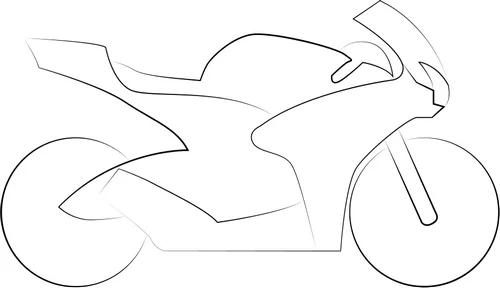

As we've seen, the GS is based on the 310R. But how did it manage to gain 11 kilos? A more protective fork head, specific cladding, a package holder with integrated handles, it weighs a lot.
The trail takes over the engine and most of the roadster's chassis. The tubular steel trellis frame is retouched at the steering column; the column angle is less open and the headroom is greater. With the same concern for stability, the swingarm has been lengthened by 46 mm, bringing the wheelbase to 1,420 mm. The same copy-and-paste approach is applied to the shock absorber and inverted fork. However, to suit trail use, suspension travel has been increased. The forks are 49 mm longer, giving 180 mm of travel, and the rear forks are 40 mm longer, giving 180 mm of travel. This will enable the G 310 GS to overcome a few rough patches, but at the price of a penalty for the sitter: the seat height has risen from 785 mm to 835 mm. You can feel the 5 cm difference for a saddle. In any case, a trail bike is high up.
And it's got a big wheel. The front axle is fitted with a 19-inch rim, a compromise between road (17') and off-road (21'). BM keeps a 17' at the rear, taking care to change the shoes for more versatile rubber. It's a pity spoked wheels aren't included, not even as an option.
No change to the brakes. ABS supervises the crew, with a 300 mm disc at the front with a 4-piston radial caliper by Bybre (a Brembo sub-brand), and another disc at the rear, this time 240 mm with a double-piston caliper.
In addition to the distinctly different seat height, the G 310 GS emphasizes its riding position. A trail bike is one of the most comfortable machines to ride. Sitting in a commanding position, you're ready to go anywhere. The small windscreen and shoulders will break the force of the air much better than the roadster. But it's still limited, a far cry from the performance of a big GS.
Once mounted, the rider will feel more protected by the presence of the trim. The cockpit view is identical to that of the 310 R. A window where everything is digital, from the speedometer to the bar graph, from the fuel gauge to the gear indicator, as well as trips, fuel consumption calculations, clock, etc.
The handlebar controls are the same...except for that little button above the turn signals. Why does it say ABS? Because it's disconnectable. A plus when venturing out on the trails, where braking sometimes requires human judgement and deviations, which the electronics can't understand.

If BMW's smallest trail bike proudly wears the blue-and-white badge, it's because it was designed in Germany, and unhesitatingly draws its inspiration from the GS family in all its glory. Under the propeller, the bike's origins lie in Indian factories. Like the roadster, it is manufactured by TVS Motor Compagny in Bangalore. As a result, it's impossible to claim the Made In Germany label. Big deal... KTM has its small Duke bikes made by Bajaj, and Harley's 500 and 750 Street bikes are also made in India. In any case, in order to conquer this market and offer a tight price, economic logic dictates.
The price. It will be important for this G 310 GS, and will largely condition its entry into the territory. Despite the proliferation of models in this displacement bracket, it's always hard to get a foothold. But there's plenty of fun to be had in the trails. The small court now features this BMW, the Suzuki 250 V-Strom, the Honda CRF 250 L and the Kawasaki Versys-X 300, as well as the Mash 400 Adventure and the Benelli 251 TRK. In short, there's a lot going on, and it's all waiting to entertain our streets. Will the smallest GS also entertain paths, hazelnuts, urban lanes, undergrowth and innuendo?!
M.B - Manufacturer's images
by Greg

 Share
Share
Key facts BMW G 310 GS (2020) : What you need to know before you buy
Highlights
- Mini-GS
- Measured gauge
- The least expensive GS
Weak points
- Limited motorization
- No spoked rims
Prices
| Basic version | |
|---|---|
 France France |
6,170€
|


Performance
- Max speed : 143 km/h (88.90 mph)
- Average fuel consumption : 3.33 liters/100km (0.71 mpg)
-
Estimated range
: 330 km (205 miles)
Calculated range until tank is empty, not verified.
Specifications BMW G 310 GS 2020
- Chassis
- Frame : Tubular steel mesh
- Fuel capacity : 11 liters (2.91 US gallons)
- Seat height : 835 mm (32.87 in)
- Length : 2,075 mm (81.69 in)
- Width : 880 mm (34.65 in)
- Wheelbase : 1,420 mm (55.91 in)
- Weight when fully loaded : 169.50 kg (374 lb)
- Front axle
- Reverse telehydraulic fork Ø 41 mm, Wheel travel : 180 mm (7.09 in)
- Braking 1 disc Ø 300 mm (11.81 in), radial mounting, 4-piston caliper
- Front tire : 110 / 80 - 19 → Order this type of tire
- Pressure : 1.7 bar
- Transmission
- 6 stage gearbox , 6-speed manual gearbox
- Secondary by chain
- Rear axle
- Mono-damper, Wheel travel : 180 mm (7.09 in)
- Braking 1 disc Ø 265 mm (10.43 in), 2-piston caliper
- Rear tire : 150 / 70 - 17 → Order this type of tire
- Pressure : 1.9 bar
- Motor
- single-cylinder , 4 strokes
- Injection
- Cooling system : liquid
- 2 ACT
- 4 valves
- 313 cc
- 34 ch (33.50 hp) to 9,500 rpm
- 3 mkg to 7,500 rpm
- Power-to-weight ratio : approximately 4.75 kg/ch
- Weight / torque ratio : approximately 53.06 kg/mkg
- Compression : 10.6 : 1
- CO² emissions: 77 g/km
- Standard equipment
- Brake assist : ABS can be disconnected
- Practical information





Models
2025


2024


2023


2022


2021


2020


2019


2018


2017


Used


Compare the G 310 GS to its competitors
Fuel consumption
Range
Torque
Power
Power-to-Weight ratio
Torque-to-Weight ratio
Speed
CO² emissions
FAQ Your frequently asked questions about the G 310 GS 2020
- What is the power of the G 310 GS 2020?
-
The G 310 GS 2020 develops a power of 34 ch (33.50 hp)
- What is the torque of the G 310 GS 2020?
-
The maximum torque of the G 310 GS 2020 is 3 mkg to 7,500 rpm.
- What is the maximum speed of the G 310 GS 2020?
-
The G 310 GS 2020 is capable of reaching a top speed of 143 km/h (88.90 mph) on the track.
- What is the weight of the G 310 GS 2020?
-
The G 310 GS 2020 has a a weight when fully loaded of 169.50 kg (374 lb).
- What is the fuel consumption of the G 310 GS 2020?
-
Average fuel consumption is estimated at 3.33 l/100km (0.71 mpg) according to the WMTC cycle.
- QWhat is the seat height of the G 310 GS 2020?
-
To ensure good accessibility, the G 310 GS 2020 offers a minimum seat height of 835 mm (32.87 in).
- What is the price of the G 310 GS 2020?
-
The price of the G 310 GS 2020 is 6,170€ in France
News
-
New motorcycle products for 2026

-
Bridgestone announces the RS12, its new road-race weapon.
-
Yamaha Race Like A Girl: Natalia Rivera in episode 5.
-
Bridgestone presents the Battlax V03, its new slick tire.
-
With Sartoria Meccanica, MV-Agusta aims to go beyond premium.
-
Upgrading the entire Bonneville family for 2026.
-
Metzeler unveils three new tires at EICMA.
-
World Superbike celebrates 70 years of Yamaha.
-
Exceptional: some thirty new Triumphs in 2026.
-
40.000 bikers for the Royal-Enfield "One Ride" 2025.


Bikers' reviews Leave a review - 8 reviews
I decided on a used 2019 G310GS with less than 1,500 km. Recovering my 46 L top case, I added 2 22 L panniers, two crash bars and a center stand (hard to prop up, but necessary for chain tensioning). Then I made a return trip from Paris to Goris (Armenia), criss-crossing Turkey for a month and a half. In all, over 23,000 km in 4 months. Fuel consumption on the trip 3 L 02 / 100 km. Longest distance in one go Paris-Mediterranean 800 km, most frequent daily route on days when I drove 300 / 400 km. In general I drove at 80 km/h, but I had to cross northern Greece quite fast on the freeway, driving at a constant 110 / 120 km / h. I didn't want to drive too fast. I didn't want to go too fast. There are vibrations (see below) but I didn't feel much and certainly not the tingling in my hands that my CB 200 used to give off at lower speeds. On the way back, I had to take part of the Italian freeways at the same speeds without feeling any annoying vibrations. I find it comfortable. The seat isn't thick, but I'm not heavy. It's very pleasant in town, thanks to the position it gives, its lightness and compactness, making it easy to ride in and out of traffic jams. On the road, it's also very pleasant at 85 km/h, a little more if the wind isn't too far ahead. The engine then emits a fairly round noise. Beyond that, it "sputters" up to 100 km / h, before gradually picking up speed and producing a turbine-like noise (in the helmet). But after 85 kph, unless there's a tailwind or no wind at all, the air currents become noticeable: you're driving more than you're cruising. It's surprising to "twist" the handle and see the 34 ponies come rushing back with gusto (this isn't a Hayabusa, after all!), and the sound of their cavalcade irresistibly evokes the song of a frantic jackhammer. At least overtaking is clearly audible to other road users. The gearbox is well spaced out and the engine fairly smooth, but beware of stalling when starting from cold: it's a mono. I find the storage possibilities quite large, but I'm a minimalist: under the seat, in the front fairing and the seat fairing, and on the frame (foot pump and trekking poles). In Albania, Georgia, Armenia and even Turkey, I've been driven to off-road against my will, because I know nothing about it, but the state or absence of the road didn't allow for anything else. The grippy tires inspired confidence, and rightly so. Near Mestia, I had to pass through 2 ditches filled with more than 30 cm of water, and again, the tires held on well. Minuses: I regret that the middle point of the turn signal switch is not sharp enough, making it too easy for me to turn to the other side when I just want to stop the signal. Vibrations do exist: I've changed the front bulb twice in the 25,000 km on the odometer. It's better to practise unclipping the pin beforehand, as it's not easy to locate (and to have a spare bulb). Last change 100 km from the end of the journey in the countryside and at night. The design of the headlight should have taken better account of these vibrations. Another effect of the vibrations transmitted by the USB cable of my phone/gps: I fried the socket of the phone. It's been replaced, and since then I've been using the phone without a cable, with the gps active, but only turning on the screen when necessary to conserve battery life. Personally, I'd have preferred less power and a motor optimized for even lower consumption. My opinion In the end, I'm still seduced by this bike, which I bought for this project but plan to keep. It's pretty much what I'd expect from a motorcycle. Rating : 4/5 Respond to Bhmb
With fuel consumption of less than 3.5l/100km, if you don't think of it as a sports bike, you can cover more than 300 km on a full tank. Equipped with semi-rigid panniers and a saddle bag so as not to spoil the look of the bike, it'll take you for a week's ride without any problems! Well worth the price! Rating : 4/5 Respond to JPLV
Still waiting for real-world road tests.
But we're still waiting for the price, which will be decisive, because if BMW releases it at 6000â'¬, it won't even be worth it. The competition has much better models at 6200â'¬ or 6500â'¬
If BMW offers 5490â'¬, it'll have every chance! Rating : 4/5 Respond to Chris 1000