
Motorcycle specifications HondaCB 500 Hornet 2026 The truant worker


presentation of the CB 500 Hornet 2026
The CB 500 Hornet is one of the iconic models to start with in the big cubes. In a manner of speaking, of course, given the size and power of today's blocks...
As a good Honda, it's designed to be very easy to access, and even more so with the E-Clutch assistance now available as an option. A robotized clutch that eliminates the need for a lever and left-hand action. With it, you can forget all about clutching! It takes care of everything. But you'll still have to shift gears with your foot; it's not an automatic gearbox.
The E-Clutch system weighs an extra 2 kg, costs a few hundred euros, is intended to be smoother and faster than a shifter, and can be set to 3 "feel" levels, for a Hard, Medium or Soft feel. The clutch lever remains. Not for nostalgia's sake, but to enable the rider to regain control on demand.
The sure value of the early days
The CB 500 changed face and name in 2024. The bike that has been accompanying young bikers for over 30 years now sees its future as part of Honda's most piquant family: the Hornet. It's no more aggressive than before, but this identifier has become very demonstrative since the success of the 750. The CB 500 would be wrong to deprive itself of this image. But has it changed that much?
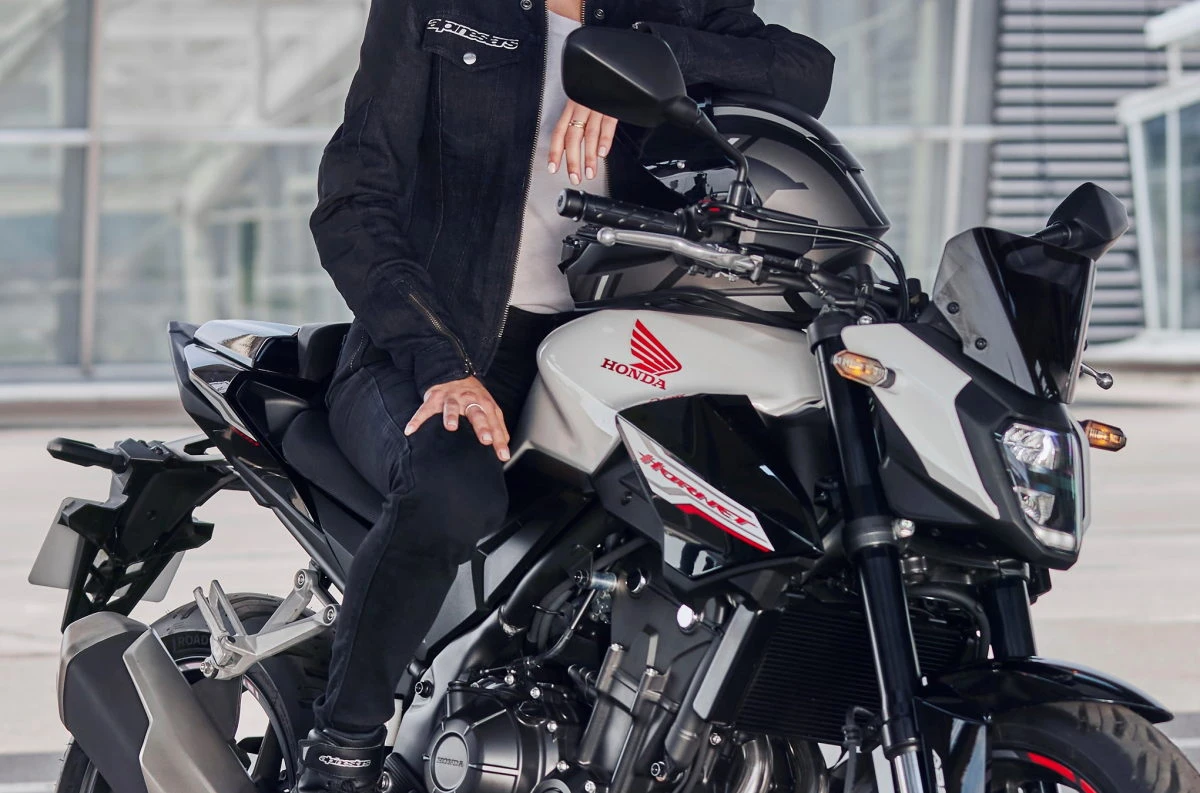
It has a new look, but it's more an evolution than a renewal. After a whole host of improvements since 2013, when it was given a new technical platform and engine, this phase retains the substance and densifies the form. The face abandons angles for a more robotic mimicry, with a gaping eye that sniffs out its course. The taillight is a little more dynamic. The new shoulders are wiser, as if to prepare the osculation for a simple reunion.
The mechanical and cycling parts of the 500 Hornet are taken over from the CB 500 F, virtually unchanged. Only the engine has been tweaked to make it more responsive at low revs and to distribute its power more progressively. The most striking addition is the arrival of disconnectable HSTC traction control. An added safety feature, but the twin-cylinder is not known for being violent. We're always surprised to see this kind of assistance on a 35 kW mill.... With good tires, this torque control won't work much.
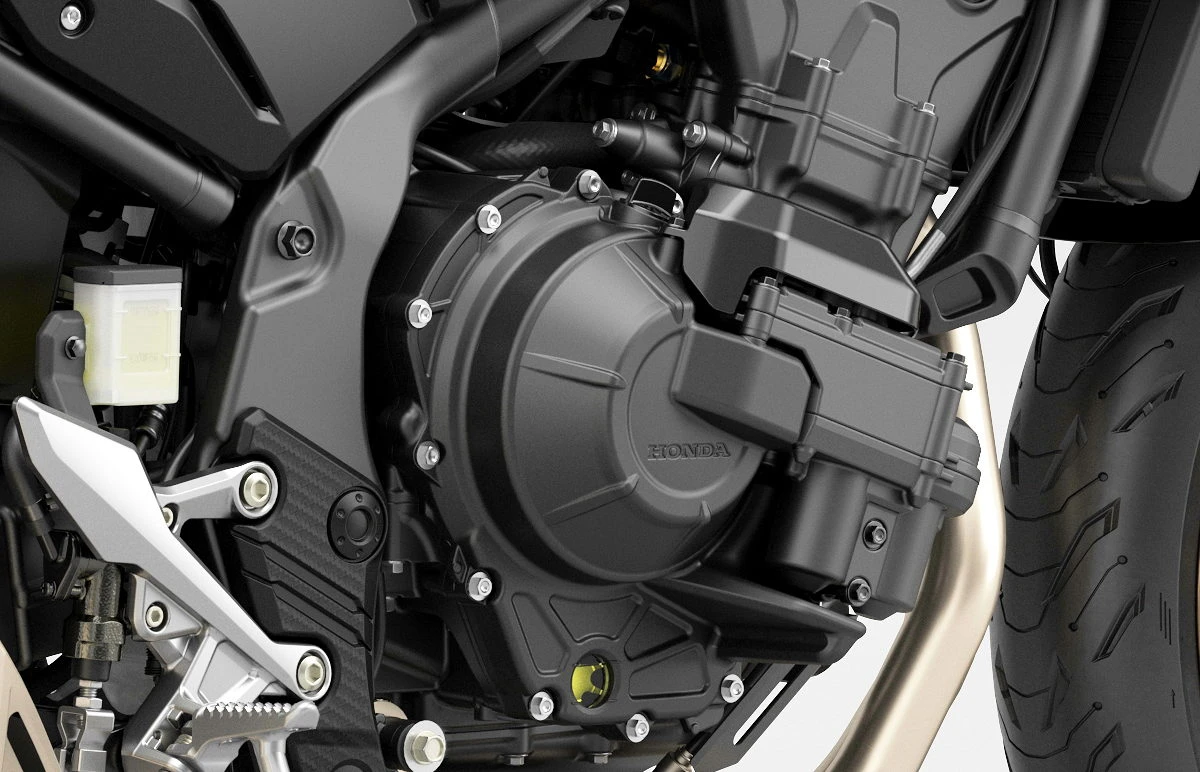
Designed as an all-purpose engine, calibrated for the A2 and always on the go, Honda's twin-cylinder is neither cheeky nor festive. Its linear character doesn't really correspond to the image of a Hornet as a rascal, but it provides a reassuring ride in all circumstances. A good engine, with smoothness throughout, but a distinctly gentle face. Although its PGM-FI injection has been refined, it still delivers the same power and torque figures: 47.5 hp at 8,600 rpm and 4.5 mkg of torque at 6,500 rpm.
Youthful changes
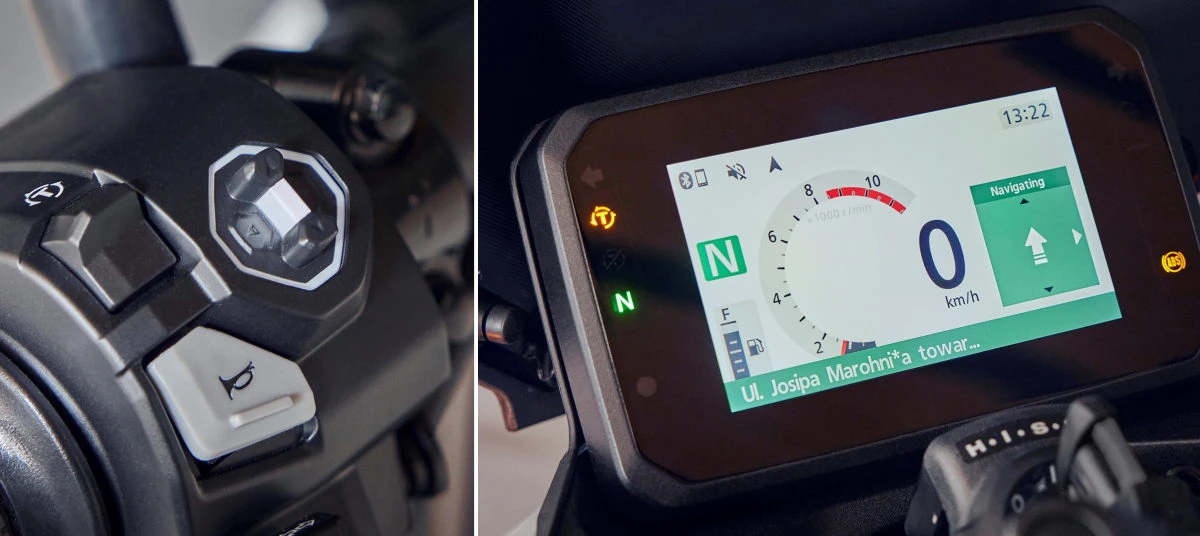
But let's get back to the elements that have changed. That's what interests us most. Turn your attention to the new left-hand switchgear. There's a button to control the HSTC, and a small backlit control pad. An indispensable appendage for controlling all the functions of the new instrument panel. After all, the CB 500 has finally got rid of its blue LCD numeric keypad and replaced it with a 5-inch color TFT screen. A screen with the right dimensions, well-arranged information and sober graphics (from Honda). It offers its rider three types of display and a good dose of interactivity with the smartphone. Once the RoadSync app has been retrieved and synchronized, the interface can display a step-by-step GPS navigator, manage calls, listen to text messages (the system converts them into audio), play stored music and even check the weather.
A total update, necessary to provide the dose of digital that everyone loves. But that doesn't stop him from taking an interest in the bike's main components, which have been carried over from the previous generation without modification. The 17-liter fuel tank is not likely to run out quickly, as Honda has measured fuel consumption at 3.5 liters / 100 km. A Diamond-type tubular steel frame supports the engine and holds a monoshock and Showa SFF-BP inverted fork. Not a bad front end for a 500, with separate functions for each tube and a large-piston damping system.
We also find the same brakes, quite flattering with their two 296 mm discs and, above all, Nissin radial calipers with 4 pistons per caliper. Some well-known bikes in the upper segment would do well to take inspiration from this. Between the suspension work and the braking efficiency, the 500 Hornet can claim the same serene and efficient ride as yesterday, without however stirring the emotions as an MT-07 would. It's important to remain reasonable, and that's exactly what the CB 500 has always wanted and will always offer.
M.B - Manufacturer's photos
* A few words about the E-Clutch system:
-When the clutch lever is pressed, Honda's electronic clutch system reactivates in less than a second above a certain engine speed, and after 5 seconds at low rpm. If the rider wishes to deactivate the system, he can do so via the control on the left handlebar. Switching to manual mode is indicated by the letter "M" on the dashboard.
- The E-Clutch allows you to select a shifting feel by adjusting the force required on the pedal. Three settings are available: hard, medium and soft, each of which can be selected independently for upshifting and downshifting. It also informs you if the selected gear is too high.
- It manages engagement and disengagement according to several parameters, including vehicle speed, throttle opening angle, engine speed, pressure on the gearshift pedal, clutch motor reducer angle, intermediate shaft speed and gear engaged. The clutch is operated by a two-motor actuator located in the right-hand crankcase. During engagement and disengagement, ignition advance and fuel injection are also controlled, ensuring smooth, jolt-free gear changes under all circumstances.
by Greg

 Share
Share
Key facts Honda CB 500 Hornet (2026) : What you need to know before you buy
Prices
| Basic version | with E-Clutch | |
|---|---|---|
 France France |
6,699€
|
7,199€
|

Performance
- Max speed : approximately 180 km/h (111.80 mph)
- Average fuel consumption : 3.50 liters/100km (0.67 mpg)
-
Estimated range
: 489 km (304 miles)
Calculated range until tank is empty, not verified.
History

Specifications Honda CB 500 Hornet 2026
- Chassis
- Two-seater saddle
- Frame : in Diamond steel
- Fuel capacity : 17.10 liters (4.52 US gallons)
- Oil capacity : 3.20 liters (0.85 US gallons)
- Seat height : 785 mm (30.91 in)
- Length : 2,080 mm (81.89 in)
- Width : 800 mm (31.50 in)
- Min height : 1,060 mm (41.73 in)
- Wheelbase : 1,410 mm (55.51 in)
- Weight when fully loaded : 188 kg (414 lb)
- Front axle
- Reverse telehydraulic fork Ø 41 mm, Wheel travel : 120 mm (4.72 in)
- Angle de chasse : 25.5 °
- Braking 2 Nissin wave discs Ø 296 mm (11.65 in), 4-piston caliper
- Front tire (Tubeless) : 120 / 70 - 17 → Order this type of tire
- Pressure : 2.5 bar
- Transmission
- 6 stage gearbox , manual
- Secondary by chain
- Rear axle
- Mono-damper
- Preload adjustment
- Braking 1 Nissin wave disc Ø 240 mm (9.45 in), single-piston caliper
- Rear tire (Tubeless) : 160 / 60 - 17 → Order this type of tire
- Pressure : 2.9 bar
- Motor
- two-cylinder online , 4 strokes, set at 180°
- Injection Ø 34 mm
- Cooling system : liquid
- 2 ACT
- 4 valves per cylinder
- 471 cc
- 48 ch (47.30 hp) to 8,600 rpm
- 4.50 mkg to 6,500 rpm
- Power-to-weight ratio : approximately 3.66 kg/ch
- Weight / torque ratio : approximately 38.46 kg/mkg
- Compression : 10.7 : 1
- Starting system : electric
- CO² emissions: 80 g/km
- Anti-pollution standard : Euro 5+
- Standard equipment
- Brake assist : ABS standard
- TFT Full-Colour screen size: 12.70 cm (5 inches)
- Gear indicator
- Torque control
- Anti-slip clutch
- Optional equipment
- automated clutch E-Clutch
- Practical information





Models
2026


2025


2024


Used


Compare the CB 500 Hornet to its competitors
Fuel consumption
Range
Torque
Power
Power-to-Weight ratio
Torque-to-Weight ratio
Speed
CO² emissions
FAQ Your frequently asked questions about the CB 500 Hornet 2026
- What is the power of the CB 500 Hornet 2026?
-
The CB 500 Hornet 2026 develops a power of 48 ch (47.30 hp)
- What is the torque of the CB 500 Hornet 2026?
-
The maximum torque of the CB 500 Hornet 2026 is 4.50 mkg to 6,500 rpm.
- What is the maximum speed of the CB 500 Hornet 2026?
-
The CB 500 Hornet 2026 is capable of reaching a top speed of approximately 180 km/h (111.80 mph) on the track.
- What is the weight of the CB 500 Hornet 2026?
-
The CB 500 Hornet 2026 has a a weight when fully loaded of 188 kg (414 lb).
- What is the fuel consumption of the CB 500 Hornet 2026?
-
Average fuel consumption is estimated at 3.50 l/100km (0.67 mpg) according to the WMTC cycle.
- QWhat is the seat height of the CB 500 Hornet 2026?
-
To ensure good accessibility, the CB 500 Hornet 2026 offers a minimum seat height of 785 mm (30.91 in).
- What is the price of the CB 500 Hornet 2026?
-
The price of the CB 500 Hornet 2026 is 6,699€ in France. It is displayed at 7,199€ in France with E-Clutch.
- What colors are available for the CB 500 Hornet 2026?
-
For the 2026 model year, the CB 500 Hornet is available in several colors: black, white and red.
News
-
New motorcycle products for 2026

-
Bridgestone announces the RS12, its new road-race weapon.
-
Yamaha Race Like A Girl: Natalia Rivera in episode 5.
-
Bridgestone presents the Battlax V03, its new slick tire.
-
With Sartoria Meccanica, MV-Agusta aims to go beyond premium.
-
Upgrading the entire Bonneville family for 2026.
-
Metzeler unveils three new tires at EICMA.
-
World Superbike celebrates 70 years of Yamaha.
-
Exceptional: some thirty new Triumphs in 2026.
-
40.000 bikers for the Royal-Enfield "One Ride" 2025.



Bikers' reviews Leave a review - 2 reviews
Beware, though, if you're planning a long trip: the exhaust pipe on the side panniers is in the upper position! So there's a big risk of burnt luggage when the exhaust pipe comes out! Rating : 5/5 Respond to Jean
Announced 180km/h and I barely reached 160km/h. 150 in fifth gear and then nothing in 6.... Rating : 4/5 Respond to Anto