
Motorcycle specifications HondaCBR 1000 RR ABS 2011 Empire marries CBR with ABS


presentation of the CBR 1000 RR ABS 2011
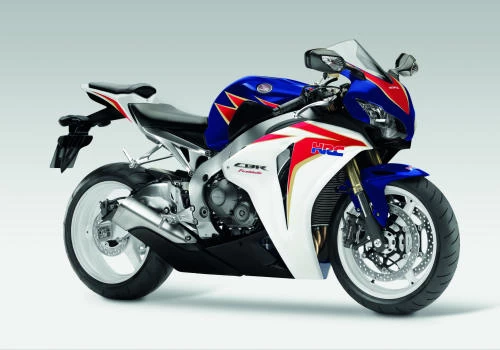
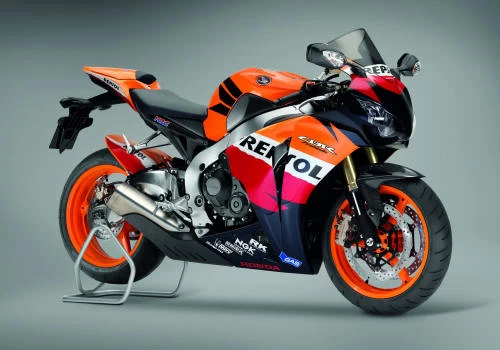
already extensively redesigned for 2008, the CBR 1000 RR Fireblade evolved in only 2 areas in 2009. The first, unavoidable and vintage-appropriate, is the appearance of the year's new colors, including the fashionable Repsol Replica and HRC Replica decals.
The second is far more interesting, as it features a major technological development: combined ABS on a sports bike. Honda presents its best sports bikes in quick succession, the CBR 600 and CBR 1000, with their new brake assist system.
in terms of technical aspects, design and features, the main points are covered in the 2009 CBR 600 RR fact sheet. But here's how we'll introduce you to the Japanese manufacturer's new technological add-on:
For many years, the ABS combined braking system has offered its users a unique sense of confidence in emergency situations, at the very moment when the wheels were likely to lock, leading to a loss of control. But never before had a system been developed with sufficient finesse, efficiency and compactness to be adapted to a sports car of the Fireblade's calibre. Developing a combined ABS system capable of meeting the demands of such a machine was quite a challenge. Although not designed to enhance on-track performance, the electronically-controlled combined-ABS braking system is so sophisticated and powerful that even experienced riders have to go back to the drawing board several times before surpassing its capabilities. In the end, the extra confidence provided by the combined-ABS system in emergency situations or on slippery surfaces is absolutely indisputable.
For the first time ever, a supersport machine is able to offer a very high level of performance
while benefiting from all the confidence provided by the presence of a combined-ABS system.

System efficiency is based on 4 main parameters:
1. Electronic control of the CBS, enabling more precise control of braking forces. This also enables finer distribution of braking forces between the two wheels.
2. Measurement of the force applied by the driver to each control. The ideal braking force on each wheel is generated accordingly, offering optimum distribution and minimizing machine reactions.
3. An ABS "modulator" that ensures smooth, late ABS engagement.
4. Compact design means that components can be ideally integrated into the bike, even while respecting the principle of mass centralization that is essential on a sports bike.
Now available as standard on CBR models, combined ABS is not mandatory but an option. The choice is yours, with or without. Between the two, only the styling, active safety and a few other features differ. The ABS model includes new trim pieces to protect ABS system components: a fairing extension houses the front servo near the engine, while at the rear, a trim piece under the seat covers the electronic control unit.

sportiness, control, safety, riding pleasure - the CBR 1000's range of capabilities is growing. All it needs is that little extra something to make it a must-have on the track. But since we're more often on the road than between the vibrators, with a clear predisposition for safety, the advent of ABS could well save us a few fairings and quite a few bowls. The only problem: weight. With this assistance, the CBR 1000 carries more than 10 kg extra weight.
the 2010 model features a new, sharper rear end with a new translucent lens light, an aluminum-clad tailpipe and 4 new color schemes. On the mechanical side, enthusiasts will be disappointed: only the crankshaft inertia weights have been optimized. These improvements have been made to absorb fluctuations in the torque curve. The alternator flywheel has been enlarged, while crankshaft rigidity has been increased (+6.87% in terms of inertia weights) to match the new flywheel characteristics. This progress has been achieved without increasing weight, thanks to the use of lighter components such as aluminum fixing screws in the cylinder head, thinner exhaust pipes and a more compact cooling fan motor. Prices range from 15,690 euros for the standard version to 16,690 euros for the C-ABS.
honda has also included a number of parts to pamper the Fireblade:
- A selection of carbon parts specially developed for the Fireblade, including a front mudguard to protect the fork tubes
front fender to protect the fork tubes, a rear fender (non-ABS version only) to protect the inside of the
the inside of the chassis, and alternator and ignition cover protectors.
- A color-matched wheel arch to protect the shock absorber (non-ABS
version only).
- A carbon-style fuel tank protector and filler cap cover with HRC logo.
- A color-matched seat cover that takes the place of the passenger seat to reinforce the CBR's sporty image
the CBR1000RR's sporty image.
- A set of "Racing" stickers for the fairing and wheels.
- A homologated windscreen, raised by 27.4 mm, for a more dynamic image and enhanced protection. The instrumentation is also better protected from the sun. Available in clear or black-tinted versions with Honda Racing logo.
- A set of nylon fairing protectors to limit the risk of damage to painted parts.
- A rider's seat using a special elastomer (Honda patent) for unrivalled comfort. With
CBR logo and various motifs
- A pannier that can be installed on the passenger seat if required.
- A tank bag.
- A compact AVERTO alarm with motion detector, siren and battery. The kit features a low-power standby mode that protects the battery from total discharge.
- A U-shaped anti-theft device designed to fit in the space under the passenger seat.
- A stand that lifts the machine from the end of the swingarm to facilitate maintenance of the rear wheel.
M.B - Manufacturer's photos
by Greg

 Share
Share
Key facts Honda CBR 1000 RR ABS (2011) : What you need to know before you buy
Highlights
- More safety
- CBR control and accessibility
- Coloris replica
Weak points
- Particular style
- Sharper competition on the track
Prices
| Basic version | |
|---|---|
 France France |
16,690€
|

Performance
- Max speed : approximately 300 km/h (186.40 mph)
- Average fuel consumption : 6.30 liters/100km (0.37 mpg)
-
Estimated range
: 281 km (175 miles)
Calculated range until tank is empty, not verified.
Specifications Honda CBR 1000 RR ABS 2011
- Chassis
- Frame : Double poutre aluminium type Diamond
- Fuel capacity : 17.70 liters (4.68 US gallons)
- Seat height : 820 mm (32.28 in)
- Length : 2,080 mm (81.89 in)
- Width : 685 mm (26.97 in)
- Min height : 1,130 mm (44.49 in)
- Wheelbase : 1,410 mm (55.51 in)
- Dry weight : 177 kg (390 lb)
- Weight when fully loaded : 210 kg (463 lb)
- Front axle
- Reverse telehydraulic fork Ø 43 mm, Wheel travel : 120 mm (4.72 in)
- Braking 2 discs Ø 320 mm (12.6 in), radial mounting, 4-piston caliper
- Front tire : 120 / 70 - 17 → Order this type of tire
- Pressure : 2.5 bar
- Transmission
- 6 stage gearbox
- Secondary by chain
- Rear axle
- Unit Pro-Link HMAS gas monoshock, Wheel travel : 135 mm (5.31 in)
- Braking 1 disc Ø 220 mm (8.66 in), single-piston caliper
- Rear tire : 190 / 50 - 17 → Order this type of tire
- Pressure : 2.9 bar
- Motor
- 4 cylinders online , 4 strokes
- injection
- Cooling system : liquid
- 2 ACT
- 4 valves per cylinder
- 999.80 cc
- 177 ch (174.60 hp) to 12,000 rpm
- 11.40 mkg to 8,500 rpm
- Power-to-weight ratio : 1.01 kg/ch
- Weight / torque ratio : 15.53 kg/mkg
- Standard equipment
- Brake assist : ABS combination
- Practical information





Models
2011
2010


2009


Used


Compare the CBR 1000 RR ABS to its competitors
Acceleration
Fuel consumption
Range
Torque
Power
Power-to-Weight ratio
Torque-to-Weight ratio
Speed
FAQ Your frequently asked questions about the CBR 1000 RR ABS 2011
- What is the power of the CBR 1000 RR ABS 2011?
-
The CBR 1000 RR ABS 2011 develops a power of 177 ch (174.60 hp)
- What is the torque of the CBR 1000 RR ABS 2011?
-
The maximum torque of the CBR 1000 RR ABS 2011 is 11.40 mkg to 8,500 rpm.
- What is the maximum speed of the CBR 1000 RR ABS 2011?
-
The CBR 1000 RR ABS 2011 is capable of reaching a top speed of approximately 300 km/h (186.40 mph) on the track.
- What is the weight of the CBR 1000 RR ABS 2011?
-
The CBR 1000 RR ABS 2011 has a a dry weight of 177 kg (390 lb), a weight when fully loaded of 210 kg (463 lb).
- What is the fuel consumption of the CBR 1000 RR ABS 2011?
-
Average fuel consumption is estimated at 6.30 l/100km (0.37 mpg) according to the WMTC cycle.
- QWhat is the seat height of the CBR 1000 RR ABS 2011?
-
To ensure good accessibility, the CBR 1000 RR ABS 2011 offers a minimum seat height of 820 mm (32.28 in).
- What is the price of the CBR 1000 RR ABS 2011?
-
The price of the CBR 1000 RR ABS 2011 is 16,690€ in France
News
-
New motorcycle products for 2026

-
Bridgestone announces the RS12, its new road-race weapon.
-
Yamaha Race Like A Girl: Natalia Rivera in episode 5.
-
Bridgestone presents the Battlax V03, its new slick tire.
-
With Sartoria Meccanica, MV-Agusta aims to go beyond premium.
-
Upgrading the entire Bonneville family for 2026.
-
Metzeler unveils three new tires at EICMA.
-
World Superbike celebrates 70 years of Yamaha.
-
Exceptional: some thirty new Triumphs in 2026.
-
40.000 bikers for the Royal-Enfield "One Ride" 2025.



Bikers' reviews Leave a review - 3 reviews
Rating : 5/5 Respond to rachidou790
By the way my current bike is for sale !!!
I don't know if it will be the "HRC" or the "REPSOL" that will end up in my garage as the choice is so difficult !!!
Bravo to Honda for these two colors. First Honda super sport that catches my eye after many other japanese!!!!
Didier Rating : 5/5 Respond to Tchip