
Motorcycle specifications HondaCBR 1000 RR Fireblade 2017 Empire Strikes Back


presentation of the CBR 1000 RR Fireblade 2017
Only time can judge legends. Some motorcycles are so deeply rooted in the collective unconscious that we only remember the prestige they radiate and the exploits they once performed. The Fireblade is different. Its name is synonymous with sport and performance, as are some of its illustrious lineages (R1, GSX-R, ZX-R), to which is added a philosophy of the road spread with Total Control. But it hasn't always been at the top. Its birth and hegemony in 1992, its mutation in 2004, its doubts at the end of the previous decade... The CBR 1000 RR had had enough of letting other missiles dominate it in terms of power, efficiency, electronics and comparos. It was high time to raise its standards. And then some.
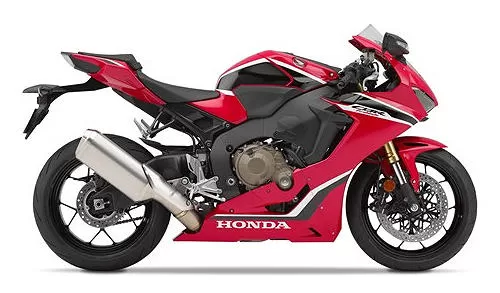
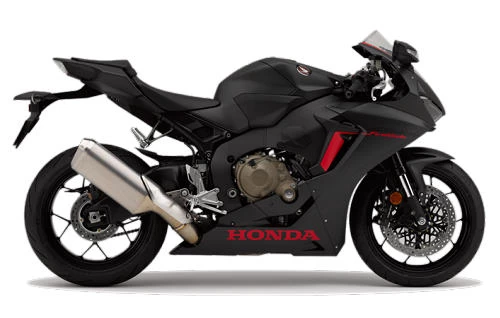
the threat is obvious. This new chapter of the Honda CBR 1000 RR will be one of the most significant in the saga. The manufacturer has taken a serious look at the design to make it a racy, intimidating motorcycle with a face to match. The 2017 Fireblade seems tucked into its shoulders, taut with hatred and at the height of expectation to bite down hard. It has the feel of a wild beast, a stealthy machine and a battle frigate. Compared to the previous generation, it's as if the engineers had trimmed the fat, leaving only the nerves on a layer of muscle. The fairing is cleanly cut to highlight the frame's substantial flanks. The frowned-up look houses all-LED lighting.
The design also marks the end of the period when the engine cowling stood apart. Henceforth, the dress is long and slender, and as on other machines, we note the return of a muffler located along the rear wheel.

Not for style's sake. With anti-pollution standards becoming ever more draconian, space is needed to accommodate catalytic converters, so that breath can escape without holding back performance. This is one of the key points on which the CBR 1000 had to work hard. Yesterday, its 4-cylinder spat out 181 hp, while the competition set their sights on the 200 hp frontier. A gulf of difference.
A heresy for a manufacturer that has racked up an impressive number of victories in competitions of all kinds. So the engine-makers got back to work. With a simple equation in mind: how to find more horsepower without developing an entirely new block. The solution lies in optimizing everything possible. First, the compression ratio was increased from 12.3 to 13:1. Then, the moving parts - crankshaft, timing and transmission - were made from better materials than the previous block. Pistons, piston rings, valve timing and valve lift are all revised, while weight is drastically reduced. The ignition housing is made of magnesium and the clutch housing of aluminum. Honda has even gone so far as to reduce the weight of screws, cooling system pipes and clamps.
As a result, the unchanged 999 cm3 gains a good 11 extra horsepower. Honda's hypersport now boasts 192 hp at 13,000 rpm, with maximum torque unchanged at 11.6 mkg. However, these values are obtained at higher engine speeds than before.
Power fans will be critical: a big wait, a big redesign, and in the end, the 2017 CBR 1000 RR doesn't join the "200" club.
brand new and already dumped? Not so sure. Honda has always preferred the best compromise over pure power. And it's not just watts that count. While the Fireblade is more powerful than its predecessor, it is also much lighter. At 15 kilos lighter, it weighs less than 200 units. Take a look at the power-to-weight ratio, and you'll get a better idea of the evolution. With a 14% improvement, the difference in performance represents a real leap forward, settling at 1.02. With this ratio, there are now only two competitors who can claim better: the Yamaha R1 and the Ducati 1299 Panigale.
already, the playing field has shifted. But how did Honda gain so much weight? The priority was to get rid of its in-house ABS, which was as light as an anvil. By switching to a Bosch system, we've already saved at least 9 kilos. Next, the exhaust. The titanium silencer saves 2.8 kilos. On the engine side, with the aforementioned improvements + a radiator that's 100 grams lighter and more compact, another 2 kilos are saved. Where else is there mass? The frame! Thinner walls, that's 300 grams; for the swingarm, ditto; a new, stiffer and lighter rear buckle, that's 600 grams; and for the Tokico radial calipers, we're going to find 150 grams; new rims to shed another 100 grams. And there you have it, our 15 kilos.
"Light is right. I never tire of quoting Colin Chapman's motto. But in today's world of hypersports, that's no longer enough. Multiple controls are needed to channel power and optimize dynamics. Until now, with the exception of PGM-DSFI fuel injection, the CBR has been the most electronically stripped-down model on the market. The situation is changing, with a massive ingestion of chips and sensors. Mind you, we're moving from the desert to Las Vegas between two generations of Fireblade.

Okay, Honda has fired its ABS to install a Bosch, but that's not all. There's also the IMU box, capable of analyzing the motorcycle's movements on 5 axes - the manufacturer apparently didn't see fit to equip itself with 6 axes like some of its rivals. As a result, the Fireblade's braking is greatly optimized: you can press down like a pig without the rear wheel lifting off the ground, and avoid a spill with a system that modulates braking force according to the angle taken.
Then there's full control for greater engine and traction efficiency. A ride-by-wire throttle and APS throttle position sensor improve response and sensitivity to the right hand. Power is then delivered via a Power Selector offering 3 different settings: 1 releases all the gniak in all gears; 2 moderates the potato in each gear to offer a certain smoothness; 3 moderates to the maximum for safety.
Last but not least, the CBR 1000 is equipped with traction control, which Honda calls "HSTC torque control". Using ABS sensors, the system intervenes if it detects rear-wheel acceleration or front-wheel deceleration. If this is the case, the system reduces engine power. It can be set to 9 positions and deactivated as required.
Another intervention technique, this time for deceleration. The rider can intervene on engine braking using the SEB (that's good). Adjustable on 3 levels, it "holds" the engine on 1, relieves it more on 2, and even more on 3.
An Up&Down shifter is also included, but only as an option on the Fireblade. To get it as standard, you'll have to go for the more advanced SP or SP2 versions.
active ABS, Ride-by-Wire, Traction Control, engine braking, anti-wheeling, 3 engine maps - the CBR has it all. And to make all this easier to manage, the rider can choose between 3 riding modes, called RMSS.
It's all on the dashboard. All-new, it consigns the previous LCD block with its multiple information displays to the status of a pleasant memory. Here, a color TFT screen adapts to ambient light and offers 3 display modes. City" mode for access to RMSS sub-modes, "Track" mode for additional information (lap times, laps completed, and difference from the best lap), and "Track" mode for additional information (lap times, laps completed, and difference from the best lap).the "Maintenance" mode displays a digital rev counter, gear engaged, throttle opening, engine temperature and battery voltage.
let's take a closer look at the "City" mode to see how the RMSS accommodates the various riding aids. The CBR 1000 RR can be controlled according to the "Track", "Pleasure" and "City" rules. The names overlap, but you'll get the idea.
In "Track" mode, all the power is there, with linear acceleration and minimal intervention of traction control and engine braking;
In "Pleasure" mode, the system models power on the first 3 gears, with little traction control and more consistent engine braking:
In "City" mode, the driver is entitled to an average increase in power on the first 4 gears and a strong intervention on traction control and engine braking.
These 3 modes may not satisfy. Fortunately, Honda has thought of everything. In addition, there are 2 "User" modes, allowing you to create your own combinations of settings and configure each level of intervention to your liking. All this is controlled from the handlebars via the left-hand commodo.
let's return to this screen for a moment, to discover what it can display. While many still appreciate the needles of yesteryear, we can't ignore the digital display. You can now see engine speed, gear engaged, water temperature, distance travelled, as well as 2 trip meters, instantaneous or average fuel consumption, fuel consumption on A or B trips, average speed and time elapsed since ignition, the amount of fuel remaining after the warning light has gone out, and so on. fuel remaining after the reserve light has come on, distance remaining in reserve, gearshift settings, throttle opening angle, battery voltage, date or predefined text. You can also see the speed and, incidentally, the time. There are also a few lights around, for the indicators, shiflight, ABS, Traction Control, Neutral and engine oil. Phew!!!

Heavily enriched with electronics, the Fireblade couldn't do without technical fundamentals. A silicon "Maverick Top Gun" won't make you go any faster if the bike's chassis is too weak. Not so with the big CBR, praised in every generation for the quality and consistency of its chassis.
With the exception of thinner sidewalls, the frame retains the same aluminum structure and geometry, but is 10% more torsionally flexible, which reduces inertia. On the other hand, the swingarm is stronger in this respect.
As for suspension, Showa is at it again. The inverted fork is still a 43 mm BPF, but revised for softer damping. At the rear, there's no change to the BFRC monoshock, with twin-tube technology for greater progressiveness and consistency between rebound and compression phases. Each component is fully adjustable. For this major overhaul, we would have liked to see the new BFFF fork with separate cartridges, as on the ZX-10R and GSX-R 1000 R, for even greater efficiency.
The steering damper remains the HESD electronic element. For something better, or even better, look (again) at the SP editions, with Öhlins suspension and Brembo brakes.
And the brakes on the standard CBR? Classic and efficient: Tokico (lighter) 4-piston radials with new, higher-performance pads. For the rear, a single-piston caliper.
25 years after its first appearance, the Fireblade is back among the best in the segment. The aura of Tourit Trophy victories was no longer enough. The 2017 Honda CBR 1000 RR is more powerful, lighter and better equipped with electronics, and can now challenge the best hypersports bikes on the market. All the while, it displays its new philosophy, "Next Stage Total Control", the continuation of the "Total Control" dear to Tadao Baba, the designer of the first 900 CBR in 1992.
M.B - Manufacturer's photos
by Greg

 Share
Share
Key facts Honda CBR 1000 RR Fireblade (2017) : What you need to know before you buy
Highlights
- Excellent power-to-weight ratio
- Sharper design
- Strong electronic package
Weak points
- No shifter as standard
- Lagging behind in pure power
Prices
| Basic version | |
|---|---|
 France France |
17,999€
|


Performance
- Max speed : approximately 300 km/h (186.40 mph)
Specifications Honda CBR 1000 RR Fireblade 2017
- Chassis
- Frame : double aluminum beam
- Fuel capacity : 16 liters (4.23 US gallons)
- Seat height : 832 mm (32.76 in)
- Length : 2,065 mm (81.30 in)
- Width : 720 mm (28.35 in)
- Min height : 1,125 mm (44.29 in)
- Wheelbase : 1,405 mm (55.31 in)
- Weight when fully loaded : 196 kg (432 lb)
- Front axle
- Reverse telehydraulic fork Ø 43 mm, Wheel travel : 120 mm (4.72 in)
- Braking 2 discs Ø 320 mm (12.6 in), radial mounting, 4-piston caliper
- Front tire : 120 / 70 - 17 → Order this type of tire
- Pressure : 2.5 bar
- Transmission
- 6 stage gearbox
- Secondary by chain
- Rear axle
- Mono-damper, Wheel travel : 138 mm (5.43 in)
- Braking 1 disc, single-piston caliper
- Rear tire : 190 / 50 - 17 → Order this type of tire
- Pressure : 2.9 bar
- Motor
- 4 cylinders online , 4 strokes
- Injection Ø 48 mm
- Cooling system : liquid
- 2 ACT
- 4 valves per cylinder
- 999 cc
- 192 ch (189.30 hp) to 13,000 rpm
- 11.60 mkg to 11,000 rpm
- Power-to-weight ratio : approximately 0.96 kg/ch
- Weight / torque ratio : approximately 15.68 kg/mkg
- Compression : 13 : 1
- Standard equipment
- Brake assist : ABS as standard
- Practical information





Models
2019
2018
2017


Compare the CBR 1000 RR Fireblade to its competitors
Acceleration
Fuel consumption
Range
Torque
Power
Power-to-Weight ratio
Torque-to-Weight ratio
Speed
FAQ Your frequently asked questions about the CBR 1000 RR Fireblade 2017
- What is the power of the CBR 1000 RR Fireblade 2017?
-
The CBR 1000 RR Fireblade 2017 develops a power of 192 ch (189.30 hp)
- What is the torque of the CBR 1000 RR Fireblade 2017?
-
The maximum torque of the CBR 1000 RR Fireblade 2017 is 11.60 mkg to 11,000 rpm.
- What is the maximum speed of the CBR 1000 RR Fireblade 2017?
-
The CBR 1000 RR Fireblade 2017 is capable of reaching a top speed of approximately 300 km/h (186.40 mph) on the track.
- What is the weight of the CBR 1000 RR Fireblade 2017?
-
The CBR 1000 RR Fireblade 2017 has a a weight when fully loaded of 196 kg (432 lb).
- QWhat is the seat height of the CBR 1000 RR Fireblade 2017?
-
To ensure good accessibility, the CBR 1000 RR Fireblade 2017 offers a minimum seat height of 832 mm (32.76 in).
- What is the price of the CBR 1000 RR Fireblade 2017?
-
The price of the CBR 1000 RR Fireblade 2017 is 17,999€ in France
News
-
New motorcycle products for 2026

-
Bridgestone announces the RS12, its new road-race weapon.
-
Yamaha Race Like A Girl: Natalia Rivera in episode 5.
-
Bridgestone presents the Battlax V03, its new slick tire.
-
With Sartoria Meccanica, MV-Agusta aims to go beyond premium.
-
Upgrading the entire Bonneville family for 2026.
-
Metzeler unveils three new tires at EICMA.
-
World Superbike celebrates 70 years of Yamaha.
-
Exceptional: some thirty new Triumphs in 2026.
-
40.000 bikers for the Royal-Enfield "One Ride" 2025.


Bikers' reviews Leave a review - 6 reviews
Fuel consumption 6.2 on average. Rating : 5/5 Respond to Myla
I must have stumbled across an excellent series, because my 2018 CBR 1000 RR gets 201hp on the dyno. What happiness!
Just so you know, I'm coming from a 2015 S1000RR. So well placed to compare. Certainly lesser equipment no cruise control, heated handle, shifter (I added it!)
In short, I'm happy with it and aesthetically it rocks :D Rating : 5/5 Respond to Marco
A bike poorly judged by the specialist press, as is the case with the CBRs, and yet .... Rating : 5/5 Respond to Nico