

For the vast majority of European motorcyclists, the idea of riding on the left is at best a curiosity, at worst a nightmare. Accustomed to riding "on the right", crossing to the other side of the road can seem counter-intuitive and dangerous. Yet for millions of enthusiasts around the world, it's the norm. So what's really different for us bikers when we cross the Channel or venture into one of the many countries where we ride on the left?
Riding on the left: what are the fundamental differences?
The main and most obvious difference is the direction of traffic. Instead of driving on the right-hand side of the road, you drive on the left. This changes everything: traffic circles are taken clockwise (the other way round in our country), right-hand priorities no longer exist and overtaking is done... from the right!
For motorcyclists, these changes are all the more important as we are more exposed. The habits acquired after years of practice are deeply ingrained. The angle at which you approach a bend, your position in your lane, how you read signs... everything has to be reviewed.
Motorcycles adapted or not?
Unlike cars, whose cockpit and controls are totally inverted (steering wheel, pedals), motorcycles are almost universal in design. Whether you're in France or Japan, the throttle is on the right, the clutch on the left, the front brake on the right handlebar, and foot controls (gear selector on the left, rear brake on the right) are standardized. This is a huge advantage for the travelling motorcyclist: his bike doesn't need to be "adapted".
However, there is one small difference, often overlooked, which concerns the headlight optics. The light beam of a motorcycle headlight is slightly offset to illuminate the side of the road where pedestrians, bicycles and signs are located. On a right-hand-drive motorcycle, the beam is directed to the right. On a left-hand drive motorcycle, it's to the left. When traveling, this can be a nuisance at night, and may even be illegal in some countries. Adaptation kits or stickers are available to correct this.
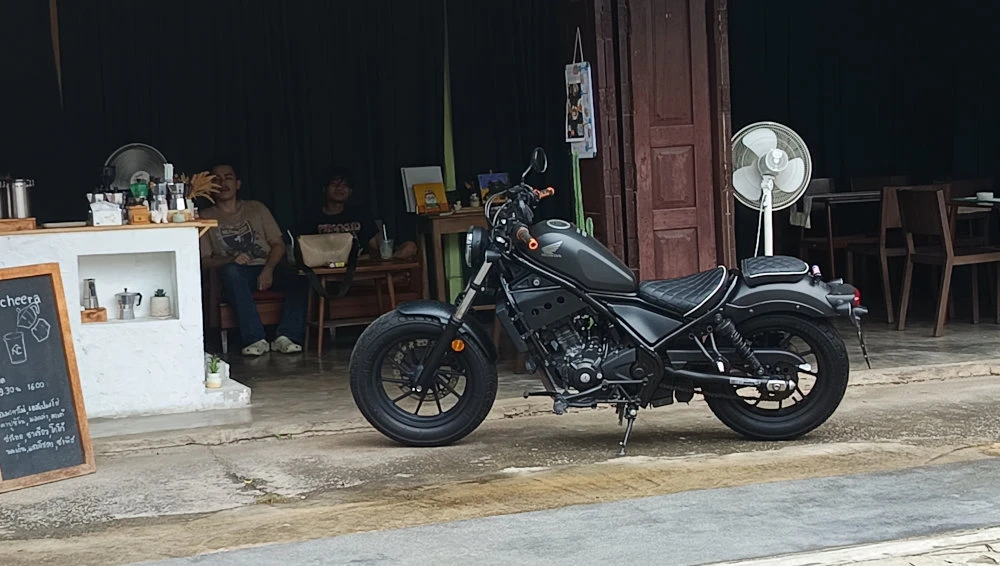
The countries of left-hand drive: a history of the British Empire
Left-hand drive is above all a historical legacy, often linked to the former British Empire. The UK is the best-known example, but Australia, New Zealand, South Africa, India, Ireland, Pakistan, Japan, Malta, Cyprus and Hong Kong are also part of this heritage. In all, nearly 70 countries and territories drive on the left, representing around a third of the world's population!
The practice dates back to medieval times. Knights, most of whom were right-handed, preferred to ride on the left so as to draw their swords with the right hand in the event of a confrontation. The arrival of cars simply formalized this practice in the countries concerned. In France, on the other hand, Napoleon imposed right-handed driving on conquered territories, a habit that spread throughout much of Europe.
Risks for the biker: anticipate and stay alert
For a motorcyclist accustomed to riding on the right, switching to left-hand drive is a challenge that demands increased concentration. The greatest risk is that of automatism. In moments of stress or fatigue, or simply by reflex, we tend to instinctively position ourselves on the right. This is particularly true when leaving a parking lot, returning to the road after a break, or on a small country road with no other vehicles.
Another major risk is traffic circles, where the habit of driving anticlockwise can lead to a wrong turn. Similarly, overtaking and reading intersections are situations where vigilance is essential. The most common and dangerous mistake for motorcyclists is to look the wrong way when entering a lane. The right reflex: look right first!
In conclusion, traveling with your motorcycle in a country where driving is on the left is an enriching experience, but one that cannot be improvised. The best solution is to start by riding carefully, following other vehicles if possible, and gradually getting used to this new direction of traffic. As motorcycling is one of the best ways to discover new horizons, it's well worth the effort!

 Share
Share
 helmet
 Gloves
 jacket
 braking
 Chain kit
 Oils
Oils Find an intercom
 Parts
Parts Luggage
 Tires
Tires


Bikers' reviews