
Motorcycle specifications Triumph900 Trident 1991


presentation of the 900 Trident 1991
At the end of 1990, Triumph rose like a phoenix from the ashes. After almost a decade's absence (the last new model, the TSX 750, dated back to 1982), the English brand launched a complete range, marked by a policy of extreme rationalization which, in retrospect, proved highly effective. The first models took on historic names: Trident, Daytona, Trophy. And if these models have their own personality, 90% of the parts are common.
the Trident, as a roadster, occupies the entry-level range and is equipped with the 3-cylinder engine that was soon to become emblematic. Available in 750cc and 900cc versions, it shares its chassis (with a few exceptions) with the whole range, and its engine with certain models. Thus, the 3-cylinder 750cc is also used for the 750 Daytona, and the 900 for the "little" Trophy.
As Moto-Guzzi has often done, Triumph's first approach to engine design was to focus on stroke rather than cylinder bore (and also on the number of cylinders): the 1000 and 1200cc are 750 and 900cc engines to which a 4th cylinder has been added). While this technique may seem more difficult to implement, it has the advantage of being more economical for mass production. In this way, the manufacturer can use the same high-performance engines. On the other hand, a tuner will find it easier to play with the bore, a technique that's easier to use with artisanal means. In the end, the 900cc is a 750cc that would have gained 10mm in stroke.
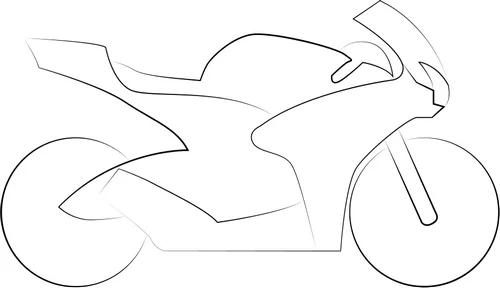

In the end, this small difference proves to be quite significant. For while the chassis is 100% the same, the engine characteristics are quite distinct. The 900 gains three times nothing in maximum power, but this power is present over a much wider rpm range. Torque is also quite noticeable. The 3-cylinder engine is transformed. The 900 is very well rounded and punchy, while the 750 is much easier to drive at higher revs.
the chassis is relatively neutral, with good suspension and braking. Once again, these qualities are the result of Triumph's policy. Frame, suspension and brakes are identical to the more luxurious models (with the exception of the Daytona 1000, which gains a more advanced braking system). The Tridents are economical Triumphs, but not discount models. The only criticism comes from the turning radius. The first Triumphs were fitted with a straight water radiator, which limited the turning radius of the first vintages. This problem was solved on other models by the adoption of a curved radiator, but not on the basic Trident.

the Trident range lasted until 1998, when it was withdrawn from the manufacturer's catalog, and was joined by its smaller sisters, Speed Triple, Adventurer, Thunderbird and Sprint. Admittedly, the Tridents no longer corresponded to Triumph's upmarket image. Nevertheless, they had nothing to be ashamed of in terms of quality and history.
Tanthallas - Photos: Manufacturer
by Greg

 Share
Share
Key facts Triumph 900 Trident (1991) : What you need to know before you buy
Highlights
- Engine Character
- Finition
Weak points
- Turn radius
- Protection
Prices
| Basic version | |
|---|---|
 France France |
8,535€
|
Model sold in 1991

Performance
- Max speed : approximately 215 km/h (133.60 mph)
- 0-100 km/h acceleration : 3.60 s
- Average fuel consumption : 7.50 liters/100km (0.31 mpg)
-
Estimated range
: 333 km (207 miles)
Calculated range until tank is empty, not verified.
Specifications Triumph 900 Trident 1991
- Chassis
- Frame : single-beam steel
- Fuel capacity : 25 liters (6.60 US gallons)
- Seat height : 775 mm (30.51 in)
- Length : 2,152 mm (84.72 in)
- Width : 760 mm (29.92 in)
- Min height : 1,265 mm (49.80 in)
- Wheelbase : 1,490 mm (58.66 in)
- Dry weight : 212 kg (467 lb)
- Weight when fully loaded : 249 kg (549 lb)
- Front axle
- Telehydraulic fork Ø 43 mm, Wheel travel : 150 mm (5.91 in)
- Braking 2 discs Ø 296 mm (11.65 in), 2-piston caliper
- Front tire : 120 / 70 - 17 → Order this type of tire
- Transmission
- 6 stage gearbox
- Secondary by chain
- Rear axle
- Mono-damper, Wheel travel : 126 mm (4.96 in)
- Braking 1 disc Ø 255 mm (10.04 in), 2-piston caliper
- Rear tire : 160 / 60 - 17 → Order this type of tire
- Motor
- 3 cylinders online , 4 strokes
- 3 carburetors Ø 36 mm
- Cooling system : liquid
- 2 ACT
- 4 valves per cylinder
- 885 cc
- 98 ch (96.60 hp) to 9,500 rpm
- 7.60 mkg to 6,500 rpm
- Power-to-weight ratio : 2.19 kg/ch
- Weight / torque ratio : 27.89 kg/mkg
- Compression : 10.6 : 1
- Practical information





Models
1991
Used
Compare the 900 Trident to its competitors
FAQ Your frequently asked questions about the 900 Trident 1991
- What is the power of the 900 Trident 1991?
-
The 900 Trident 1991 develops a power of 98 ch (96.60 hp)
- What is the torque of the 900 Trident 1991?
-
The maximum torque of the 900 Trident 1991 is 7.60 mkg to 6,500 rpm.
- What is the maximum speed of the 900 Trident 1991?
-
The 900 Trident 1991 is capable of reaching a top speed of approximately 215 km/h (133.60 mph) on the track.
- What is the weight of the 900 Trident 1991?
-
The 900 Trident 1991 has a a dry weight of 212 kg (467 lb), a weight when fully loaded of 249 kg (549 lb).
- What is the fuel consumption of the 900 Trident 1991?
-
Average fuel consumption is estimated at 7.50 l/100km (0.31 mpg) according to the WMTC cycle.
- QWhat is the seat height of the 900 Trident 1991?
-
To ensure good accessibility, the 900 Trident 1991 offers a minimum seat height of 775 mm (30.51 in).
- What is the price of the 900 Trident 1991?
-
The price of the 900 Trident 1991 is 8,535€ in France
News
-
New motorcycle products for 2026

-
Bridgestone announces the RS12, its new road-race weapon.
-
Yamaha Race Like A Girl: Natalia Rivera in episode 5.
-
Bridgestone presents the Battlax V03, its new slick tire.
-
With Sartoria Meccanica, MV-Agusta aims to go beyond premium.
-
Upgrading the entire Bonneville family for 2026.
-
Metzeler unveils three new tires at EICMA.
-
World Superbike celebrates 70 years of Yamaha.
-
Exceptional: some thirty new Triumphs in 2026.
-
40.000 bikers for the Royal-Enfield "One Ride" 2025.



Bikers' reviews Leave a review