
Motorcycle specifications YamahaR9 900 2025 The ideal sportswoman?


presentation of the R9 900 2025
The sportbike market is moribund, not to say mortifying... Competition has killed off this category on the road, and many manufacturers have withdrawn their spearheads from the market, notably Yamaha, which no longer markets the R1 in a homologated version, but only a model for the track. It's a sad state of affairs, since the biker who's always ready to wear a wetsuit finds himself without a solution, or at least a slightly watered-down one.
TheAprilia RS 660 is a super sports bike, but for some, its displacement means it lacks boot space. The R7 rekindled the flame at Yamaha, but 73hp may still be a little short ... So what to do? Well, graft the fabulous three-cylinder CP3 to the tuning forks in a sporty chassis and sprinkle in a few electronic assistants. The recipe for new-found happiness?
Deltabox: Yamaha DNA
This brings us back to the 80's, when Yamaha engineers first used an aluminum Deltabox frame for the TZR 250. From then on, the Japanese never ceased their efforts to perfect this technology, and it has succeeded in every sports bike born since the name Deltabox first appeared. TheYZF-R 750 helped popularize the name.
For the R9, Yamaha started from scratch to give the CP3 engine an unprecedented setting. The aim for the sports bike (compared to the MT-09) was to offer greater rigidity in all three directions: longitudinal, lateral and torsional. Engineers used different frame thicknesses in various places, as well as holes in the frame, to achieve the desired result. As a result, the frame weighs just 9.7 kg, making it the lightest chassis ever developed by Yamaha for a Supersport model. Note that Yamaha is not talking Superbike, despite the displacement. In running order with full tanks, the R9 weighs just 195 kg! In this sense, it's reminiscent of another now-defunct ballerina, the Triumph 675 Daytona, which had much in common with the Yamaha: a featherweight and a fiery three-cylinder to shake its rider.
Front and rear suspension are by KYB, designed specifically for the machine, and Yamaha inevitably slips in the marketing argument that they draw their genesis from work done for the R1 GYTR and R1 RACE 2025.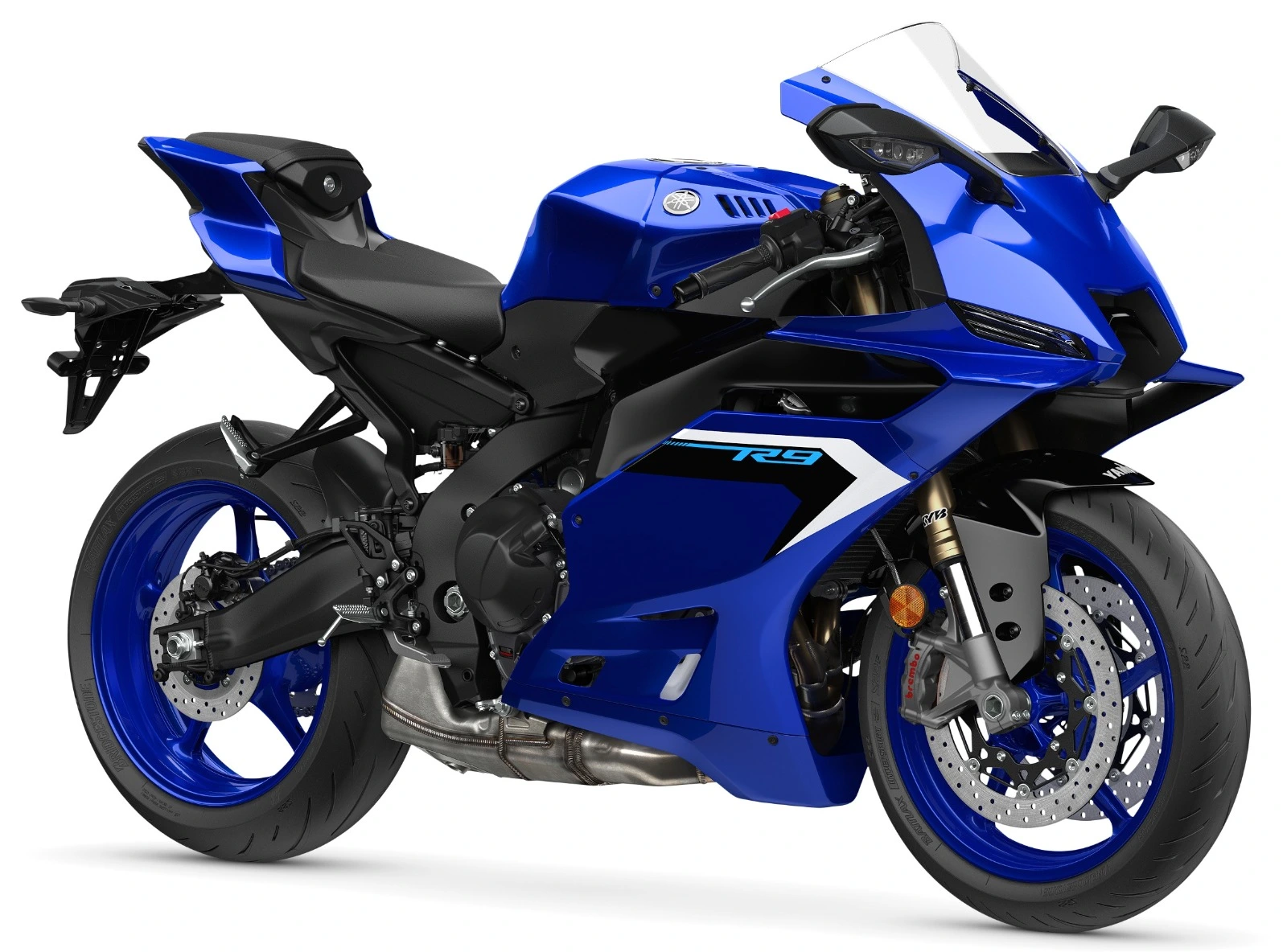
With an eye for detail, Yamaha has chosen a Kashima coating that darkens the gold/bronze color of the fork crowns for the machine's sporty look. The shock absorber is adjustable for preload, rebound and compression to suit your riding style, whether on the road or the track.
In any case, under extreme conditions, the R9's braking system is very solid. The sports car is equipped with Brembo Stylema monobloc calipers. These calipers are fitted with four 30 mm-diameter pistons. Inherited from the track, their shape accentuates air flow for improved cooling. They bite into 320 mm discs. And to maintain constant lever pressure even under repeated effort, Yamaha has used aviation brake hoses. Braking feel is also enhanced by a radial master cylinder.
Yamaha has also selected Bridgestone's Battlax Hypersport RS11 tires for maximum performance in all conditions.
Engine ... like the MT-09
Now that's a surprise! There will be pros and cons. The cons will be those who take offense at the fact that the R9 is no more powerful than the MT-09. For the R9, Yamaha has adopted the CP3 three-cylinder, 890 cm³, liquid-cooled, fuel-injected, DOHC engine from its roadster. Values are as follows: 119 hp (87.5 kW) at 10,000 rpm and 93 Nm (9.5 mkg) of torque at 7,000 rpm. Yamaha has optimized the feed, ignition and final drive.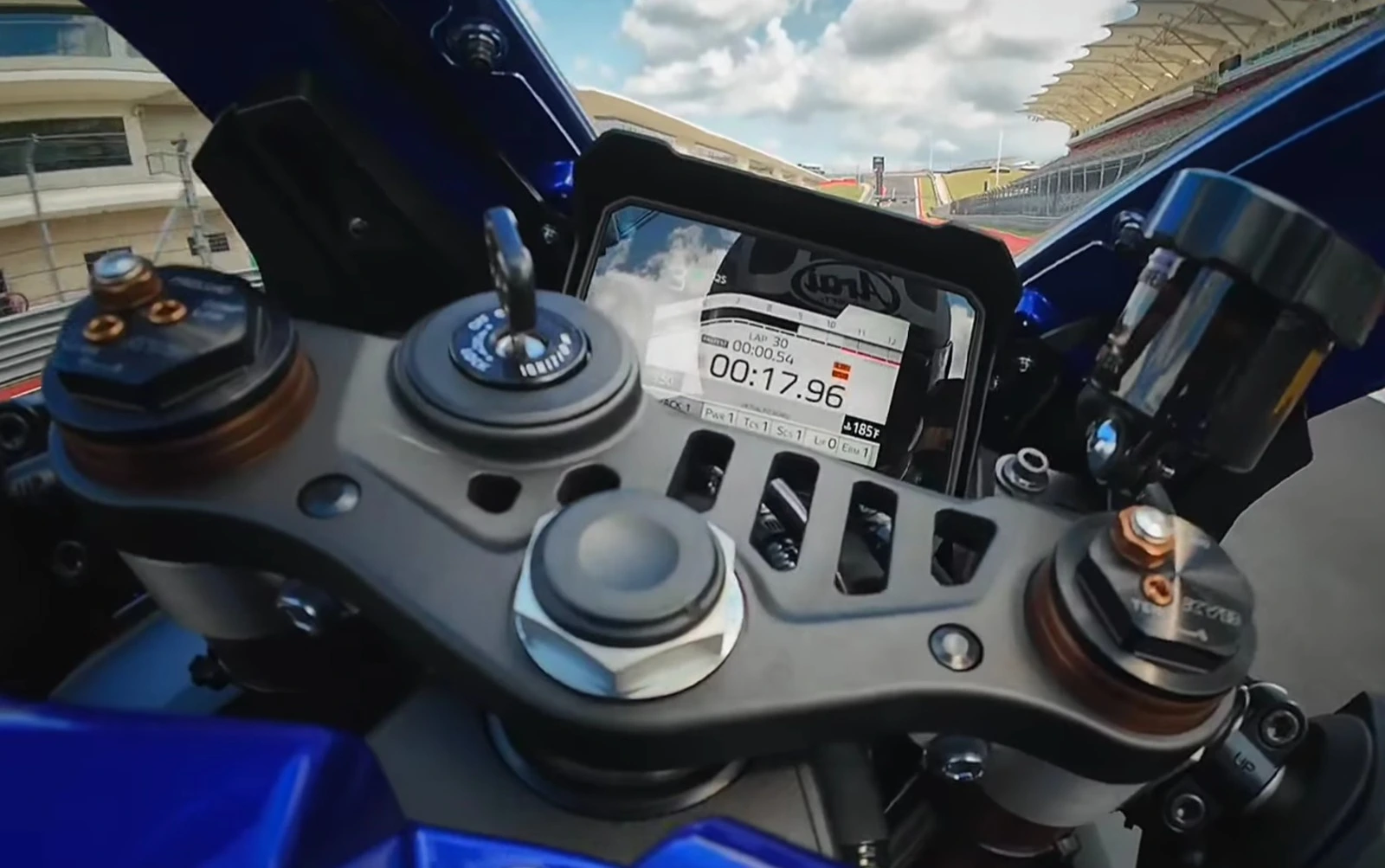
To flatter the rider, Yamaha claims to have paid particular attention to the three-cylinder's roar, trying to amplify its vocals as much as possible within homologation standards.
Electronics: what it takes to stay in control
Here's an interesting section. How do you make a sports car accessible? Accessibility is about price, but it's also about a machine that provides its rider with aids that are as easy to use as they are to adjust. The big Superbikes are becoming gas factories in this respect, and you need a real instruction manual to be able to enter all the configuration menus. The R9 takes us back to basics, with a few riding modes, TC traction control, SCS slip control and BC braking intensity control, in addition to ABS of course.
To achieve this, the Japanese automaker has chosen a six-axis IMU multidirectional control unit that also works on an angle. The level of intervention of the aids should then be quite fine.
Yamaha offers three pre-configured Ride Control modes from the factory: Sport, Street and Rain. R9 owners have the option of adding two personal modes and four customizable track modes (ideal for regular track riders). Four power modes are available to adjust the character of the engine and the way it delivers its power. Launch Control and anti-wheeling are also available. Engine braking is also adjustable on two levels, and the torque feedback limiter prevents untimely wheel lock-up when downshifting.
Shifting gears can be done on the fly, thanks to the up and down shifter. Those who get dizzy on long freeway journeys will be delighted to learn that the bike is equipped with cruise control, effective from 40 km/h.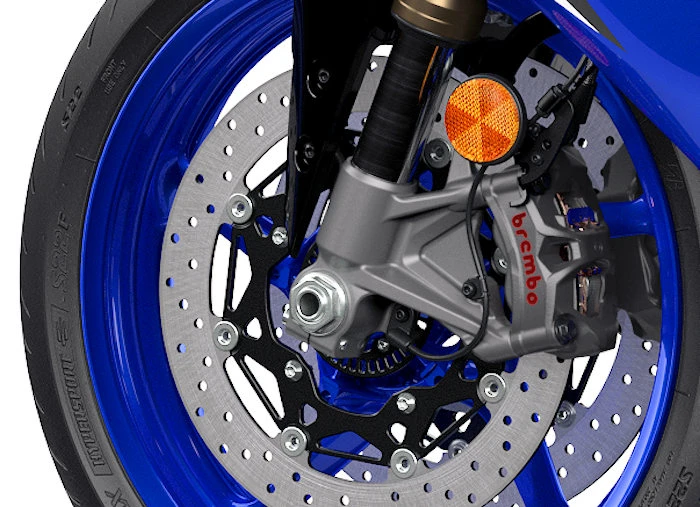
The essential: how beautiful you are!
Style is always a matter of personal taste. Well, I love this R9! I fell in love with the last generation R6 and wasn't entirely convinced by the front end of the R7. Yamaha has found the right balance for the R9, even if we probably could have done without the fins on the fairing. Let's just say that R9 owners will be delighted to have a little something more than R7 owners. Yamaha justifies their presence by a 6-7% reduction in caber in a straight line, and when combined with the front spoiler placed under the M-shaped pipe, this effect is increased by around 10% in corners.
All in all, the R9 is taut as a crossbow with a fairly smooth appearance. The design forms a homogeneous whole, in contrast to the destructuring proposed by some competitors. It's clean, precise and uncluttered.
Bikers will also find themselves in a more radical position than the R7, with half-handlebars positioned under the fork crown. Yamaha must have played around with the opening angle of the bracelets, since the brand has nevertheless announced that the R9 will be more "welcoming" than the latest R6. Seat height is 830 mm.
The attractive fairing conceals a 5-inch TFT color display. It can be customized according to four themes, while a track mode displays information such as a stopwatch, useful for keeping track of lap times. The R9's screen can be connected to a smartphone via Yamaha's MyRide application. A fully integrated navigation system is also available via the Garmin StreetCross app. Users can display a variety of information and images on the screen, including phone calls, SMS messages and weather updates.
As an option, R9 owners can take out a subscription to the Y-TRAC application. This application can be used to analyze data during track use. 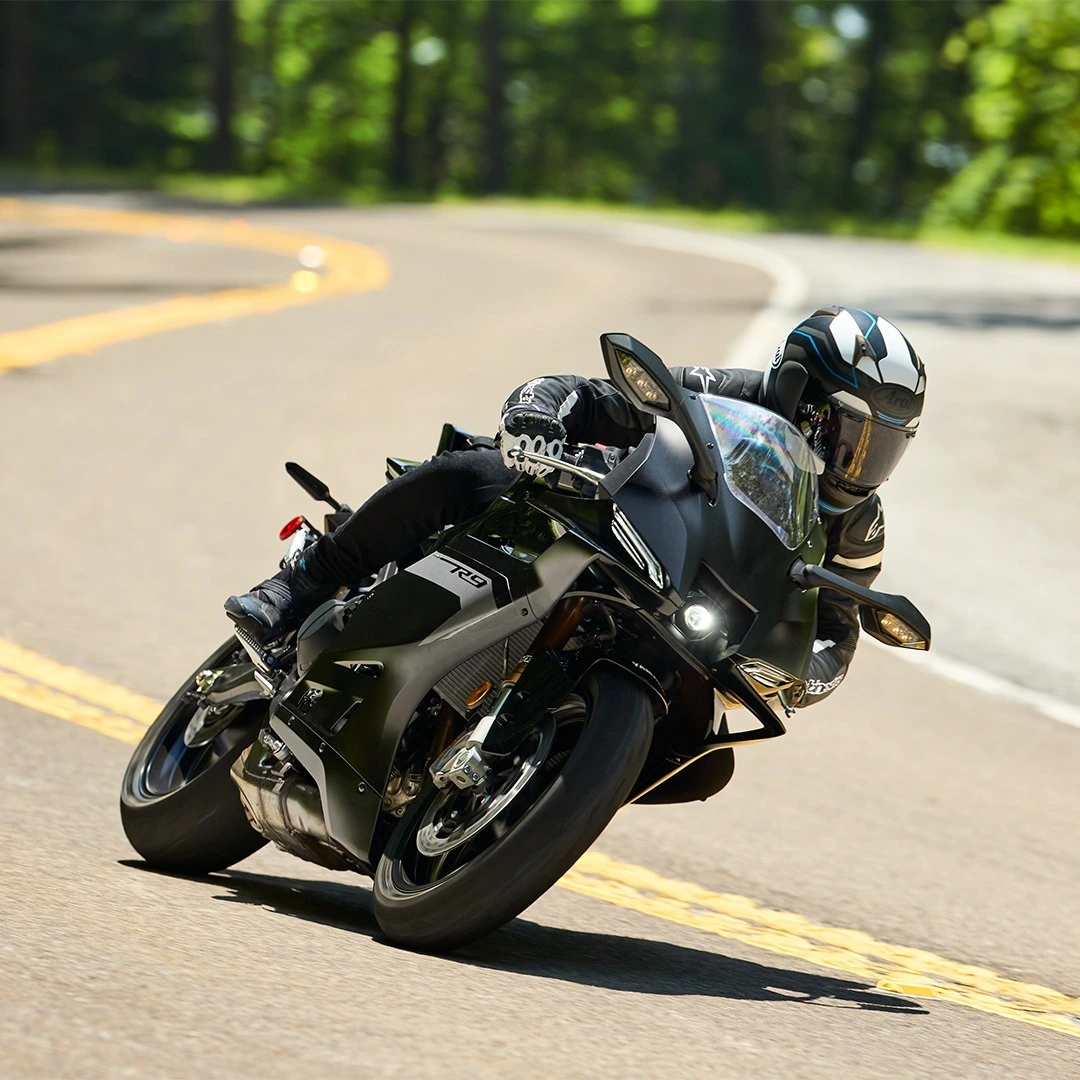
The R9 2025 is available in Icon Blue and Tech Black, and will be on display at your favorite retailer in March 2025. Pricing is currently unknown in Europe, but has already been announced in the US at $12,499. On the Old Continent, we can expect a price of between 13,000 and 13,500 Euros, which, given the current economic climate and the level of performance on offer, is very pleasing indeed!
Indeed, to see an everyday sports car back on the road had almost become wishful thinking. For the beauty of the gesture and the intention alone, Yamaha is to be congratulated. The response of buyers will be crucial in ensuring the model's longevity, and perhaps encouraging the competition to follow suit.
The R9 will also feature a whole catalog of options/parts for customizing the machine, including an Akrapovic line with titanium muffler.
Technical highlights :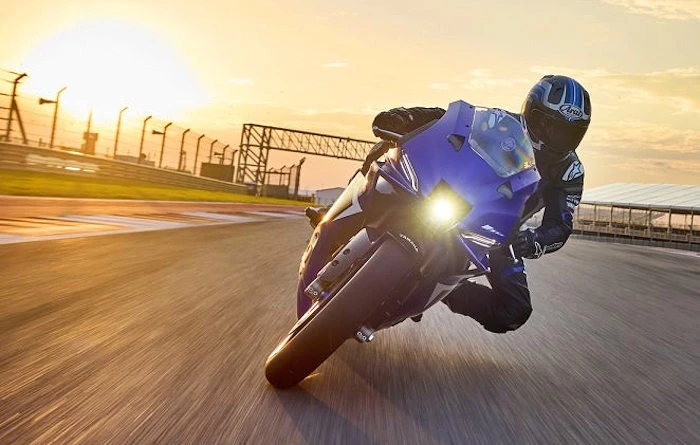
- Deltabox aluminum frame, the lightest ever used on a Yamaha Supersport model
- Brembo front master cylinder and Stylema calipers combined with 320 mm brake discs
- Aggressive aerodynamic fairing with fins
- New-generation, fully adjustable 43 mm KYB forks
- 6-axis IMU developed for R1
- Tilt-sensitive steering aids, including traction control (TCS), glide control (SCS) and braking control (BC)
- Power modes (PWR), start control (LC), pitch control (LIF)
- Third-generation Quick Shift System (QSS)
- Engine brake management (EBM) and rear wheel slip control (BSR)
- Rear ABS deactivation mode
- Yamaha Ride Control (YRC) with customizable settings
- CCU for loading and downloading motorcycle settings
- 5" color TFT display with connectivity features
- Riding data recording and analysis with the Y-TRAC application.
- Cruise control and speed limiter
- Strap handlebars
- Bridgestone Battlax Hypersport RS11 tires
- Cast aluminum wheels
- Adjustable levers
- Forged aluminum gear selector
Vincent Beaucousin - Manufacturer's photos
 Share
Share
Key facts Yamaha R9 900 (2025) : What you need to know before you buy
Prices
| Basic version | |
|---|---|
 France France |
13,999€
|
 United States United States |
$12,499
|
 Italy Italy |
13,749€
|
 Austria Austria |
14,899€
|
 Belgium Belgium |
13,799€
|
 Germany Germany |
13,699€
|
 Luxembour Luxembour |
13,399€
|
 Spain Spain |
13,499€
|
 Switzerland Switzerland |
13,990CH
|
 United Kingdom United Kingdom |
£12,250
|

Performance
- Max speed : over 240 km/h (149.10 mph)
Specifications Yamaha R9 900 2025
- Chassis
- Two-seater saddle
- Frame : aluminum perimeter
- Fuel capacity : 14 liters (3.70 US gallons)
- Oil capacity : 3.50 liters (0.92 US gallons)
- Seat height : 830 mm (32.68 in)
- Length : 2,070 mm (81.50 in)
- Width : 705 mm (27.76 in)
- Min height : 1,180 mm (46.46 in)
-
Min. ground clearance : 140 mm (5.51 in)
- Wheelbase : 1,420 mm (55.91 in)
- Weight when fully loaded : 195 kg (430 lb)
- Front axle
- Reverse telehydraulic fork Ø 43 mm, Wheel travel : 120 mm (4.72 in)
- Angle de chasse : 22.35 °
- Preload, compression and rebound adjustment
- Braking 2 Brembo discs Ø 320 mm (12.6 in), radial mounting, 4-piston caliper (Stylema monobloc)
- Front tire (Tubeless) : 120 / 70 - 17 → Order this type of tire
- Handlebars handlebars
- Transmission
- 6 stage gearbox , manual - shifter as standard
- Secondary by chain
- Rear axle
- Mono-damper, Wheel travel : 118 mm (4.65 in)
- Preload, compression and rebound adjustment
- Braking 1 disc Ø 220 mm (8.66 in), single-piston caliper
- Rear tire (Tubeless) : 180 / 55 - 17 → Order this type of tire
- Motor
- 3 cylinders online , 4 strokes
- Injection
- Cooling system : liquid
- 2 ACT
- 4 valves
- 889 cc
- 119 ch (117.40 hp) to 10,000 rpm
- 9.50 mkg (93 Nm) to 7,000 rpm
- Power-to-weight ratio : approximately 1.55 kg/ch
- Weight / torque ratio : approximately 19.2 kg/mkg
- Starting system : electric
- CO² emissions: 116 g/km
- Anti-pollution standard : Euro 5+
- Standard equipment
- Brake assist : ABS
- Number of riding modes : 9
- TFT Full-Colour screen size: 12.70 cm (5 inches)
- ABS Cornering
- Shifter
- Gear indicator
- Cruise control
- Launch Control
- Traction control
- ABS disconnectable
- Anti-wheeling control
- Forged rims
- Traction control
- Anti-slip clutch
- Inertial measurement system
- Engine-brake control
- Pit speed limiter
- Practical information





Models
2026


2025


Used


Compare the R9 900 to its competitors
Price
Acceleration
Fuel consumption
Range
Torque
Power
Power-to-Weight ratio
Torque-to-Weight ratio
Speed
CO² emissions
FAQ Your frequently asked questions about the R9 900 2025
- What is the power of the R9 900 2025?
-
The R9 900 2025 develops a power of 119 ch (117.40 hp)
- What is the torque of the R9 900 2025?
-
The maximum torque of the R9 900 2025 is 9.50 mkg (93 Nm) to 7,000 rpm.
- What is the maximum speed of the R9 900 2025?
-
The R9 900 2025 is capable of reaching a top speed of over 240 km/h (149.10 mph) on the track.
- What is the weight of the R9 900 2025?
-
The R9 900 2025 has a a weight when fully loaded of 195 kg (430 lb).
- QWhat is the seat height of the R9 900 2025?
-
To ensure good accessibility, the R9 900 2025 offers a minimum seat height of 830 mm (32.68 in).
- What is the price of the R9 900 2025?
-
The price of the R9 900 2025 is £12,250 in United Kingdom. It is displayed at $12,499 in the United States, at 13,399€ in Luxembour, at 13,499€ in Spain, at 13,699€ in Germany, at 13,749€ in Italy, at 13,799€ in Belgium, at 13,990CH in Switzerland, at 13,999€ in France and at 14,899€ in Austria.
- Is the R9 900 2025 approved for transporting a passenger?
-
Yes, this vehicle is equipped as standard for 2 people.
- What colors are available for the R9 900 2025?
-
For the 2025 model year, the R9 900 is available in several colors: blue and black.
News
-
New motorcycle products for 2026

-
Bridgestone announces the RS12, its new road-race weapon.
-
Yamaha Race Like A Girl: Natalia Rivera in episode 5.
-
Bridgestone presents the Battlax V03, its new slick tire.
-
With Sartoria Meccanica, MV-Agusta aims to go beyond premium.
-
Upgrading the entire Bonneville family for 2026.
-
Metzeler unveils three new tires at EICMA.
-
World Superbike celebrates 70 years of Yamaha.
-
Exceptional: some thirty new Triumphs in 2026.
-
40.000 bikers for the Royal-Enfield "One Ride" 2025.



Bikers' reviews Leave a review - 11 reviews
New prices are similar to used R6 prices. Rating : 5/5 Respond to Yabix
To tell the truth, I can't think of a single fault with it. We've got a novelty, well finished, well equipped as standard, with a sparkling engine that's recognized and reliable.
Now we need a driver to tame it to the limit.
Thank you motoplanete for this wonderful review. Rating : 5/5 Respond to DDD
Those who bought the Yamaha XSR900GP at the same price might be a bit upset ... Rating : 5/5 Respond to Alain81