
Motorcycle specifications YamahaFJR 1300 AS 2013 The road in semi-automatic mode


presentation of the FJR 1300 AS 2013
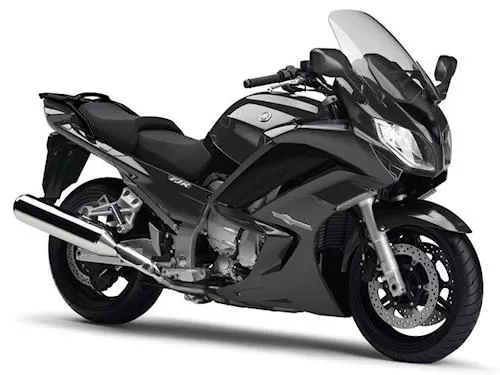
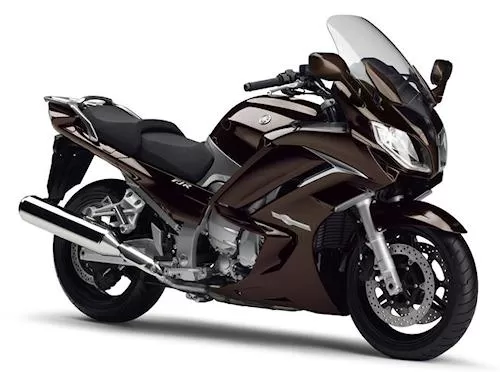
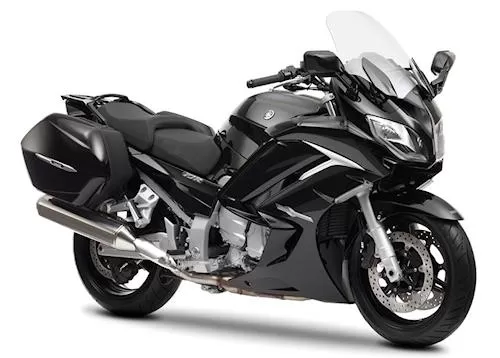
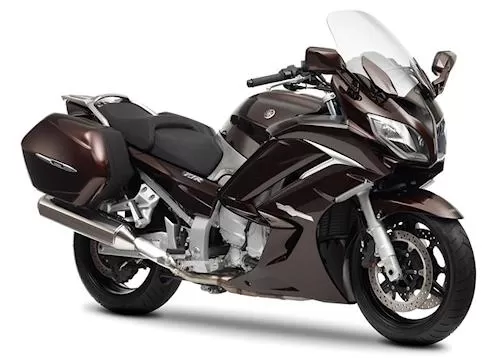
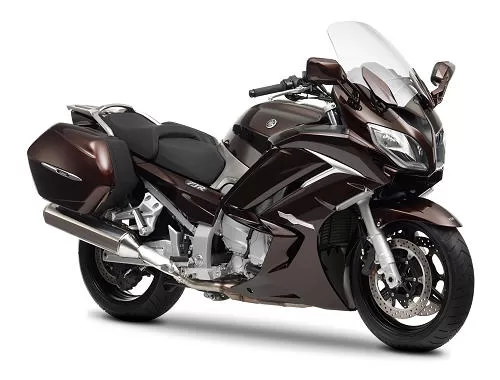
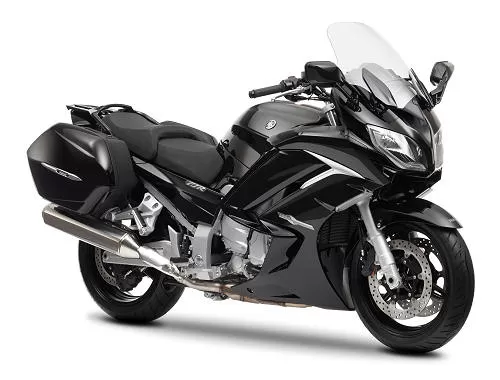
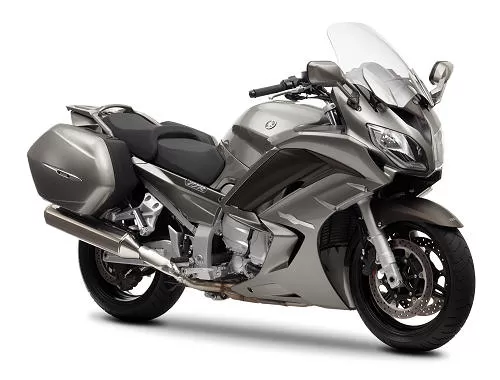
the FJR 1300 underwent a profound evolution in 2013. This "phase 3" boasts a generous dynamism that's downright pleasing to the eye. Its big-boy look is replaced by that of a pussycat; its sides have taken on a new identity while providing extra protection; its turn signal warts have disappeared in favor of rows of LEDs. Yamaha has elegantly achieved this restyling. While retaining its identity as a powerful, imposing vessel.
An ounce of mechanical retouching must accompany this silhouette. The FJR's already generous 4-cylinder engine receives a few mechanical upgrades and a major electronics package. The engine block now features ceramic-plated, linerless cylinders. The new system involves applying the treatment directly to the block alloy. The main benefit: better heat dissipation.
Redesigned throttle bodies, an improved exhaust system with half the number of catalytic converters required, a ride-by-wire YCC-T (Yamaha Chip Controlled Throttle) - these are just a few of the components that contribute to more progressive acceleration. As a bonus, a ladleful of extra power (2 hp and half a kg).
Prior to this third generation, the FJR was only equipped with ABS with combined braking, and a robotized gearbox for the AS version. Now it's catching up with silicon and software. For 2013, the FJR 1300 comes with disengageable traction control (TCS), cruise control, a choice of two maps (D-mode) and automatic suspension adjustment. Let's take a closer look:
- TCS: After the Super Ténéré and the R1, traction control arrives on the FJR. When the rear wheel begins to spin, the system instantly adjusts ignition timing, injection volume and throttle opening to maintain traction. The driver can activate or deactivate it at will.
- Cruise control: activated and adjusted via two buttons on the left-hand switchgear. The speed can be set in 2 km/h steps, from 50 to 180 per hour, in 3rd, 4th or 5th gear. If necessary, simply touch the brakes, clutch or gas pedal to deactivate.
- D-mode: or how to offer dual injection mapping. In "T" mode, the arrival of power is in a cool version, more suited to city driving or long journeys. The "S" mode engages a sportier character, to take full advantage of the beast's 146 horsepower.
The FJR AS differs from the standard version in two major ways. Its suspension (see next chapter) and its robotized transmission. This is similar to the sequential gearboxes used on sports cars. There are two ways of shifting gears: the traditional foot-operated selector or two controls on the comodo... except that the clutch lever has disappeared. A combination of sensors and an electronic control unit take care of everything. Once the shift command has been received, the system takes care of engine management, dog clutch engagement and ignition, all with comfort and flexibility. This system adds around 4 kg to the weight of the mechanical part. The driver retains full control of his driving, as the YCC-S is not a fully automatic mode but a semi-automatic one: you give the impulse to change gear, and the gearbox does the rest of the work (declutching, internal movements of forks and pinions, throttle management, clutching).
electronic suspension
the AS model goes much further in terms of damping solutions than the standard FJR. An inverted model is used to house the components needed to bring the 3 Diamond GT up to class standards.
As on the R1, the damping systems are separate: the compression mechanism is in the left-hand sleeve, the rebound in the right. But that's not the most important thing. The major innovation on this FJR is electronically controlled damping. Following in the footsteps of BMW's ESA and Ducati's Riding Mode, Yamaha now offers this type of technology.
Four modes are available: rider only, rider with luggage, rider and passenger, rider and passenger with luggage. To complete the picture, 3 damping forces can be selected: Soft, Medium or Hard. This gives us a total of twelve available configurations. Choose a profile, and the bike will adjust its suspension to suit you.
If you're going to fiddle with the processor, you might as well have a look at the YCC-S electronically-automated clutch. The addition of ride-by-wire makes the system even smoother and faster. Other changes: gears can now be shifted by foot or handlebar, without having to make a pre-selection, and a STOP MODE function has been added. By reacting to certain parameters and after driving for a while at low revs, the gearbox automatically reverts to 1st gear. A pleasant solution for city driving, where you're constantly stopping and starting again.
let's get back to the essence of the FJR, and the little extras it offers. The electric bubble has a new shape to limit air turbulence, its support has been simplified and its adjustment speed increased (2 times faster). Various elements have been updated: the kickstand, commodos, rear lights, seat side cladding, passenger footrests, and above all a completely redesigned instrument panel. An analog tachometer on the left, two digital displays on the right. All the information you need is elegantly grouped together.
Side panniers are still standard, holding 30 liters each and a maximum of 10 kilos. To round out your capacities, check out the optional extras: Akrapovic exhaust, 50-liter top-case, high bubble, toe guards, hand guards, etc.
fine styling touches, a seriously enhanced technical package, improved power and flexibility - Yamaha has done its utmost to restore the appeal of its FJR 1300. In terms of performance, the FJR has already proved its worth; this version III is equipped to put it back in the limelight.
M.B - Manufacturer's photos
by Greg

 Share
Share
Key facts Yamaha FJR 1300 AS (2013) : What you need to know before you buy
Highlights
- Elegant, muscular lines
- Pilot-controlled suspension
- Automated gearbox
Weak points
- Tarif musclé
Prices
| Basic version | |
|---|---|
 France France |
19,499€
|

Performance
- Max speed : approximately 250 km/h (155.30 mph)
Specifications Yamaha FJR 1300 AS 2013
- Chassis
- Frame : aluminum perimeter
- Fuel capacity : 25 liters (6.60 US gallons)
- seat height adjustable between 805 mm and 825 mm
- Length : 2,230 mm (87.80 in)
- Width : 750 mm (29.53 in)
- Height between 1,325 mm (52.17 in) and 1,455 mm (57.28 in)
- Wheelbase : 1,545 mm (60.83 in)
- Weight when fully loaded : 296 kg (653 lb)
- Front axle
- Reverse telehydraulic fork Ø 48 mm, Wheel travel : 135 mm (5.31 in)
- Braking 2 discs Ø 320 mm (12.6 in), 4-piston caliper
- Front tire : 120 / 70 - 17 → Order this type of tire
- Pressure : 2.5 bar
- Transmission
- 5 stage gearbox
- Secondary cardan shaft
- Rear axle
- Monoshock, Wheel travel : 125 mm (4.92 in)
- Braking 1 disc Ø 282 mm (11.1 in), 2-piston caliper
- Rear tire : 180 / 55 - 17 → Order this type of tire
- Pressure : 2.5 bar
- Motor
- 4 cylinders online , 4 strokes
- Injection
- Cooling system : liquid
- 2 ACT
- 4 valves per cylinder
- 1,298 cc
- 146 ch (144 hp) to 8,000 rpm
- 14.10 mkg to 7,000 rpm
- Power-to-weight ratio : approximately 1.91 kg/ch
- Weight / torque ratio : approximately 19.51 kg/mkg
- Compression : 10.8 : 1
- Standard equipment
- Brake assist : ABS as standard
- Practical information




Models
2015
2014
2013


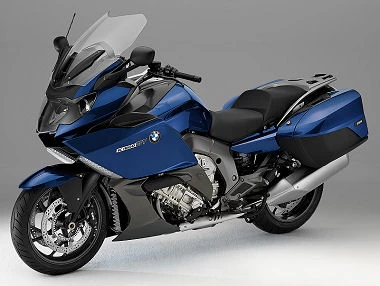


Compare the FJR 1300 AS to its competitors
Acceleration
Fuel consumption
Range
Torque
Power
Power-to-Weight ratio
Torque-to-Weight ratio
Speed
FAQ Your frequently asked questions about the FJR 1300 AS 2013
- What is the power of the FJR 1300 AS 2013?
-
The FJR 1300 AS 2013 develops a power of 146 ch (144 hp)
- What is the torque of the FJR 1300 AS 2013?
-
The maximum torque of the FJR 1300 AS 2013 is 14.10 mkg to 7,000 rpm.
- What is the maximum speed of the FJR 1300 AS 2013?
-
The FJR 1300 AS 2013 is capable of reaching a top speed of approximately 250 km/h (155.30 mph) on the track.
- What is the weight of the FJR 1300 AS 2013?
-
The FJR 1300 AS 2013 has a a weight when fully loaded of 296 kg (653 lb).
- QWhat is the seat height of the FJR 1300 AS 2013?
-
To ensure good accessibility, the FJR 1300 AS 2013 offers a minimum seat height of 805 mm (31.69 in). The integrated adjustment allows you to adjust the riding position to suit your needs.
- What is the price of the FJR 1300 AS 2013?
-
The price of the FJR 1300 AS 2013 is 19,499€ in France
News
-
New motorcycle products for 2026

-
Bridgestone announces the RS12, its new road-race weapon.
-
Yamaha Race Like A Girl: Natalia Rivera in episode 5.
-
Bridgestone presents the Battlax V03, its new slick tire.
-
With Sartoria Meccanica, MV-Agusta aims to go beyond premium.
-
Upgrading the entire Bonneville family for 2026.
-
Metzeler unveils three new tires at EICMA.
-
World Superbike celebrates 70 years of Yamaha.
-
Exceptional: some thirty new Triumphs in 2026.
-
40.000 bikers for the Royal-Enfield "One Ride" 2025.



Bikers' reviews Leave a review