
Motorcycle specifications Brough SuperiorSS100 1932 English excellence


presentation of the SS100 1932
among the many British motorcycle products, Brough Superior is one of the most emblematic. The brand was created in 1919 and died out in 1940. During this period, the models produced were of such high quality that they were compared to the most famous car brand, Rolls-Royce. In addition to top-notch finish and performance, each Brough was assiduously tested before delivery and tailored to its owner. A refinement worthy of today's millstone.
The most famous model is the SS100. Sadly, its reputation is partly rooted in tragedy. It was on these handlebars that Thomas Edward Lawrence (better known as Lawrence of Arabia) met his fate on a small road in the English countryside, near his home in Cloud Hills. Lawrence loved Broughs (he owned seven of them) and speed. The SS100 was just the thing. It was guaranteed for 160 km/h, could reach 170, and broke several world records in its day. The year was 1932, but the engine was already capable of producing 48 horsepower. The air-cooled twin cubed 988 cm3 and transmitted its power via a 4-speed gearbox.
Technical solutions were based on the canons of the time. A chassis consisting of a simple tubular steel cradle guided by a parallelogram fork. No rear suspension: the rear end is rigid. Braking with 178 and 203 mm single-cam drums was far from efficient, especially given the Brough's performance. Heavy steering and a long wheelbase did not make it a model of maneuverability.
This Brough Superior SS100 cost T.E. Lawrence 170 pounds in 1932, which would correspond to a list price today of 9550 euros. A reasonable price? Certainly not. In those days, the average wage was £3 a week. To afford an SS 100 required more than a year's salary. Today, you'd have to fork out a 6-figure check to afford one. In 1935, Lawrence went off the road and smashed his skull, because no one wore a helmet in those days. One of the doctors who treated him, Hugh Caims, did extensive work on motorcycle head injuries. His research led to the use of helmets in both civilian and military applications. If we all wear helmets today, which save so many lives, it's partly because of this episode in history.
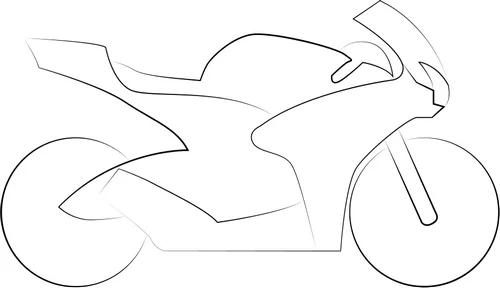
M.B - Internet photos
by Greg

 Share
Share
Key facts Brough Superior SS100 (1932) : What you need to know before you buy
 France
Specifications Brough Superior SS100 1932
- Chassis
- Frame : double steel cradle
- Fuel capacity : 18 liters (4.76 US gallons)
- Dry weight : 200 kg (441 lb)
- Front axle
- castle parallelogram fork
- drum brakes Ø 178 mm (7.01 in) (simple came)
- Transmission
- 4 stage gearbox , manual
- Secondary by chain
- Rear axle
- no rear suspension
- drum brakes Ø 203 mm (7.99 in) (simple came)
- Motor
- two-cylinder 50° V-shaped , 4 strokes
- 1 carburetor
- Cooling system : by air
- tumbled
- 990 cc
- 48 ch (47.30 hp) to 4,200 rpm
- Power-to-weight ratio : 4.23 kg/ch
- Practical information





Models
1932
Used
Compare the SS100 to its competitors
FAQ Your frequently asked questions about the SS100 1932
- What is the power of the SS100 1932?
-
The SS100 1932 develops a power of 48 ch (47.30 hp)
- What is the maximum speed of the SS100 1932?
-
The SS100 1932 is capable of reaching a top speed of approximately 160 km/h (99.40 mph) on the track.
- What is the weight of the SS100 1932?
-
The SS100 1932 has a a dry weight of 200 kg (441 lb).
- What is the price of the SS100 1932?
-
The price of the SS100 1932 is 9,550€ in France
News
-
New motorcycle products for 2026

-
Bridgestone announces the RS12, its new road-race weapon.
-
Yamaha Race Like A Girl: Natalia Rivera in episode 5.
-
Bridgestone presents the Battlax V03, its new slick tire.
-
With Sartoria Meccanica, MV-Agusta aims to go beyond premium.
-
Upgrading the entire Bonneville family for 2026.
-
Metzeler unveils three new tires at EICMA.
-
World Superbike celebrates 70 years of Yamaha.
-
Exceptional: some thirty new Triumphs in 2026.
-
40.000 bikers for the Royal-Enfield "One Ride" 2025.



Bikers' reviews Leave a review