
Motorcycle specifications KawasakiNinja 500 2025 Ninjette turns a corner


presentation of the Ninja 500 2025
The Ninja family has become the one with the most iterations on the market. Depending on desires and budgets, enthusiasts can discover the 125, get a taste of SuperSport with the ZX-6R, propel themselves into space with the supercharged H2R, dare to gohybrid with the Ninja 7, dodge the stopwatch with the ZX-10R - there's something for everyone, and even a little more for A2s with the arrival of the 500 Ninja.
Let's get straight to one of the key points: the engine. After all, you'd expect to see a big gap between the 400 and the Ninja. It is, but it's not easy to see at first glance. Let's start with the bitter side. The Nina has not grown by a hundred cm3 as its name suggests, but by 52 cm3. No big deal, you might say; the twin 451 must spit out a few more horsepower. But in reality, nothing! It's still 45 horses at the engine's output. So where's the interest? All over the place.
First, there's the gain in torque, of around 1/2 mkg. Then there's the greater muscular availability of the powertrain. Power and torque are available much sooner, and at all engine speeds, the rider will always have more hp and mkg than with the 400. The engine is more robust, fuller and more enthusiastic.
To achieve this, Kawasaki has redesigned the compression ratio, piston stroke, pistons, connecting rods, airbox and crankshaft.
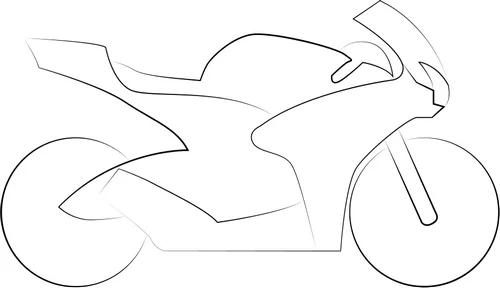
The chassis, on the other hand, has not been updated. No desire or no need? Let's not forget that this is an entry-level model. Like the Ninja 400 and its Z roadster cousin, the 500 starts with a 41mm inverted fork, followed by a minimalist tubular steel trellis frame, a preload-adjustable shock absorber only, and 17-inch wheels, each with its own brake disc. 310 mm at the front and 220 mm at the rear, both gripped by 2-piston calipers. Note that the discs are no longer in petal format.
But this technical reproduction doesn't give you a taste of déjà-vu, as the reworked design allows you to feel the freshness of the new. A little more aggressive, with two more prominent fangs and a ZX-6R 636-style scowl, redesigned flanks, a more tapered taillight, a flatter seat - the Ninja 500 doesn't transcend style, but evolves it.

Long gone are the days of the little Ninja, with only 250 cm3 in the belly. Fragile, almost fragile, it gradually grew in confidence and style, from generation 300 to generation 400, culminating in the 500. It now offers a more convincing proposition, in the face of a well-established Honda CBR 500 R and competition that is quietly gaining strength.
M.B - Manufacturer's photos
by Greg

 Share
Share
Key facts Kawasaki Ninja 500 (2025) : What you need to know before you buy
Prices
| Basic version | |
|---|---|
 France France |
6,499€
|


Performance
- Max speed : approximately 170 km/h (105.60 mph)
History

Specifications Kawasaki Ninja 500 2025
- Chassis
- Two-seater saddle
- Frame : Tubular steel structure
- Fuel capacity : 14 liters (3.70 US gallons)
- Seat height : 785 mm (30.91 in)
- Length : 1,995 mm (78.54 in)
- Width : 730 mm (28.74 in)
- Min height : 1,120 mm (44.09 in)
-
Min. ground clearance : 145 mm (5.71 in)
- Wheelbase : 1,375 mm (54.13 in)
- Dry weight : 157 kg (346 lb)
- Weight when fully loaded : 171 kg (377 lb)
- Front axle
- Telescopic fork Ø 41 mm, Wheel travel : 120 mm (4.72 in)
- Braking 1 disc Ø 310 mm (12.2 in), 2-piston caliper
- Front tire (Tubeless) : 110 / 70 - 17 → Order this type of tire
- Pressure : 2 bar
- Transmission
- 6 stage gearbox , manual
- Secondary by chain
- Rear axle
- Mono-damper, Wheel travel : 130 mm (5.12 in)
- Preload adjustment
- Braking 1 disc Ø 220 mm (8.66 in), 2-piston caliper
- Rear tire (Tubeless) : 150 / 60 - 17 → Order this type of tire
- Pressure : 2.25 bar
- Motor
- two-cylinder parallel , 4 strokes
- Injection Ø 32 mm
- Cooling system : liquid
- 2 ACT
- 4 valves per cylinder
- 451 cc
- 45.40 ch (44.80 hp) to 9,000 rpm
- 4.30 mkg to 6,000 rpm
- Power-to-weight ratio : 3.5 kg/ch
- Weight / torque ratio : 36.51 kg/mkg
- Compression : 11.3 : 1
- Starting system : electric
- CO² emissions: 89 g/km
- Standard equipment
- Brake assist : ABS
- Aluminium rims
- Gear indicator
- Bluetooth
- Anti-slip clutch
- Practical information





Models
2026

2025

2024

Used


Competitors


Compare the Ninja 500 to its competitors
Price
Fuel consumption
Range
Torque
Power
Power-to-Weight ratio
Torque-to-Weight ratio
Speed
CO² emissions
FAQ Your frequently asked questions about the Ninja 500 2025
- What is the power of the Ninja 500 2025?
-
The Ninja 500 2025 develops a power of 45.40 ch (44.80 hp)
- What is the torque of the Ninja 500 2025?
-
The maximum torque of the Ninja 500 2025 is 4.30 mkg to 6,000 rpm.
- What is the maximum speed of the Ninja 500 2025?
-
The Ninja 500 2025 is capable of reaching a top speed of approximately 170 km/h (105.60 mph) on the track.
- What is the weight of the Ninja 500 2025?
-
The Ninja 500 2025 has a a dry weight of 157 kg (346 lb), a weight when fully loaded of 171 kg (377 lb).
- QWhat is the seat height of the Ninja 500 2025?
-
To ensure good accessibility, the Ninja 500 2025 offers a minimum seat height of 785 mm (30.91 in).
- What is the price of the Ninja 500 2025?
-
The price of the Ninja 500 2025 is 6,499€ in France
- What colors are available for the Ninja 500 2025?
-
For the 2025 model year, the Ninja 500 is available in one color: black.
News
-
New motorcycle products for 2026

-
Bridgestone announces the RS12, its new road-race weapon.
-
Yamaha Race Like A Girl: Natalia Rivera in episode 5.
-
Bridgestone presents the Battlax V03, its new slick tire.
-
With Sartoria Meccanica, MV-Agusta aims to go beyond premium.
-
Upgrading the entire Bonneville family for 2026.
-
Metzeler unveils three new tires at EICMA.
-
World Superbike celebrates 70 years of Yamaha.
-
Exceptional: some thirty new Triumphs in 2026.
-
40.000 bikers for the Royal-Enfield "One Ride" 2025.



Bikers' reviews Leave a review