
Motorcycle specifications Moto-Guzzi750 V7 III Stone 2020 The time of a charm


presentation of the 750 V7 III Stone 2020
When I speak of Italy, you think of the aromatic scents of Tuscany, of wines sipped under olive trees, of antipasti savored in the setting sun, of the fullness of Lake Como and the spray of the Adriatic as it meets the Mediterranean.it's in this bubble that the reworked and improved version of Guzzi's little retro roadster is unveiled. Benefiting from a host of upgrades, the V7 III is more charming than ever, and hides many surprises. An eaglet that ignores the times, yet strikes a chord with smartphones.
You can recognize a V7 right away: the small size, the old-fashioned look, the tempting cylinder heads, the moderno-canonical look. A motorcycle living in today's past. And, as usual, proud and exuberant of its engine. For this second evolution, the V7 sports a much more generous anatomical shape. The twin-cylinder's cubic capacity remains unchanged, but by adopting the V9's cylinder heads, the 744 cm3 engine has gained an undeniable aplomb. You'd swear the V7 III had a bigger, beefier, almost more virile engine.
And it is. With 5 more horsepower, the twin benefits from a wide range of improvements. The V7 phase II had already improved the block considerably. The Italian manufacturer is continuing in this vein with technical improvements at every level. New cylinders, pistons, aluminum cylinder head, valves and exhaust system. Lower down, the aluminum crankcase has been reinforced, and the oil pump, crankshaft and clutch have been modified. And gear ratios 1 and 6 have been lengthened. A new alternator cover and the introduction of oil-injected piston cooling are also included. Guzzi has worked on the reliability and optimization of its smallest mill, and the result is there. 10% more watts. Let's not get carried away. In concrete terms, this translates into 52 horsepower at 6,200 rpm. Torque rises slightly, to 6.2 mkg, but peaks much higher, at 4,900 rpm instead of 3,000 rpm on the V7 II. Then, as now, a V7 engine isn't meant to tease a stopwatch or a red zone; it's meant to revel in a very special kind of charm, in the "pulsing" of a highly visual mechanism.
The V7 III thus stands out for its engine, more demonstrative in appearance and technique. All around, the Mandello brand has chosen sobriety and continuity. The only things that stand out are the new design of the airbox side covers, the relocated turn signal support point, and the revised front brake chamber and rear disc.
More conspicuous is the loss of the rev counter (found on the Special and Racer models), the modification of the fuel filler cap attachment, and in terms of looks, the V7 III has completely blackened its exhaust system. A sleeker look, very much in vogue these days. But that doesn't mean the little Italian neo-retro is short on equipment.
The V7 has always been distinguished by its cardan shaft, and is the only motorcycle of its size to be equipped with such a transmission. Now, gears have been replaced by digital technology. At the heart of the V7 III are fuel injection, ABS and two-stage, disengageable traction control. Is this really useful for a machine that only pulls out about fifty cylinders? Wide debate... More attention will be paid to the MG-MP multimedia platform, available as an option. Combined with the mobile app, the interface allows interaction between the bike and a smartphone. From now on, the rider becomes a digital player on the V7 III: 5 parameters can be displayed on the screen, with a wide choice to choose from. Speed, engine revs, instantaneous power, torque, fuel consumption, average speed, battery voltage, longitudinal acceleration, trip computer... Plenty of data to view, and it doesn't stop there. The app records where you parked and helps you find your bike. It also memorizes the route taken, gives you information on traction control and lets you set certain alerts. There's also an eco-driving mode and a system for locating service stations when the tank is running low.
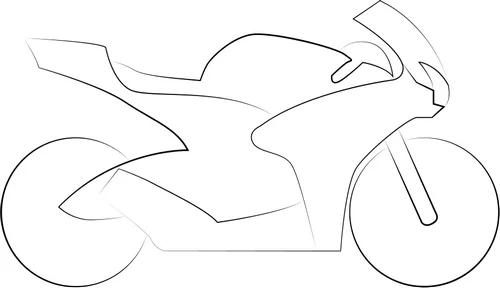
Digital-ready, Guzzi has also evolved in a more fundamental, if less flashy, area. A motorcycle is first and foremost an engine and a chassis. From V7 II to V7 III, a few things have changed. The double-cradle steel frame has been strengthened at the front, while the geometry has been revised to make it a little more dynamic - the column angle has been reduced from 27.5° to 26.4°, and the headroom has been cut by 11 mm. The rider also benefits from advanced aluminum footrests and a seat that's been moved up a few mm. The Kayaba amortos, which are more inclined, are intended to offer a more progressive ride. As for the passenger, the higher, more advanced footrests should provide an ounce of extra comfort.
The Moto-Guzzi V7 III is a welcome and unobtrusive evolution of the Moto-Guzzi line, keeping up with new technologies while remaining perfectly in tune with the times. Unpretentious, comfortable and suitable for Sunday rides, the bike exudes a whiff of yesteryear that's well worth smelling.
M.B - Manufacturer's photos
by Greg

 Share
Share
Key facts Moto-Guzzi 750 V7 III Stone (2020) : What you need to know before you buy
Prices
| Basic version | |
|---|---|
 France France |
8,599€
|


History

Specifications Moto-Guzzi 750 V7 III Stone 2020
- Chassis
- Frame : double tubular steel cradle
- Fuel capacity : 21 liters (5.55 US gallons)
- Seat height : 770 mm (30.31 in)
- Length : 2,185 mm (86.02 in)
- Width : 800 mm (31.50 in)
- Min height : 1,110 mm (43.70 in)
- Wheelbase : 1,463 mm (57.60 in)
- Dry weight : 189 kg (417 lb)
- Weight when fully loaded : 209 kg (461 lb)
- Front axle
- Telehydraulic fork Ø 40 mm, Wheel travel : 130 mm (5.12 in)
- Braking 1 disc Ø 320 mm (12.6 in), 4-piston caliper
- Front tire : 100 / 90 - 18 → Order this type of tire
- Transmission
- 6 stage gearbox
- Secondary cardan shaft
- Rear axle
- 2 lateral shock absorbers, Wheel travel : 93 mm (3.66 in)
- Braking 1 disc Ø 260 mm (10.24 in), 2-piston caliper
- Rear tire : 130 / 80 - 17 → Order this type of tire
- Motor
- two-cylinder 90° L-shape , 4 strokes
- Injection
- Cooling system : by air
- tumbled
- 2 valves per cylinder
- 744 cc
- 52 ch (51.30 hp) to 6,200 rpm
- 6.20 mkg to 4,900 rpm
- Power-to-weight ratio : 3.68 kg/ch
- Weight / torque ratio : 30.48 kg/mkg
- Compression : 10.2 : 1
- Standard equipment
- Brake assist : ABS
- Practical information





Models
2020


2019


2018


2017


Compare the 750 V7 III Stone to its competitors
Fuel consumption
Range
Torque
Power
Power-to-Weight ratio
Torque-to-Weight ratio
Speed
CO² emissions
FAQ Your frequently asked questions about the 750 V7 III Stone 2020
- What is the power of the 750 V7 III Stone 2020?
-
The 750 V7 III Stone 2020 develops a power of 52 ch (51.30 hp)
- What is the torque of the 750 V7 III Stone 2020?
-
The maximum torque of the 750 V7 III Stone 2020 is 6.20 mkg to 4,900 rpm.
- What is the weight of the 750 V7 III Stone 2020?
-
The 750 V7 III Stone 2020 has a a dry weight of 189 kg (417 lb), a weight when fully loaded of 209 kg (461 lb).
- QWhat is the seat height of the 750 V7 III Stone 2020?
-
To ensure good accessibility, the 750 V7 III Stone 2020 offers a minimum seat height of 770 mm (30.31 in).
- What is the price of the 750 V7 III Stone 2020?
-
The price of the 750 V7 III Stone 2020 is 8,599€ in France
News
-
New motorcycle products for 2026

-
Bridgestone announces the RS12, its new road-race weapon.
-
Yamaha Race Like A Girl: Natalia Rivera in episode 5.
-
Bridgestone presents the Battlax V03, its new slick tire.
-
With Sartoria Meccanica, MV-Agusta aims to go beyond premium.
-
Upgrading the entire Bonneville family for 2026.
-
Metzeler unveils three new tires at EICMA.
-
World Superbike celebrates 70 years of Yamaha.
-
Exceptional: some thirty new Triumphs in 2026.
-
40.000 bikers for the Royal-Enfield "One Ride" 2025.



Bikers' reviews Leave a review - 2 reviews