
Motorcycle specifications YamahaR3 300 2022 Assertive re-engagement


presentation of the R3 300 2022
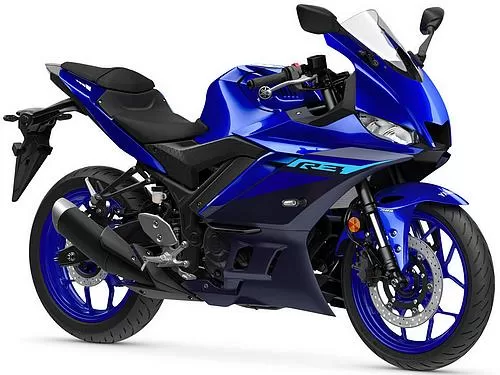
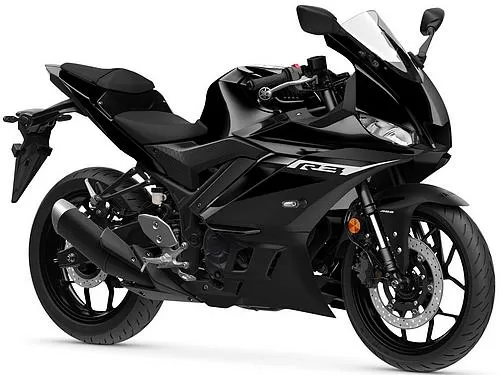
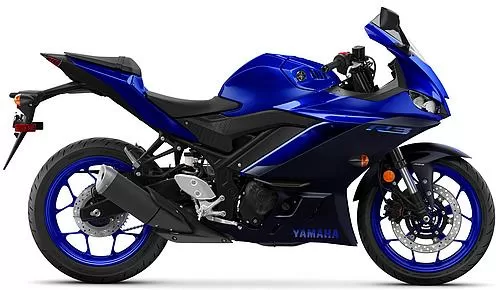
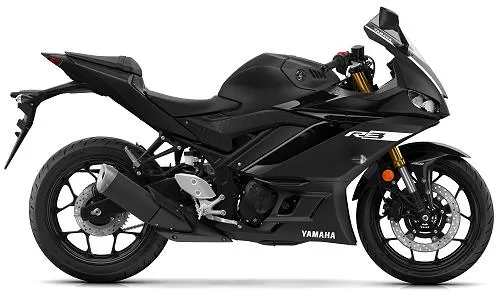
The R3 remained on the sidelines until 2021. A season of retreat, the time to fiddle with the engine to adapt it to Euro5. As a result, it gained 2 kilos, with no impact on torque or maximum power. Nor on the design side, whose doctrine is frozen in consanguinity. A certain R in the family? More than a little. Since the R1's profound transformation in 2015, all of Iwata's sportbikes have sought to resemble the supreme M1 tracker. With more or less differences, but the silhouette is now totally anchored in the R-series DNA.
There's no question of the R3 standing apart. The sibling's reputation is at stake, and it's important to make a mark. Especially as the 300/400 category is beginning to establish a (small) reputation in Europe, with its flagship tactical position in the SBK championship, the WSS 300.
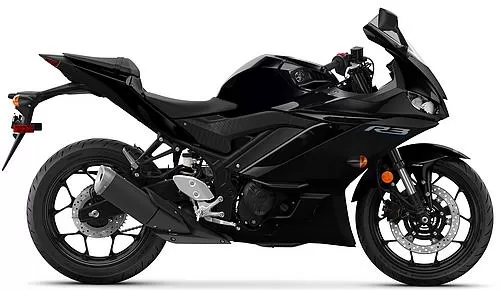
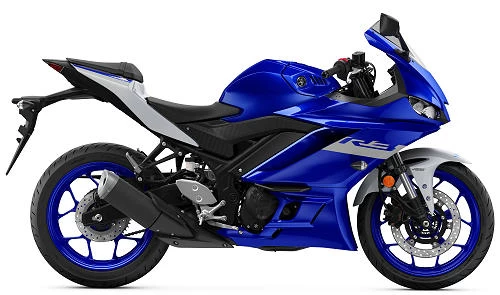
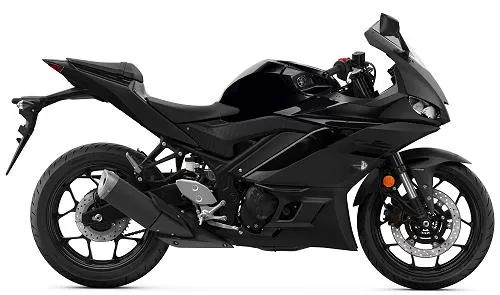
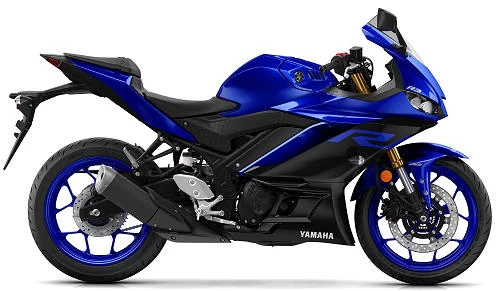
It's taking a bit of a beating this R3. Long gone are the days when CBR 250s and Ninja 250s came to rough out a nascent category. Flimsy and timid, they seemed lost in a small-displacement market long since abandoned in favor of the 500/600/650. Today, hesitation is no longer an option. The R3 is damn proud to show its face and its audacity, as if the R1 and M1 were adoring it in front of its public. Its R6 look will please, its jaw and its look will challenge. The sleek lines of its fairing ensure that it's a real crowd-pleaser, while keeping one of its trump cards on the table when it's time to hit the tachometer. The manufacturer has announced a 7% reduction in aerodynamic drag. This translates into an 8 km/h increase in top speed.
With your head in the bubble, knees bent and right wrist twisted, you'll be able to take it easy on the connecting rods, while the engine takes off to conquer the 42 horsepower spewed out by the 321 cm3 twin-cylinder. Both the mechanics and the frame are unchanged from the previous R3. Its tubular steel skeleton completes its rigidity by resting on the engine block. Braking is provided by a 298 mm front disc, a 220 mm rear disc, twin or single-piston calipers (depending on the size of the bite) and ABS. There's nothing new here; it's for the ground connection that Yamaha has offered new parts.

The road has to be trimmed, and a 37 mm inverted fork has been called to the rescue. Larger and stiffer, it allows you to demand a little more from the chassis on hard rides. Alas, it offers no adjustment options. But it doesn't care. With the exception of those who take it out on the track, most users won't be too keen on tweaking the settings to fine-tune their handling. And a more advanced fork would have significantly lowered the price. A 300, somewhere between a sports bike and a sport-GT, is not destined to offer the sharpness of a 600 SuperSport.
But that doesn't mean you can't have a close encounter with the R3. A motorcycle has to be held together. The fuel tank has been redesigned with this in mind. Without losing a liter of its 14-litre capacity, it has been redesigned to be wider at the top and a little lower in height. The half-guidelines are also lowered, by 22 mm. All the more reason to adopt a sportier attitude.
Her winks seem more pronounced. What did she put in her eyes? An array of LEDs. As we've seen, the fork head benefits from a new design, and its surroundings have also been given a bonus. A certain uniformity in the dashboards brings the YZF family spirit even closer. The R3 forgets its old handset to give the rider a more sporty feel. No more needles, no more compromises: an LCD panel very similar in style to that of the R1 takes its place in front of the openwork fork crown. Yet another link to the big R models, with a barely toned-down racing ambience. The display gives pride of place to speed, engine rpm in bar graph format and gear engaged. The rest of the information is of little importance to the rider, and more for the pulse of everyday life. There's a fuel gauge, odometer trips, a clock and engine temperature.

The R3 seems to have changed category, from sports-roader to pure sports car, adopting M1-style bodywork and a more muscular front end. A fine exercise on Yamaha's part, indicating the confidence that certain manufacturers are developing in this segment. This 300 plays the game and wants to have a little more fun. A small detail: this evolution weighs in at 169 kilos.
M.B - Photos and video
by Greg

 Share
Share
Key facts Yamaha R3 300 (2022) : What you need to know before you buy
Prices
| Basic version | |
|---|---|
 France France |
6,399€
|


Performance
- Max speed : approximately 170 km/h (105.60 mph)
- Average fuel consumption : 3.80 liters/100km (0.62 mpg)
-
Estimated range
: 368 km (229 miles)
Calculated range until tank is empty, not verified.
Specifications Yamaha R3 300 2022
- Chassis
- Frame : in diamond steel
- Fuel capacity : 14 liters (3.70 US gallons)
- Seat height : 780 mm (30.71 in)
- Length : 2,090 mm (82.28 in)
- Width : 730 mm (28.74 in)
- Min height : 1,140 mm (44.88 in)
- Wheelbase : 1,380 mm (54.33 in)
- Weight when fully loaded : 169 kg (373 lb)
- Front axle
- Reverse telehydraulic fork Ø 37 mm, Wheel travel : 130 mm (5.12 in)
- Braking 1 disc Ø 298 mm (11.73 in), 2-piston caliper
- Front tire : 110 / 70 - 17 → Order this type of tire
- Pressure : 2 bar
- Transmission
- 6 stage gearbox , manual
- Secondary by chain
- Rear axle
- Mono-damper, Wheel travel : 125 mm (4.92 in)
- Braking 1 disc Ø 220 mm (8.66 in), single-piston caliper
- Rear tire : 140 / 70 - 17 → Order this type of tire
- Pressure : 2.5 bar
- Motor
- two-cylinder online , 4 strokes
- Injection
- Cooling system : liquid
- 2 ACT
- 4 valves per cylinder
- 321 cc
- 42 ch (41.40 hp) to 10,750 rpm
- 3 mkg to 9,000 rpm
- Power-to-weight ratio : approximately 3.78 kg/ch
- Weight / torque ratio : approximately 52.14 kg/mkg
- Compression : 11.2 : 1
- Standard equipment
- Brake assist : ABS as standard
- Practical information





Used


Compare the R3 300 to its competitors
Price
Fuel consumption
Range
Torque
Power
Power-to-Weight ratio
Torque-to-Weight ratio
Speed
CO² emissions
FAQ Your frequently asked questions about the R3 300 2022
- What is the power of the R3 300 2022?
-
The R3 300 2022 develops a power of 42 ch (41.40 hp)
- What is the torque of the R3 300 2022?
-
The maximum torque of the R3 300 2022 is 3 mkg to 9,000 rpm.
- What is the maximum speed of the R3 300 2022?
-
The R3 300 2022 is capable of reaching a top speed of approximately 170 km/h (105.60 mph) on the track.
- What is the weight of the R3 300 2022?
-
The R3 300 2022 has a a weight when fully loaded of 169 kg (373 lb).
- What is the fuel consumption of the R3 300 2022?
-
Average fuel consumption is estimated at 3.80 l/100km (0.62 mpg) according to the WMTC cycle.
- QWhat is the seat height of the R3 300 2022?
-
To ensure good accessibility, the R3 300 2022 offers a minimum seat height of 780 mm (30.71 in).
- What is the price of the R3 300 2022?
-
The price of the R3 300 2022 is 6,399€ in France
News
-
New motorcycle products for 2026

-
Bridgestone announces the RS12, its new road-race weapon.
-
Yamaha Race Like A Girl: Natalia Rivera in episode 5.
-
Bridgestone presents the Battlax V03, its new slick tire.
-
With Sartoria Meccanica, MV-Agusta aims to go beyond premium.
-
Upgrading the entire Bonneville family for 2026.
-
Metzeler unveils three new tires at EICMA.
-
World Superbike celebrates 70 years of Yamaha.
-
Exceptional: some thirty new Triumphs in 2026.
-
40.000 bikers for the Royal-Enfield "One Ride" 2025.


Bikers' reviews Leave a review - 5 reviews
I wanted to change and buy a new one in 2024 but the look is horrible, a big hole in the front! I know it's probably a very good bike too but I'm really, really not thrilled with the aesthetics; sorry Yamaha but you have to think about looks not just performance. Rating : 3/5 Respond to fredo05
20000km .tout est parfait à part le freinage av qui est vraiment limite.c\'est encore plus vrai sur
This r3 has a sporting vocation on
Which Yamaha should have modified as a priority.
Too bad.... Rating : 5/5 Respond to Eriko