
Motorcycle specifications HondaCBR 600 RR E-ABS 2010 Safety for sport


presentation of the CBR 600 RR E-ABS 2010
aBS is well known on motorcycles, especially to BMW enthusiasts and a few big Japanese tourers. But until now, this braking aid has never attempted an excursion onto the track... until this summer 2008. In June, Honda announced the 1st electronically controlled "Combined ABS" braking system for sports cars. Barely 3 months later, the manufacturer presents its new 600 CBR with this technology. And it's not the only one: the big sister 1000 Fireblade is also equipped with Combined ABS.
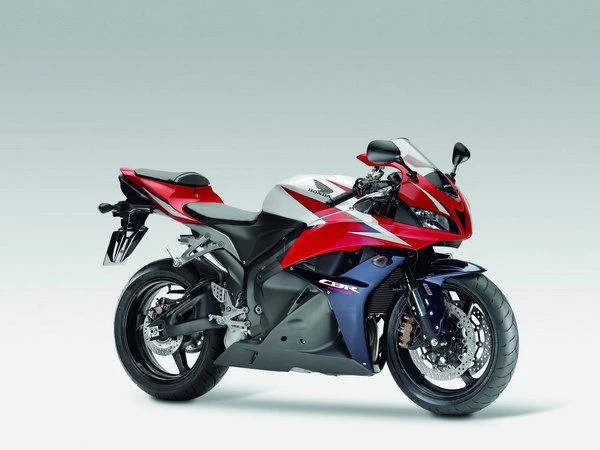
the 600 RR continues to be renewed every 2 years. So, apart from the colors, there's no change in 2010. In 2009, the evolution is less marked than a standard cycle. We were expecting a design inspired by the new, more compact style inaugurated by the 2008 CBR 1000, but this is not the case.
The CBR 600 RR '09 is just a bit of stitching on its dress, coupled with a small change of make-up. A new, more enveloping engine cowling with new air intakes protects the engine's side casings, while generating a more efficient airflow at medium to high speeds. The result is a more stable machine.
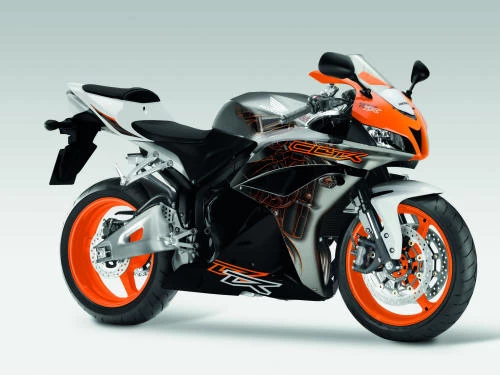
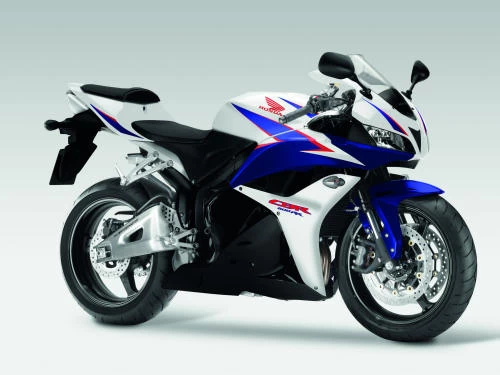
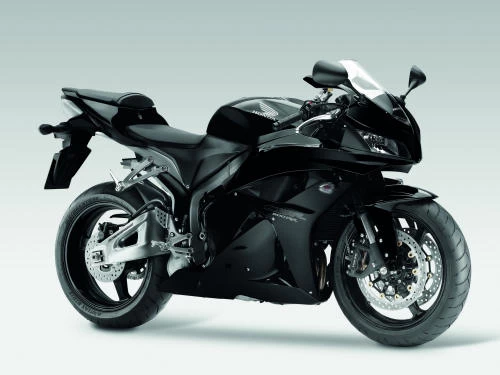
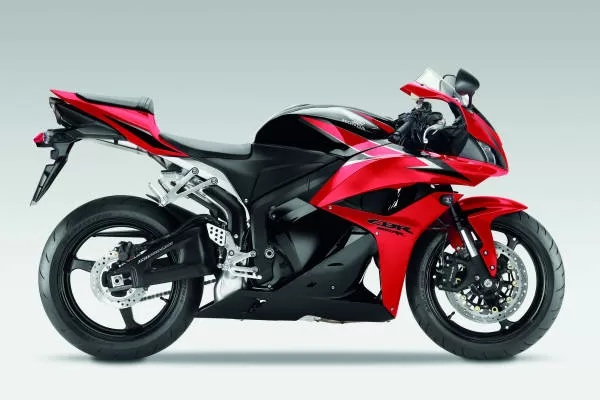
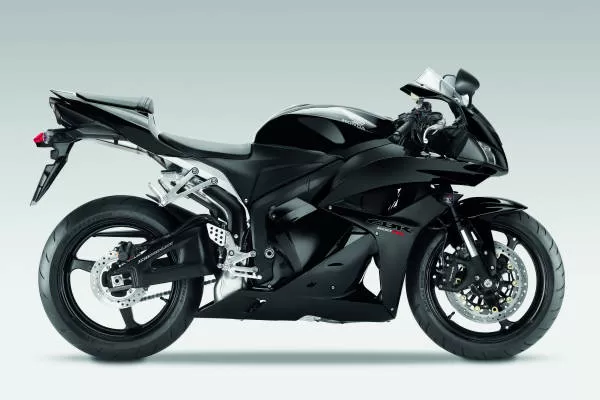
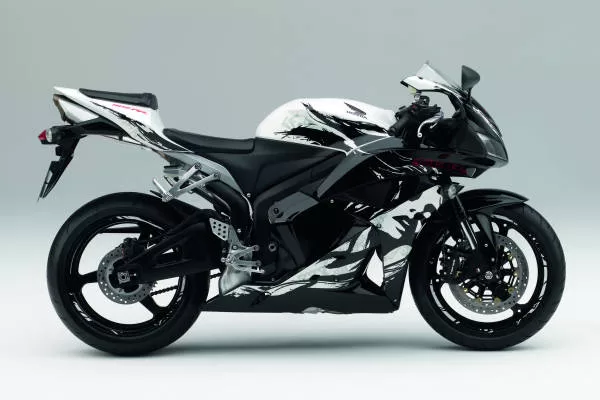
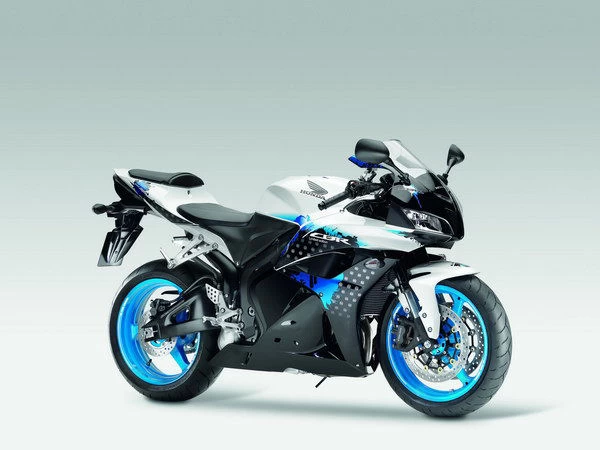
New, more "trendy" indicators, new colors, including a limited series for the CBR 600 RR without ABS... that's it for the aesthetic change. The CBR retains its major identity, with the pot under the seat, the VTR-SP2-style air intake, an ultra-compact size and an unchanged dashboard (apart from the addition of the ABS indicator light) that still lacks sex appeal.

Well, first things first. First, the brake calipers. They're still radially mounted, but they've been updated to become lighter and more monobloc. Next, the concept and why:
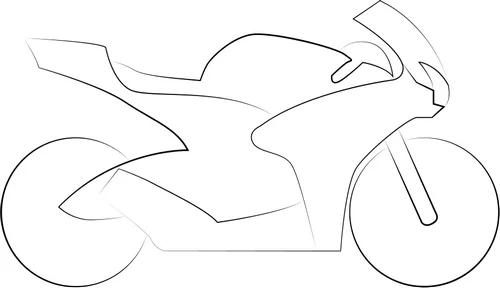
On a sports bike, heavy braking is the norm and an integral part of performance. An anti-lock system that you can't feel, or that becomes too present as you approach the limits of braking performance, would not be satisfactory. In concrete terms, for a sports car, a combined anti-lock braking system must allow the rider to brake as close to the limit as possible before coming into operation. And when he does, braking force limitation must be particularly gentle, so as not to distract the rider or destabilize the machine.
What's more, the significant transfer of weight to the front during braking - which affects front braking capacity while reducing rear traction - calls for the development of a particularly subtle system. to develop a particularly subtle and efficient system to deliver an acceptable level of performance in relation to the machine's braking potential.
The system consists of a combined electronically controlled "brake by wire" system equipped with an original and innovative pressure sensor.an original and innovative pressure sensor which measures the pressure applied to a control (lever or pedal) and controls a servo-motor which actuates the calipers directly and with extreme precision. In addition, all the components required to operate the system are divided into several smaller sub-assemblies, more numerous but also more compact, so as not to interfere with the centralization of mass or the compactness of the machine.
System efficiency is based on 4 main parameters:
1. Electronic control of the CBS, enabling more precise control of braking forces. This also enables finer distribution of braking forces between the two wheels.
2. Measurement of the force applied by the driver to each control. The ideal braking force on each wheel is generated accordingly, offering optimum distribution and minimizing machine reactions.
3. An ABS "modulator" that ensures smooth, late ABS engagement.
4. Compactness means that components can be ideally integrated into the motorcycle, even while respecting the principle of mass centralization that is essential on a sports bike.

It is only in the case of track use, where the rider always uses the same braking cues, that he or she will sometimes be able to reach the same level of braking performance
braking cues, that it can sometimes prove superior to the combined-ABS system.
The benefits in terms of confidence are therefore significant for users of all levels, especially on open roads where the circumstances of braking are more varied
especially on open roads, where driving conditions are constantly changing.
On the other hand, on the racetrack, this system doesn't really seem to be of interest to a seasoned rider (one with a serious technical background).
as with all new-generation sports bikesas with any new-generation sports bike (the 4th for this CBR), the pistarde is packed with technology accumulated from previous evolutions. HESD electronic steering damper, MotoGP-style Unit Pro-link monoshock, 41 mm HMAS inverted fork, HISS immobilizer, double set of injectors, reinforced swingarmin short, everything already found on the 2007-2008 model; apart from ABS and styling, the main changes are to the engine. Changes have been made to the pistons, cylinder head and exhaust (in particular the header pipes and valve system, similar to that used on the CBR 1000 RR Fireblade.) to boost torque in the 8/12,000 rpm range, with a 3.5% increase at 10,000 rpm. A little extra to get you out of the corner, with a hint of extra gniak. OK, but we'd have liked more watts everywhere to go and get the R6 or eat from the 675 Daytona. In the end, the 2009 CBR 600 RR's values remain unchanged: 120 hp for 184 kg fully loaded (a record weight in the category). But the ABS version is a different story. With the ABS system adding 10 kg to the weight, the CBR 600 ABS is much closer to the 200 kg mark: at 194 kg, it loses some of its superbness.
with this evolution, it's unlikely that the 2009 CBR 600 RR will shake up the 600-sport hierarchy (except in World Supersport, where it does extremely well). On the other hand, it marks a real evolution towards greater safety and performance on the road. More confidence, more fun, remarkably easy and lively, the CBR 600 RR '09 has perhaps chosen its camp: superb and safe on the road, if not queen on the track.

- A 70% tinted bubble for a more dynamic image and enhanced protection. The height is identical.
- A color-matched seat cover that takes the place of the passenger seat to reinforce the CBR600RR's sporty image. Facilitating access to the space under the seat, this hood features a 4-position adjustable backrest, an embossed CBR logo and Honda Racing logos on both sides.
- A selection of carbon parts specially developed for the CBR, including a front mudguard to protect the fork tubes, a rear mudguard to protect the inside of the chassis and an exhaust protector. All these parts meet Honda's quality standards and carry the Honda Racing logo.
- A compact alarm with motion detector and siren. The kit features 8 sensitivity settings and a low-power standby mode that protects the battery from total discharge.
- A stand that lifts the machine from the end of the swingarm to facilitate maintenance of the rear wheel.
- A carbon-style tank protector and filler cap cover with HRC logo.
Dashboard and top-tee covers are also available.
- A set of "Racing" adhesives for fairing and wheels.
by Greg

 Share
Share
Key facts Honda CBR 600 RR E-ABS (2010) : What you need to know before you buy
Highlights
- More safety on the road
- Reinforced torque curve
- Poids mini
Weak points
- Minimal engine evolution
- Limited benefit of ABS combo on track
Prices
| Basic version | |
|---|---|
 France France |
11,490€
|
Performance
- Max speed : approximately 270 km/h (167.80 mph)
- Average fuel consumption : 5.20 liters/100km (0.45 mpg)
-
Estimated range
: 346 km (215 miles)
Calculated range until tank is empty, not verified.
Specifications Honda CBR 600 RR E-ABS 2010
- Chassis
- Frame : Double beam in cast aluminium, Diamond type
- Fuel capacity : 18 liters (4.76 US gallons)
- Seat height : 820 mm (32.28 in)
- Length : 2,010 mm (79.13 in)
- Width : 685 mm (26.97 in)
- Min height : 1,105 mm (43.50 in)
- Wheelbase : 1,375 mm (54.13 in)
- Dry weight : 165 kg (364 lb)
- Weight when fully loaded : 194 kg (428 lb)
- Front axle
- HMAS inverted cartridge fork ø 41 mm, Wheel travel : 120 mm (4.72 in)
- Braking 2 discs Ø 310 mm (12.2 in), radial mounting, 4-piston caliper
- Front tire : 120 / 70 - 17 → Order this type of tire
- Pressure : 2.5 bar
- Transmission
- 6 stage gearbox
- Secondary by chain
- Rear axle
- Unit Pro-Link monoshock with separate reservoir, Wheel travel : 130 mm (5.12 in)
- Braking 1 disc Ø 220 mm (8.66 in), single-piston caliper
- Rear tire : 180 / 55 - 17 → Order this type of tire
- Pressure : 2.9 bar
- Motor
- 4 cylinders online , 4 strokes
- injection
- Cooling system : liquid
- 2 ACT
- 4 valves per cylinder
- 599 cc
- 120 ch (118.30 hp) to 13,500 rpm
- 6.60 mkg to 11,250 rpm
- Power-to-weight ratio : 1.39 kg/ch
- Weight / torque ratio : 25 kg/mkg
- Compression : 12:1
- Standard equipment
- Brake assist : ABS conbiné
- Practical information





Models
2011
2010

2009


Used
Competitors


Compare the CBR 600 RR E-ABS to its competitors
Fuel consumption
Range
Torque
Power
Power-to-Weight ratio
Torque-to-Weight ratio
Speed
FAQ Your frequently asked questions about the CBR 600 RR E-ABS 2010
- What is the power of the CBR 600 RR E-ABS 2010?
-
The CBR 600 RR E-ABS 2010 develops a power of 120 ch (118.30 hp)
- What is the torque of the CBR 600 RR E-ABS 2010?
-
The maximum torque of the CBR 600 RR E-ABS 2010 is 6.60 mkg to 11,250 rpm.
- What is the maximum speed of the CBR 600 RR E-ABS 2010?
-
The CBR 600 RR E-ABS 2010 is capable of reaching a top speed of approximately 270 km/h (167.80 mph) on the track.
- What is the weight of the CBR 600 RR E-ABS 2010?
-
The CBR 600 RR E-ABS 2010 has a a dry weight of 165 kg (364 lb), a weight when fully loaded of 194 kg (428 lb).
- What is the fuel consumption of the CBR 600 RR E-ABS 2010?
-
Average fuel consumption is estimated at 5.20 l/100km (0.45 mpg) according to the WMTC cycle.
- QWhat is the seat height of the CBR 600 RR E-ABS 2010?
-
To ensure good accessibility, the CBR 600 RR E-ABS 2010 offers a minimum seat height of 820 mm (32.28 in).
- What is the price of the CBR 600 RR E-ABS 2010?
-
The price of the CBR 600 RR E-ABS 2010 is 11,490€ in France
News
-
New motorcycle products for 2026

-
Bridgestone announces the RS12, its new road-race weapon.
-
Yamaha Race Like A Girl: Natalia Rivera in episode 5.
-
Bridgestone presents the Battlax V03, its new slick tire.
-
With Sartoria Meccanica, MV-Agusta aims to go beyond premium.
-
Upgrading the entire Bonneville family for 2026.
-
Metzeler unveils three new tires at EICMA.
-
World Superbike celebrates 70 years of Yamaha.
-
Exceptional: some thirty new Triumphs in 2026.
-
40.000 bikers for the Royal-Enfield "One Ride" 2025.



Bikers' reviews Leave a review