
Motorcycle specifications SuzukiGSX-R 1000 2021 Twist the handle... permanently


presentation of the GSX-R 1000 2021
One of the most famous hypersports models is about to leave the European scene. The GSX-R 1000 doesn't pass Euro5 and won't be able to continue its career for long in France. Fortunately, Suzuki France has stocked up, and it will still be possible to buy a few MY 2020s for some time to come. More discreet in recent years, the Suz has to contend with more than formidable competition, a sluggish market and a lesser love affair than in the past.
Although it no longer has the supremacy of yesteryear, the GSX-R 1000 is still a damn good hypersport. Its crazy engine is a dynamite bar under adrenaline pressure. And its sportiness manages to retain the road-going versatility for which the line has become famous.
A little time has passed since the new model was launched... Not enough time for an evolution, but enough to make a few changes. And, above all, to repair a challenge: this pistarde was not equipped with a shifter. It was the only one in the category.
The damage has been repaired with 2019. The R version's Quickshifter, which works on both upshifts and downshifts, is installed on this Gex. Another improvement, this time visual, is the installation of a black coating and a tapered plate on the exhaust. It's still as big as ever, but looks a little smaller with these tricks.
There are no other changes on the program, except for the GSX-R 1000 R, which has also been slightly revised. Oh yes, the tires. Bridgestone RS10s give way to RS11s.
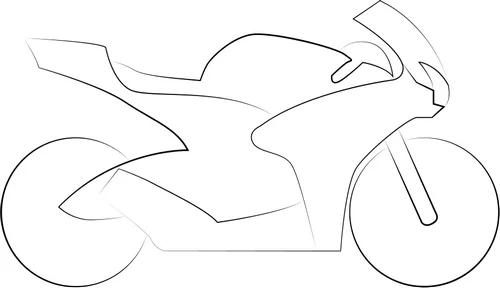
the new-generation Suzuki GSX-R 1000 is all about that: At the end of 2015, the brand announced the broad lines of this sports bike with the GSX-R Concept; a demonstration very close to the definitive interpretation. In fact, there are very few differences from the production version. Identical design, same technical strength, obvious threat, this teaser hinted at great potential.
The first step on a long road to catching up is to find horses. Psychologically, and perhaps more than in any other category, the tracker wants a missile with big watts. Until the next level is reached, the standard has stabilized at 200 hp. Suzuki wants to make its mark. Let's not wait until the end of the lines to learn that a GSX-R 1000 now produces 202 horsepower. Quite an improvement! The 4-cylinder block has gained 17 hp, with a relative sanction. Maximum power is perched much higher, at 13,500 rpm instead of 11,500 rpm. The same applies to torque, up slightly to 12 mkg, but with 800 extra rpm to reach its maximum. Suz has always been able to offer engines brimming with vigor for its high-caliber models, and this Gex is enough to make other blocks in the category sweat.
But this engine isn't just more powerful. It has other assets. Suzuki has taken a serious look at it. With a rare technological solution for motorcycles: variable valve timing. As a result, the intake camshaft has a different profile at different engine speeds. How is this achieved? By means of an ingenious system borrowed from MotoGP's GSX-RR. A special bell mounted on the ACT contains 12 balls running in oblique grooves. Centrifugal force pushes the balls towards the edge of the bell, shifting the cams. The VVT (Variable valve timing system) preserves power at low and medium revs, then boosts power at high revs. To save weight, the camshafts are hollow. And to prevent the valves from panicking at the top of the rev range, they are no longer actuated by pushrods but by finger followers.

These innovations are just some of the special features of this 4-cylinder. With new internal dimensions, 76 x 55.1 mm instead of 74.5 x 57.3 mm, it boasts a slightly larger displacement (999.1 -> 999.8 cm3), a higher compression ratio (12.9 -> 13.2 : 1), 1,000 rpm more (14,500 rpm), as well as new connecting rods, pistons and rings. Power isn't its only priority, however; it also wants to contribute to overall balance. It's 22.2 mm shorter, 6.6 mm narrower and 6° straighter.
For a GSX-R, the technical chapter has a special flavor. Every little improvement helps to make up for that missing thousandth. For example, there are new 10-hole injectors. The first row is located under the throttle and operates permanently, while the second, located in the airbox, only kicks in at high revs. The airbox has something to say too. There are single ducts in the center for cylinders 2 and 3, and a variable system for 1 and 4. These two-stage ducts are activated according to engine speed. At low and mid-rpm, air takes the longest route to boost torque; above mid-rpm, air rushes in from the top and bottom of the ducts to boost power. With this air intake distribution, Suzuki intends to smooth as well as broaden usable power. The intake diameter is increased from 44 to 46 mm.
On the exhaust side, too, airflow is controlled. In addition to the traditional valve in front of the silencer, the GSX-R features valves in the connecting tubes between cylinders 1-4 and 2-3. This balances gas counter-pressure.
A few brief details before another, more digital, chapter. Clutch control is smoother with the new anti-dribble clutch, the drive chain adopts a 525 pitch (530 previously), cooling efficiency is increased, but with 400 ml less on board + a modified oil cooler.
With its more powerful, more compact, more rev-hungry 4-cylinder, the 1000 GSX-R lines up head-on with the strongest of the pack. Every headlamp in ambush, every hand itching for performance, is now waiting for Suzuki's on-board electronics response. Like Honda with its CBR 1000 RR, Suz has waited a long time to integrate the latest rider assistance technologies. We were indeed entitled to several mappings with the S-DMS, and to ABS. But it now takes much more to sell. A 200-strong hypersport without traction control is a heresy today. So, in Hamamatsu, we hit the flea market and filled the trolley. Except...

Now it's time to install traction control. Suzuki's TCS calculates wheel rotation every 4 milliseconds, then intervenes according to deviations and the chosen setting. There are 10 positions on the big Gex, with this graduation: from 1 to 4, it's more for the track; 5 to 8, when you're going fast on the road; and 9 and 10 when the weather or the road are dull.
The S-DMS is still there, offering three injection mappings. Each provides maximum power but distributes it differently. Mode A is the most direct, while mode B tempers the engine's ardor until mid-range, and mode C calms power in the first two-thirds of the curve.
For everyday use, there are the two facilities found throughout the range: Low RPM Assist and Easy Start. The former adjusts revs to avoid stalling when starting off or at low speeds, while the latter takes care of starting after pressing the red button. Uh.... Does this kind of goodie really belong on a motorcycle requiring a lot of experience?
On the other hand, a small revolution at Suz: in neutral, you no longer need to squeeze the clutch handle when you want to start.

When we first saw the GSX-R 1000 Concept, we were expecting something seriously strong on the chassis side, with the beautiful inverted fork with offset cartridges as an appetizer. Problem is, this Showa BFF reserves its effectiveness for the R version.
Grumbling? Not so much. A lot of work has gone into the chassis to give the GSX-R 1000 a boost. The aluminum frame takes on more compact dimensions, and gains 10% in weight. The new swingarm is claimed to be more rigid, with the pivot axis moved forward 20 mm. The rear frame has been redesigned to save a further 1kg.
The suspensions, already tried and tested on the previous generation and of an excellent standard, are carried over to the new Gex. The 43 mm inverted fork is a Showa BPF model with a large piston. The rear shock absorber comes from the same manufacturer, and benefits from a new linkage for greater responsiveness.
When climbing aboard, but especially during the riding phases, seasoned riders will appreciate the ergonomic efforts made. Little things, but they're worth appreciating. The fuel tank, 21 mm lower, has been redesigned to facilitate body movement. Aim, move, angle! It's always more fun when you're comfortable and can pivot more naturally. Open the throttle wide, let the speedometer run wild for a while, then grab the brakes. Brake efficiency goes up a notch. The discs increase in size from 310 to 320 mm, and are attached to the frets by a duo of connectors, half classic, half T-drive. The calipers are still by Brembo. They are radially mounted and contain 4 x 32 mm pistons. ABS is standard, and thanks to the inertial unit, it's also active when cornering. Track Motion reduces pressure when the bike is on an angle, and also acts on rear-wheel lift during heavy braking.
New Gex, new dashboard. No more needle-type rev counter, no more hysterically jiggling red stem. From now on, an alphanumeric tablet groups all the information. Not very cheerful, no color except for a bit of red lost at the end of the revs... It's a far cry from the R1, RSV4-RR or Panigale. Yet all the information is there, with priority given to rpm, speed, gear engaged, S-DMS map selected and Traction Control level. And since the previous cockpit, we've gained a fuel level display, fuel consumption calculation, ambient temperature, a maintenance indicator and an ice warning light.

With this version, the Suzuki GSX-R 1000 has had its fill of power and the essentials of electronic assistance. It needs a few more to be as well-equipped as its friends, but there's already plenty to do - choice of mapping, traction control, ABS cornering, rear wheel lift control, Up&Down shifter. As announced, this Gex is the most powerful ever produced. And it boasts a superb power-to-weight ratio. Clearly, there's enough here to continue the trophy harvest. But it seems to have left it to its sister GSX-R 1000 R to take over the track and the hearts of seasoned racers. As far as she's concerned, her mission will be to be the most effective everywhere else.
M.B - Manufacturer's photos
by Greg

 Share
Share
Key facts Suzuki GSX-R 1000 (2021) : What you need to know before you buy
Highlights
- Top power
- Refined and optimized
- Enhanced electronic endowment
Weak points
- Badly beaten by the competition
- Effective but bland dashboard
Prices
| Basic version | |
|---|---|
 France France |
16,999€
|

Performance
- Max speed : approximately 300 km/h (186.40 mph)
History

Specifications Suzuki GSX-R 1000 2021
- Chassis
- Frame : aluminum perimeter
- Fuel capacity : 16 liters (4.23 US gallons)
- Seat height : 825 mm (32.48 in)
- Length : 2,075 mm (81.69 in)
- Width : 705 mm (27.76 in)
- Min height : 1,145 mm (45.08 in)
- Wheelbase : 1,420 mm (55.91 in)
- Weight when fully loaded : 202 kg (445 lb)
- Front axle
- Reverse telehydraulic fork Ø 43 mm
- Braking 2 Brembo discs Ø 320 mm (12.6 in), radial mounting, 4-piston caliper
- Front tire : 120 / 70 - 17 → Order this type of tire
- Transmission
- 6 stage gearbox
- Secondary by chain
- Rear axle
- Mono-damper
- Braking 1 disc Ø 220 mm (8.66 in), single-piston caliper
- Rear tire : 190 / 55 - 17 → Order this type of tire
- Motor
- 4 cylinders online , 4 strokes
- Injection Ø 46 mm
- Cooling system : liquid
- 2 ACT, distribution varia
- 4 valves per cylinder
- 999.80 cc
- 202 ch (199.20 hp) to 13,200 rpm
- 12 mkg to 10,800 rpm
- Power-to-weight ratio : approximately 0.94 kg/ch
- Weight / torque ratio : approximately 15.66 kg/mkg
- Compression : 13.2 : 1
- Standard equipment
- Brake assist : Carrera ABS
- Practical information





Models
2021
2020


2019


2018


2017


Used


Compare the GSX-R 1000 to its competitors
Acceleration
Fuel consumption
Range
Torque
Power
Power-to-Weight ratio
Torque-to-Weight ratio
Speed
CO² emissions
FAQ Your frequently asked questions about the GSX-R 1000 2021
- What is the power of the GSX-R 1000 2021?
-
The GSX-R 1000 2021 develops a power of 202 ch (199.20 hp)
- What is the torque of the GSX-R 1000 2021?
-
The maximum torque of the GSX-R 1000 2021 is 12 mkg to 10,800 rpm.
- What is the maximum speed of the GSX-R 1000 2021?
-
The GSX-R 1000 2021 is capable of reaching a top speed of approximately 300 km/h (186.40 mph) on the track.
- What is the weight of the GSX-R 1000 2021?
-
The GSX-R 1000 2021 has a a weight when fully loaded of 202 kg (445 lb).
- QWhat is the seat height of the GSX-R 1000 2021?
-
To ensure good accessibility, the GSX-R 1000 2021 offers a minimum seat height of 825 mm (32.48 in).
- What is the price of the GSX-R 1000 2021?
-
The price of the GSX-R 1000 2021 is 16,999€ in France
News
-
New motorcycle products for 2026

-
Bridgestone announces the RS12, its new road-race weapon.
-
Yamaha Race Like A Girl: Natalia Rivera in episode 5.
-
Bridgestone presents the Battlax V03, its new slick tire.
-
With Sartoria Meccanica, MV-Agusta aims to go beyond premium.
-
Upgrading the entire Bonneville family for 2026.
-
Metzeler unveils three new tires at EICMA.
-
World Superbike celebrates 70 years of Yamaha.
-
Exceptional: some thirty new Triumphs in 2026.
-
40.000 bikers for the Royal-Enfield "One Ride" 2025.



Bikers' reviews Leave a review - 2 reviews