
Motorcycle specifications YamahaYZF-R1 1000 2008 Boundaries no longer exist


presentation of the YZF-R1 1000 2008
Is the R1's evolutionary potential unlimited? It's a vast debate that will be settled this year by a major new evolution of Yamaha's hypersport. Change? Plenty, although the lines don't seem to suggest as much. For 2007, R1 evolution or new R1?
Judging briefly by the styling, we'd be tempted to say evolution. The R1 's much-praised and much-admired design has finally been tweaked, something Yamaha didn't dare do in 2006, when the 2004 design was such a success. Such is its beauty that this stylistic approach remains for this new opus, but with reinforced aggressiveness. The forced air intakes are closer to the underside of the headlamps, while the sides of the rear hull are trimmed to give more space to the exhausts. Inspired by the latest R6 offensive, the fairing sides adopt a new design derived directly from the 600 pistarde. The shoulders lose some of their fluidity, as does the overall line, which was previously so homogeneous. The new R1 is beautiful, seductive, intimidating, almost voracious, but its sensual design has become a little less suave, less fine, more virile.
The dress rework is only a tiny part of what's changed. And now, as we take a closer look at this fifth-generation R1, we'll see that it's no longer a weapon for the track, but artillery for competition. The NEW R1 takes climbing one step further.
This year, Yam adds a new ingredient to the cocktail: YCC-I. The result: more power, more availability and more engine fun. YCC-I stands for Yamaha Chip Controlled Intake. More concretely, it's an electronically-controlled motorized variable air intake system. So, how does it work?
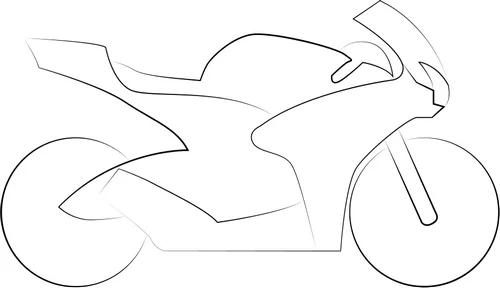

The advantage: during the intake phase of an engine, the downward movement of the piston creates a vacuum in the intake manifold, generating a pressure difference between the air and its natural inertia. This pressure difference causes a reverse reaction in the direction of the intake valve. This 'inertial load' phenomenon increases the engine's volumetric efficiency. A shorter intake manifold produces a shorter pressure wave, which optimizes volumetric efficiency. A longer intake manifold slows down the pressure wave. By varying the length of the intake manifold according to rpm, performance can be improved across the entire rpm range.
At low revs, for example, the mill uses the 140 mm intake manifold, which optimizes torque and improves responsiveness under acceleration. When the rider steps on the gas and increases engine speed and throttle opening, on the racetrack for example, the intake manifold length is instantly reduced to 65 mm, allowing the engine to display its full potential.
One year after the R6, the new R1 adopts YCC-T This technology analyzes various parameters relating to the way the R1 rider handles the throttle. The electronic unit then adapts the throttle opening by means of a motor to ensure optimum performance.
Another small revolution: the cylinder head. For 20 years, Yamaha's hypersports bikes have featured 5 valves per cylinder. No more! Back to the conventional 16-valve cylinder head. The engine itself, although the same dimensions as the 2006 boiler, has undergone some major changes: completely redesigned cylinder head, new combustion chambers, compression ratio increased to 12.7:1, titanium intake valves, and to avoid sweeping the track during heavy deceleration, the clutch now features a torque limiter, as on the R1 SP.
So much technology! It takes a lot to make this R1 the new scarecrow of the class, and to master the new bike's 189 horsepower. Exceptional power, thanks to forced air intake (180 static) and the incredible work of our engine designers.

the rear suspension has been optimized, while the front features a new fork finished with radial calipers with... 6-piston radial calipers. A first on a production machine. The discs are 10 mm smaller in diameter. We can't wait to try out these new brakes.
Another, even more surprising surprise: the weight. Like the GSX-R 1000 2007, the R1 hasn't lost weight, it's gained. It has gained 4 kg since last year - it's back to its youthful shape, weighing the same as when it came out in '98. Except that since then, it has gained 41 horsepower and a Superbike chassis.
Last but not least, the dashboard has evolved. Reworked speedometer graphics (superb), hexagonal shiftlight and subtle touch-ups.
New restrictive pollution standards, new 16-valve cylinder head, invasive electronics... the R1's new engine was eagerly awaited on the circuit, with the imperative need to demonstrate its potential, without detour or hesitation. A test in itself, which the YZF 1000 faces with aplomb that challenges the competition. eternally compared to the GSX-R 1000, the Yamaha 's weaker mid-range power meant that it was less effective. This time around, the situation is likely to be very different, as the R1 has become quite full in the middle of the rev counter. When I say "packed", I'm not just talking about its power, but also about the way it's delivered. Power takes full advantage of the long intake cones managed by the YCC-I, and driveability is superbly managed by the YCC-T (throttle control). As a result, thrust arrives vigorously, smoothly and progressively. A reassuring "softness" when the horsepower is unleashed, smoothing the arrival of power to make the most of curve exits. Sensations are a little poorer, but efficiency is increased tenfold, with fewer afterthoughts on acceleration and less risk of stalling. Open up! The silicon chips manage. As always with Yam hypersports, when you hit the high revs, it pushes hard, very hard!
S
Will the rider of such a machine easily accept that his right hand and his ardor are controlled by microprocessors? The benefit in terms of time will calm his ego. Let's hope so, because cohabitation will become indispensable with such beasts of power.
Undeniably fuller on every level than its predecessor, the new YZF-R1 is a monster of technology and power. A true adrenalin-fuelled competition beast. The benefits of such a profusion of innovations are of very limited interest on the road, where its performance cannot be exploited in any case. On the track, however, its efficiency is multiplied tenfold - it's going to get hot and heavy between the vibrators. The match against the GSX-R 1000 should crush all existing references.
M.B - Russel Stihl
Manufacturer'sphotos
by Greg

 Share
Share
Key facts Yamaha YZF-R1 1000 (2008) : What you need to know before you buy
Highlights
- On-board technology
- Increased power
- Optimized chassis
- More torque at mid-range
Weak points
- Weight gain
- Pas de rangement
- Pilot managed by
Prices
| Basic version | |
|---|---|
 France France |
13,790€
|


Performance
- Max speed : approximately 300 km/h (186.40 mph)
Specifications Yamaha YZF-R1 1000 2008
- Chassis
- Frame : deltabox V aluminium double beam
- Fuel capacity : 18 liters (4.76 US gallons)
- Seat height : 835 mm (32.87 in)
- Length : 2,060 mm (81.10 in)
- Width : 720 mm (28.35 in)
- Min height : 1,110 mm (43.70 in)
- Wheelbase : 1,415 mm (55.71 in)
- Dry weight : 177 kg (390 lb)
- Front axle
- Reverse telehydraulic fork Ø 43 mm, Wheel travel : 120 mm (4.72 in)
- Braking 2 discs Ø 310 mm (12.2 in), radial mounting, caliper 6 pistons
- Front tire : 120 / 70 - 17 → Order this type of tire
- Transmission
- 6 stage gearbox
- Secondary by chain
- Rear axle
- Monoshock rear suspension, Wheel travel : 130 mm (5.12 in)
- Braking 1 disc Ø 220 mm (8.66 in), 2-piston caliper
- Rear tire : 190 / 50 - 17 → Order this type of tire
- Motor
- 4 cylinders online , 4 strokes
- Injection
- Cooling system : liquid
- 2 ACT
- 4 valves per cylinder
- 998 cc
- 180 ch (177.50 hp) to 12,500 rpm
- 189 hp with ram air
- 11 mkg to 10,500 rpm
- 12.1 mkg with ram air
- Power-to-weight ratio : 1 kg/ch
- Weight / torque ratio : 16.09 kg/mkg
- Compression : 12.7:1
- Practical information





Models
2008


2007


Compare the YZF-R1 1000 to its competitors
Acceleration
Fuel consumption
Range
Torque
Power
Power-to-Weight ratio
Torque-to-Weight ratio
Speed
FAQ Your frequently asked questions about the YZF-R1 1000 2008
- What is the power of the YZF-R1 1000 2008?
-
The YZF-R1 1000 2008 develops a power of 180 ch (177.50 hp)
- What is the torque of the YZF-R1 1000 2008?
-
The maximum torque of the YZF-R1 1000 2008 is 11 mkg to 10,500 rpm.
- What is the maximum speed of the YZF-R1 1000 2008?
-
The YZF-R1 1000 2008 is capable of reaching a top speed of approximately 300 km/h (186.40 mph) on the track.
- What is the weight of the YZF-R1 1000 2008?
-
The YZF-R1 1000 2008 has a a dry weight of 177 kg (390 lb).
- QWhat is the seat height of the YZF-R1 1000 2008?
-
To ensure good accessibility, the YZF-R1 1000 2008 offers a minimum seat height of 835 mm (32.87 in).
- What is the price of the YZF-R1 1000 2008?
-
The price of the YZF-R1 1000 2008 is 13,790€ in France
News
-
New motorcycle products for 2026

-
Bridgestone announces the RS12, its new road-race weapon.
-
Yamaha Race Like A Girl: Natalia Rivera in episode 5.
-
Bridgestone presents the Battlax V03, its new slick tire.
-
With Sartoria Meccanica, MV-Agusta aims to go beyond premium.
-
Upgrading the entire Bonneville family for 2026.
-
Metzeler unveils three new tires at EICMA.
-
World Superbike celebrates 70 years of Yamaha.
-
Exceptional: some thirty new Triumphs in 2026.
-
40.000 bikers for the Royal-Enfield "One Ride" 2025.



Bikers' reviews Leave a review - 12 reviews
Having had a 2004 model, without hesitation, I recommend this model, the 2004 didn't leave me with a good memory next to this one. Rating : 5/5 Respond to YR1
one comment: fork finished with radial calipers with... 6-piston radial calipers. A first on a production machine
his fake l4YZF 750R from 1993 already had them back then Rating : 5/5 Respond to drago67
Acceleration and acceleration are breathtaking both on hills and flats, the front wheel is almost never on the ground in case of strong acceleration caution is required! lol! finally it's a supersport bike with GP sauce! Dany de la Réunion Rating : 5/5 Respond to yamasukayc
To hell with Sarko and his henchmen who haunt our roads and try to prevent us from having fun....
I'd love to have this new R1, it's magnificent, sensual and wild as can be
I'm almost 50, but who cares, with this bike, the years don't exist and I certainly don't want to become "reasonable"
thank you Yamaha for creating such masterpieces. Rating : 5/5 Respond to Zoltan
However, such a debauchery of technology and power doesn't really have a place on our roads anymore !!!!!
In fact, I've got the 2004 R1 in Bordeaux, and the 172 hp are already more than enough to have fun and toast anything on the road, no need for anything more for ordinary "mortals"
The Japanese manufacturers should be working on the reliability and pollution levels of their machines
Finally, in conclusion, I'm like you and this mad escalation of power and performance makes me dream too; what a pity though that there are so few circuits, in France, of the necessary size to exploit these 189 hp at our disposal
Frédéric from Lille. Rating : 5/5 Respond to R1FREDERIC