
Motorcycle specifications HondaCRF 250 R 2018 For the win


presentation of the CRF 250 R 2018
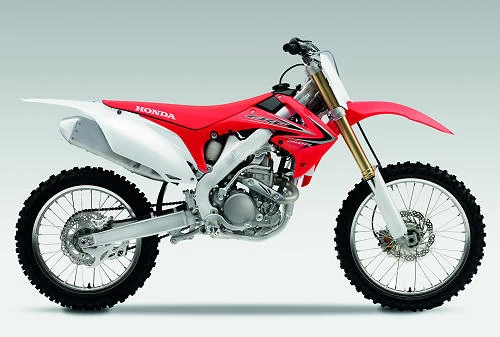
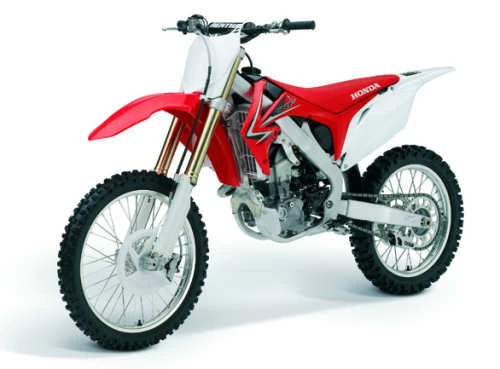
Honda has done a hell of a job on its cross-country machine. The 250 CRF had to evolve in the face of very tough competition, and the results are there for all to see: it gets an all-new engine with double overhead camshafts, 9% more power over a large part of the operating range, higher maximum rpm and an original electric starter. The entire chassis is taken from the CRF 450 R, including the inverted fork with 49 mm Showa springs. Let's take a closer look:
the 2018 CRF 250 R leaves the 2017 version far behind with a 5% improved power-to-weight ratio. In comparative tests between the two vintages, the new CRF 250 R is faster from the very first meters off the grid!
Its double ACT engine, with its super-square dimensions, larger valves and revised intake/exhaust tuning, now boastsnow boasts a power increase of over 9%, spread over a much wider operating range and an even higher maximum rpm. Right from the start and lap after lap, the 2018 CRF 250 R is built to take the lead and smash the lap times.
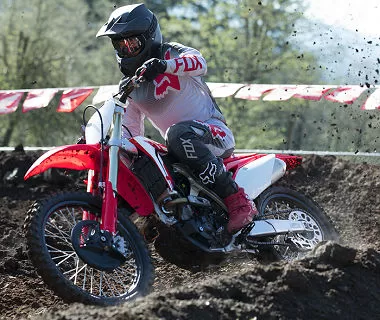
Characterized by an in-depth focus on mass centralization, the new frame borrowed from the cRF 450 R transforms this extra power into efficient power, with new geometry and a lowered center of gravity that glues the rear wheel to the ground. The new model also adopts the Showa ø 49 mm inverted fork with springs from the CRF 450 R, offering a wide range of adjustment options.
Like the CRF 450 R, the CRF 250 R's bodywork features aerodynamic, organic shapes that give the rider ample freedom of movement. The graphics are integrated into scratch-resistant plastic, giving them a durable, aesthetic appearance.
finally, like the 2018 CRF 450 R, the new CRF 250 R comes with an electric starter as standard.
engine

A simple run on the power bench is enough to demonstrate this: from 8,500 rpm, the 249.4 cm3 block simply outperforms its predecessor, and continues to deliver power and torque without running out of steam as it revs up.
A key factor in this increase in performance - which boils down to improved gas exchange - is the fundamental dimensions of the bore and stroke, now denow set at 79 x 50.9 mm, with a 4.5 mm cylinder offset to reduce friction (compared with 76.8 x 53.8 mm and 4 mm respectively for the 2017 version). These much more "super-square" dimensions (larger bore, shorter stroke) allow the use of larger titanium valves: ø 33 mm at the intake (with a specific tulip shape to reduce intake resistance) and ø 26 mm at the exhaust (vs. 30.5/25 mm).
Valve lift is also greater: 10.5 mm at intake and 9.5 mm at exhaust (9.2/8.4 mm), while the angle between valves is slightly more compact, dropping from 21.5° to 20.5°. Camshaft-valve lugs receive a DLC (Diamond Like Carbon) surface treatment, providing both abrasion resistance and reduced friction, while valve springs are now oval in cross-section. The intake valves are fed by a ø 46 PGM-FI electronic fuel injection system via symmetrical direct pipes, which are shorter to favor high revs.
The new engine also features two exhaust ducts, each with its own manifold whose radius is progressively reduced to control gas flow. The two silencers are positioned 24 mm further down the center of the machine to help centralize mass.
The volumetric ratio rises slightly from 13.8:1 to 13.9:1. The piston crown is reinforced by a partitioned structure, a first on a Honda motocross bike. This architecture transfers the pressure of combustion into more efficient power, and despite the increased bore, the piston is no heavier. 4 nozzles (compared to 2 previously) limit friction and ensure better cooling.
The new H-shaped crankshaft is 350g lighter - for greater liveliness - while remaining rigid and robust. To make the engine as compact as possible, the distance between the crankshaft and balancer axles has been reduced by 0.5 mm, and by 1 mm between the crankshaft and the gearbox input shaft. The timing chain is now positioned on the right-hand side to reduce the distance between crankshaft and flywheel.
The 2018 CRF 250 R engine features an electric starter that replaces the kick. Centrally positioned (the design of the new crankcases ensures that all inertial masses are positioned as close as possible to the center of gravity) for improved dynamic behavior, it drives the clutch and idler via a torque limiter and thanks to a compact, lightweight lithium-ion battery (0.65 kg).
This adds just 1 kg to the weight of the engine and starter.
An oil pump reduces friction and pumping losses at high engine speeds by evacuating air and oil from the crankcase and maintaining negative pressure. The 1250 cm3 engine oil also lubricates the clutch and gearbox, whereas the 2017 version carried a total of 1600 cm3 divided between the engine (850 cm3) and gearbox (750 cm3).
The primary pinion (which drives the oil pump), filter and oil lines are located on the right-hand side of the engine, while the lubrication circuit has been simplified and shortened. Distribution lubrication now passes through the cylinder head and then the inside of the intake and exhaust camshafts, directly lubricating the contact surface between the rocker arm and the valve stem. The water supply pipes in the crankcase walls are now 3 mm thick, compared with 4 mm previously.
Although exactly the same dimensions as before, the clutch features modified components, in particular outer plates lined with a different friction material. The clutch lever support has also been redesigned, simplified and lightened. The new 5-speed gearbox is made from high-strength steel and weighs 200g less. The first and second gears are slightly shorter, while the final gear ratio has gained one tooth at the crown (48 teeth).
The contact-breaker and EMSB (Engine Mode Select Button) map selector are integrated into a small comodo on the left of the handlebars. 3 mappings are available to suit rider preferences and riding conditions: Mode 1 (Standard), Mode 2 (Gentle) and Mode 3 (Aggressive). Modes 2 and 3 can be reset using the existing HRC software and tool. A small indicator light shows which mode is selected. to the right of the handlebar is the electric starter button.
Finally, the throttle's resin guide is now integrated into the cable itself, limiting weight. A knurled screw is used to adjust the throttle clearance.
cycle part

Lighter by 340g than the previous version, this 7th-generation aluminum frame features trapezoidal side beams, with a precise distribution of weight.zoidal side beams, with a precise balance between rigidity and flexibility that translates into greater front-end stability and a direct feel for the traction available at the rear.
Compared to the old chassis, the geometry of the 2018 CRF 250 R evolves slightly: the wheelbase is 3 mm shorter, and the distance between the rear wheel axle and the swingarm axle is shortened by 15 mm to 573 mm. Caster angle and drag are fixed at 27.5°/116 mm, while the center of gravity is lowered by 1.4 mm.
Now made from extruded aluminum (rather than forged), the rear buckle is 20% lighter, helping to centralize mass. Seat height has increased by 6 mm (957 mm) and ground clearance by 5 mm (327 mm). Finally, the total weight, fully loaded, is 108 kg.
The Showa SFF-TAC-Air fork of the previous model has been replaced by an inverted element.the Showa SFF-TAC-Air fork of the previous model has been replaced by an inverted ø 49 mm spring element, again from Showa. Inaugurated on the current CRF 450 R, this fork is not an evolution of the old ø 48 mm sprung fork, but a version of the Showa factory kit supplied to official Japanese MX Championship teams.
The main rebound cartridge has a diameter of 25 mm, the stem is 14 mm, while the secondary cartridge for managing compression is a 39 mm model. As you'd expect from a suspension designed specifically for racing, the ride is smooth, progressive and perfectly controlled. Compression and rebound are adjustable.
Installed 39 mm lower than before and directly in the machine's axle, the fully adjustable Showathe fully-adjustable Showa rear shock absorber acts via a variable Pro-Link gearing system on a 220g lighter aluminum swingarm.
At the front, a ø 260 mm petal disc combined with a 2-piston caliper ensures braking that's both powerful and easy to control. this is complemented at the rear by a ø 240 mm disc with single-piston caliper. Aluminum rims (21 x 1.6 at the front and 19 x 1.85 at the rear) limit unsprung weight; both are fitted with Dunlop GEOMAX MX3S 80/100-21 and 100/90-19 rubber.
The new 2018 CRF 250 R also shares with the CRF 450 R its 6.3-liter titanium fuel tank, which weighs just 1,039g, a saving of 513g over the plastic element it replaces. This half-kilo reduction in weight contributes significantly to the machine's lower center of gravity, while the shape of the tank facilitates rider movement.
The flowing lines of the new plastics also help the rider to move around more easily, while the front end is narrower and the new shape of the front fender directs air more efficiently to the radiators.
The bodywork is based on the graphics introduced on the CRF 450 R last year. The graphics are integrated directly into the plastic components, ensuring high resistance to friction.
News and media credits: Honda
by Greg

 Share
Share
Key facts Honda CRF 250 R (2018) : What you need to know before you buy
 France
Specifications Honda CRF 250 R 2018
- Chassis
- Frame : Double beam and single split cradle in aluminum
- Fuel capacity : 6.30 liters (1.66 US gallons)
- Seat height : 957 mm (37.68 in)
- Length : 2,183 mm (85.94 in)
- Width : 827 mm (32.56 in)
- Min height : 1,274 mm (50.16 in)
- Wheelbase : 1,486 mm (58.50 in)
- Weight when fully loaded : 108 kg (238 lb)
- Front axle
- Telehydraulic inverted fork Ø 49 mm, Wheel travel : 310 mm (12.20 in)
- Braking 1 disc Ø 260 mm (10.24 in), 2-piston caliper
- Front tire : 80 / 100 - 21 → Order this type of tire
- Transmission
- 5 stage gearbox
- Secondary by chain
- Rear axle
- Mono-damper, Wheel travel : 317.60 mm (12.50 in)
- Braking 1 disc Ø 240 mm (9.45 in), single-piston caliper
- Rear tire : 100 / 90 - 19 → Order this type of tire
- Motor
- single-cylinder , 4 strokes
- Injection Ø 46 mm
- Cooling system : liquid
- 1 ACT
- 4 valves
- 249.40 cc
- ≈ 44 ch (43.40 hp)
- Power-to-weight ratio : approximately 2.33 kg/ch
- Compression : 13.9 : 1
- Practical information





Models
2025

2024
2023
2022
2020

2019

2018
2017
2016

2015
2014

2013
2012
Used


Compare the CRF 250 R to its competitors
Power
Power-to-Weight ratio
FAQ Your frequently asked questions about the CRF 250 R 2018
- What is the power of the CRF 250 R 2018?
-
The CRF 250 R 2018 develops a power of 44 ch (43.40 hp)
- What is the weight of the CRF 250 R 2018?
-
The CRF 250 R 2018 has a a weight when fully loaded of 108 kg (238 lb).
- QWhat is the seat height of the CRF 250 R 2018?
-
To ensure good accessibility, the CRF 250 R 2018 offers a minimum seat height of 957 mm (37.68 in).
- What is the price of the CRF 250 R 2018?
-
The price of the CRF 250 R 2018 is 8,799€ in France
News
-
New motorcycle products for 2026

-
Bridgestone announces the RS12, its new road-race weapon.
-
Yamaha Race Like A Girl: Natalia Rivera in episode 5.
-
Bridgestone presents the Battlax V03, its new slick tire.
-
With Sartoria Meccanica, MV-Agusta aims to go beyond premium.
-
Upgrading the entire Bonneville family for 2026.
-
Metzeler unveils three new tires at EICMA.
-
World Superbike celebrates 70 years of Yamaha.
-
Exceptional: some thirty new Triumphs in 2026.
-
40.000 bikers for the Royal-Enfield "One Ride" 2025.




Bikers' reviews Leave a review - 7 reviews
it is beautiful, slim and I think very efficient ... I'll test it tomorrow and I'll talk later thank you
Rating : 5/5 Respond to Mo
How to find the valve clearance value for CRF 2014 R
Thank you for your help. Rating : 5/5 Respond to fred
who can tell me?
thank you Rating : 4/5 Respond to josysxm
you'll find the information on the motorcycle page
http://www.motoplanete.com/honda/4277/CRF-250-R-2013/contact.html#technique
Bonne route Rating : 5/5 Participate in the conversation