
Motorcycle specifications HondaCBR 1000 RR Fireblade 2010 Change of course


presentation of the CBR 1000 RR Fireblade 2010
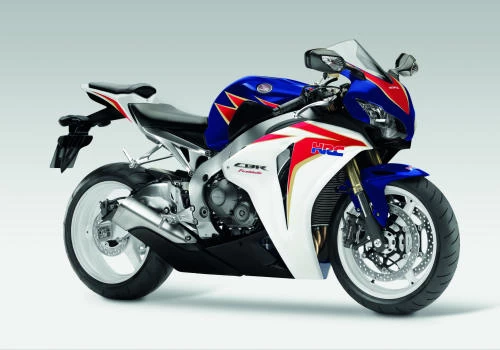
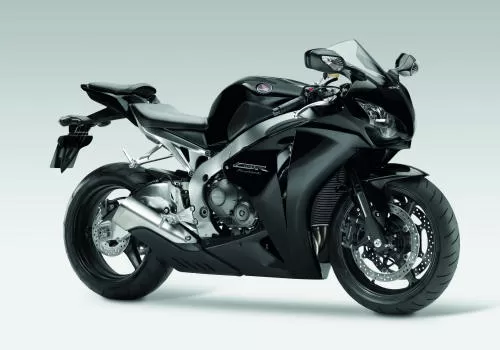
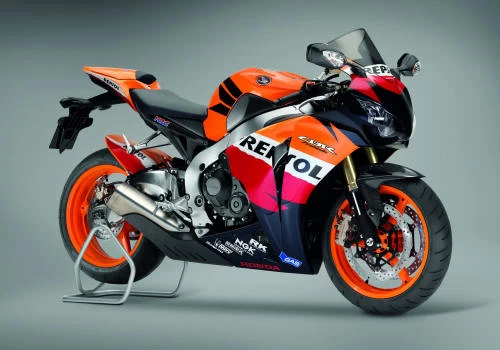
the CBR 1000 RR has undergone a major transformation. From top to bottom and from engine to fairing, the Fireblade marks a clear break with its predecessors. As a result, the "detachment" movement initiated in 2006 with the"RCV 211 Design" concept reaches its conclusion here: neither the 600 nor the 1000 copy the style of the innovative MotoGP machine, although some styling elements tend to resemble the new 800 RCV 212... The CBR evolves with its own philosophy, and its own codes.
a stylistic evolution that surprises on many points, in particular the boldly balanced silhouette. With the disappearance of the under-seat exhaust, the rear end has been completely redesigned. Particularly slim and short, almost as svelte as a 125, its tiny size contrasts surprisingly well with the more massive design of the main fairing. A cetacean-like profile, apt to fuel controversy for many hours, but perfectly justified by the hard work of our engineers. As Honda emphasizes -"Clearly, aerodynamic performance is more important than visual appeal" - the focus is on simplicity and efficiency. And it's fair to say they've worked hard to achieve this.
first, to optimize the properties of air, a capricious element in aerodynamics and a vital commodity for the boiler. The new shape of the fork head is intended to offer greater liveliness and control when changing direction. Closer to the steering column, it re-centralizes mass and reduces aerodynamic drag as the rider swings from one angle to another.
Under its menacing eyes, 2 dynamic intakes replace the single air intake duct (hidden under the steering column on older 1000 RRs) to feed the new engine more efficiently.

199 kg fully loaded. This is no laughing matter. For one thing, it's been a long time since Japanese manufacturers have announced a weight in this way (usually, it's always dry, with values so low that one wonders if they're counting oil, coolant and battery acid...). On the other hand, it means that the CBR 1000 RR is the only hypersport to have lost weight in its transformation. Only Ducati has also lost weight in its upgrade from 999 to 1098. The Honda is now the lightest of the big Japanese sports bikes, as was its venerable 1992 ancestor. The latest R1 and GSX-R are almost 10 kg lighter.
but before that, the CBR was far from the slimmest bike in its class; how did it get that way? Simple: weight has been hunted down everywhere, in every direction, in every way.
new hollow spokes on the wheels save 240g at the front and 310g at the rear. Radial brake calipers (monobloc type, please) are 126g lighter each. Their pistons are no longer made of steel but of chromium-coated aluminum, and lose a further 430g. As for the discs, the simple fact of using 6 frets instead of 10 saves a further 90g.
it's all there. The engineers even opted for a 7-ah battery instead of 10, saving 1 kg. And they spent a few sleepless nights on the engine:
objective: find some horsepower. Solution: redesign everything in the engine. Procedure: change the internal dimensions. And it works. The block gains half a thimble in displacement (from 998 to 999.8 cm3) and changes its stroke/bore ratio. This was only made possible by a change in surface treatment. The ceramic composite liners have been replaced by an ultra-resistant JCP (Jet-flow Circulation Plating) treatment. As a result, the bore has increased from 75 to 76 mm, and the stroke has been reduced by 1.4 mm to 55.1 mm. The engine's overall width remains unchanged, as the space between the cylinders has been reduced from 6 to 5 mm. The result: 2.5 kg less weight on the mill and 177 static horsepower(172 on the 2007 version). This brings us up to speed with the competition, especially as the main enemy in competition is weight. And the hunt doesn't stop there: weight has been saved on the cylinder head, with shorter, lighter valves, new camshafts, lighter return springs, larger but lighter forged pistons... everywhere, I tell you! And the frame has also been given a makeover.
the new trick to reducing frame weight is to simplify it. On the Honda, only 4 parts are used instead of 9: a new molded steering column in which the two passages of the air intake system are housed, two intermediate sections that surround the engine and finally a large U-shaped piece that runs under the rear of the engine and houses the swingarm axle. The factory claims a gain of around 2.5 kg for increased rigidity values: + 40% in torsion, + 30% in vertical and + 13% in lateral.
As for suspension, the manufacturer remains confident in the current system. As a result, there are few changes on the agenda: fork tube spacing reduced by 10 mm (214 -> 204), offset increased by 2.5 mm (from 25 to 27.5 mm), and more compact wheel axle mounts.
It's the swingarm that stands out the most. Now banana-shaped on the right, it is 11 mm longer and anchored higher, but without altering the wheelbase. Stability will be all the better for it, especially as the host of chassis modifications should more than significantly improve the Fireblade's agility. The shock absorber is still linked to the Unit Pro-Link system inaugurated by MotoGP's RCV 211.

returning to the clutch, we find that Honda has adopted an anti-dribble clutch. The manufacturer knows more than a little about this technology - Honda says"such a system had already been developed for the first time on the revolutionary NR500 with oval pistons entered in Grand Prix racing in 1979, then on the VFRs entered by the factory in Superbike racing in 1982. On production machines, the RC45 which appeared in 1994 was also equipped with such a system." - In short, we had to wait more than 25 years for the system to appear on a mass-produced Honda sportsbike...
The engineers didn't want to copy the competition's systems, so they fine-tuned their device. On deceleration, the anti-dribble system is activated in the same way as most other systems, with a set of cams that disengage the discs when there's too much torque to digest. Where the Honda mechanism differs is in the presence of another set of cams which force the discs back together and re-engage the clutch firmly the instant engine power is re-applied. This process reduces pressure on the discs, and the clutch control system dispenses with hydraulics and reverts to the traditional cable.
perhaps the bold styling of the new CBR is debatable, but surely its design is an impressive dose of hard work to restore the Fireblade to its former glory. Honda is back on track with the Ten Kate team's Superbike performance, and intends to provide it with excellent equipment for the 2008 season. The GSX-R has swept all before it for the last 6 years, the R1 has just won the Bol d'Or, and the ZX-10R is back with a completely new look. The battle promises to be tighter than ever.

A number of options are available to personalize your CBR 1000 RR '08:
- A selection of carbon parts specially developed for the Fireblade, including a rear mudguard
a selection of carbon parts specially developed for the Fireblade, including a rear mudguard to protect the inside of the chassis, a front mudguard to protect the lower part of the fork, and clutch and alternator housing protectors.
- A carbon-style fuel tank protector and a filler cap cover with HRC logo.
- A passenger seat cover in tuned colors, reinforcing the CBR's dynamic image.
- A tinted bubble 30 mm higher for a more dynamic image and enhanced protection.
- A set of "Racing" adhesives for the fairing and wheels.
- A set of nylon fairing protectors.
- A rider's seat made from a special elastomer for enhanced comfort.
- A U-shaped anti-theft device designed to fit in the space under the passenger seat or under the optional hood
hood.
- A tank bag specially designed for the CBR1000RR Fireblade.
- A saddlebag that can be installed on the passenger seat.
- A compact alarm with motion detector, siren and battery backup. Low-power standby
mode protects the battery from total discharge.
by Greg

 Share
Share
Key facts Honda CBR 1000 RR Fireblade (2010) : What you need to know before you buy
Highlights
- Engine
- Behavior
- Increased power
Weak points
- Concurrence
- Look ... Special
Prices
| Basic version | |
|---|---|
 France France |
15,690€
|


Performance
- Max speed : 290 km/h (180.20 mph)
- Average fuel consumption : 6.30 liters/100km (0.37 mpg)
-
Estimated range
: 270 km (168 miles)
Calculated range until tank is empty, not verified.
History

Specifications Honda CBR 1000 RR Fireblade 2010
- Chassis
- Frame : Double poutre aluminium composite type Diamond
- Fuel capacity : 17 liters (4.49 US gallons)
- Seat height : 831 mm (32.72 in)
- Length : 2,077 mm (81.77 in)
- Width : 826 mm (32.52 in)
- Min height : 1,131 mm (44.53 in)
- Wheelbase : 1,407 mm (55.39 in)
- Dry weight : 166 kg (366 lb)
- Weight when fully loaded : 198 kg (437 lb)
- Front axle
- Reverse telehydraulic fork Ø 43 mm, Wheel travel : 120 mm (4.72 in)
- Braking 2 discs Ø 320 mm (12.6 in), radial mounting, 4-piston caliper
- Front tire : 120 / 70 - 17 → Order this type of tire
- Pressure : 2.5 bar
- Transmission
- 6 stage gearbox
- Secondary by chain
- Rear axle
- Unit Pro-Link monoshock rear suspension, Wheel travel : 135 mm (5.31 in)
- Braking 1 disc Ø 220 mm (8.66 in), single-piston caliper
- Rear tire : 190 / 50 - 17 → Order this type of tire
- Pressure : 2.9 bar
- Motor
- 4 cylinders online , 4 strokes
- Double ACT
- Cooling system : liquid
- Injection
- 4 valves per cylinder
- 999.80 cc
- 177 ch (174.60 hp) to 1,200 rpm
- 11 mkg to 8,500 rpm
- Power-to-weight ratio : 0.95 kg/ch
- Weight / torque ratio : 15.09 kg/mkg
- Compression : 12.2:1
- Practical information





Models
2011
2010


Used


Compare the CBR 1000 RR Fireblade to its competitors
Acceleration
Fuel consumption
Range
Torque
Power
Power-to-Weight ratio
Torque-to-Weight ratio
Speed
FAQ Your frequently asked questions about the CBR 1000 RR Fireblade 2010
- What is the power of the CBR 1000 RR Fireblade 2010?
-
The CBR 1000 RR Fireblade 2010 develops a power of 177 ch (174.60 hp)
- What is the torque of the CBR 1000 RR Fireblade 2010?
-
The maximum torque of the CBR 1000 RR Fireblade 2010 is 11 mkg to 8,500 rpm.
- What is the maximum speed of the CBR 1000 RR Fireblade 2010?
-
The CBR 1000 RR Fireblade 2010 is capable of reaching a top speed of 290 km/h (180.20 mph) on the track.
- What is the weight of the CBR 1000 RR Fireblade 2010?
-
The CBR 1000 RR Fireblade 2010 has a a dry weight of 166 kg (366 lb), a weight when fully loaded of 198 kg (437 lb).
- What is the fuel consumption of the CBR 1000 RR Fireblade 2010?
-
Average fuel consumption is estimated at 6.30 l/100km (0.37 mpg) according to the WMTC cycle.
- QWhat is the seat height of the CBR 1000 RR Fireblade 2010?
-
To ensure good accessibility, the CBR 1000 RR Fireblade 2010 offers a minimum seat height of 831 mm (32.72 in).
- What is the price of the CBR 1000 RR Fireblade 2010?
-
The price of the CBR 1000 RR Fireblade 2010 is 15,690€ in France
News
-
New motorcycle products for 2026

-
Bridgestone announces the RS12, its new road-race weapon.
-
Yamaha Race Like A Girl: Natalia Rivera in episode 5.
-
Bridgestone presents the Battlax V03, its new slick tire.
-
With Sartoria Meccanica, MV-Agusta aims to go beyond premium.
-
Upgrading the entire Bonneville family for 2026.
-
Metzeler unveils three new tires at EICMA.
-
World Superbike celebrates 70 years of Yamaha.
-
Exceptional: some thirty new Triumphs in 2026.
-
40.000 bikers for the Royal-Enfield "One Ride" 2025.



Bikers' reviews Leave a review - 7 reviews
A real treat, I'm thinking of buying one again. Rating : 4/5 Respond to Gazorus
Gazzzzzzzzzzzzzz ;-) Rating : 5/5 Respond to Pilou1000
a bike, my 1st sports bike! I'll have trouble getting back on my 1250 suz, duo obligatory!
i'll never sell it! (or a new one will have to change my mind!) and I love the look. Rating : 5/5 Respond to La Brazouille